Sharjah Biennial 17 Unveils 109-Artist Program for 2027
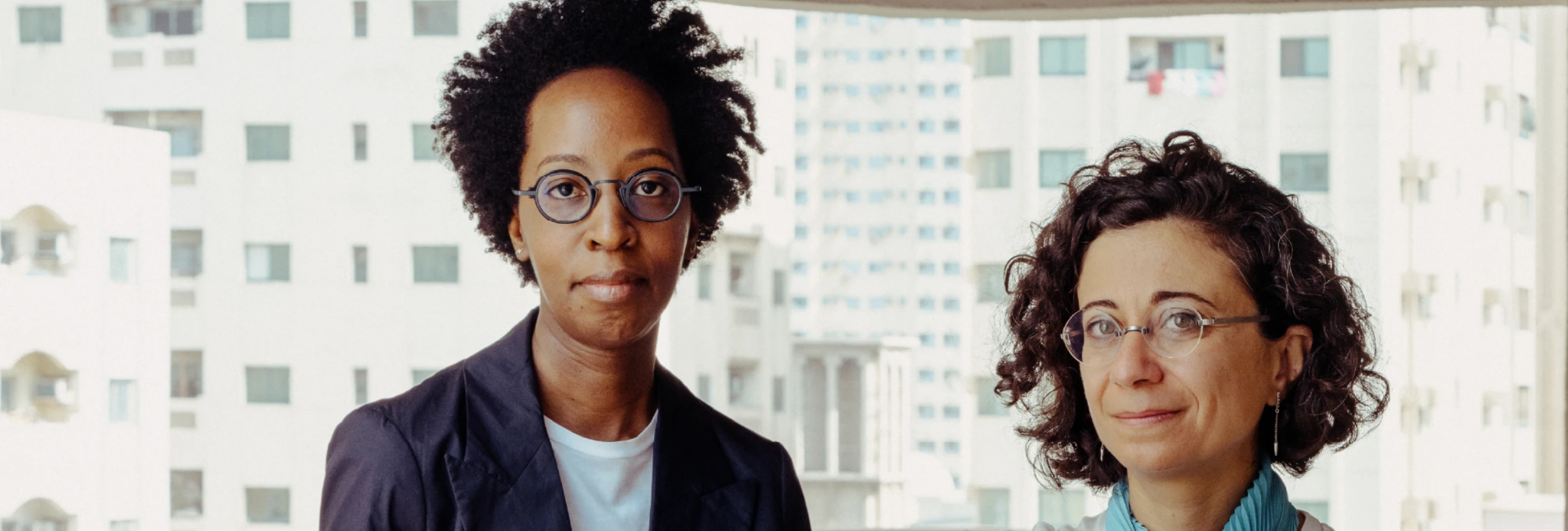
Sharjah Art Foundation announced the 2027 biennial under curators Angela Harutyunyan and Paula Nascimento, with 109 participants across two complementary curatorial tracks.
Sharjah Art Foundation has announced core programming for Sharjah Biennial 17, confirming a large-scale 2027 edition that will run from January 21 to June 13 and include 109 participants. Curated by Angela Harutyunyan and Paula Nascimento, the biennial carries the title What remains, sits restive and is explicitly designed as a dual structure: two curatorial propositions, distinct in method, staged in dialogue rather than merged into a single rhetorical frame.
According to details reported by Artforum, Harutyunyan’s section centers on the afterlives of socialist modernity and asks whether art can reactivate emancipatory projects inside late-capitalist alienation. Nascimento’s section uses infrastructure as a method, treating space, memory, and place as linked political and material systems. This is a serious curatorial proposition, and it is notable for avoiding the usual mega-exhibition habit of collapsing all positions into one thematic slogan.
The roster itself confirms ambition in both scope and tempo. Harutyunyan’s list includes artists such as Hassan Khan, Hiwa K, Iman Issa, and Jasmina Cibic, while Nascimento’s includes Oscar Murillo, Sonia Gomes, Nástio Bopape, and others working across film, installation, social practice, and research-based forms. For institutions and funders, that breadth signals a production-heavy biennial, likely requiring major fabrication, long lead times, and close site coordination rather than lightweight display logistics.
Sharjah has spent years consolidating its role as a non-Western center of curatorial experimentation, and this edition appears calibrated to reinforce that position. The foundation’s model, which combines commissions with local and regional anchoring, has made the biennial legible to both international museums and artists working outside the fair-market spotlight. In a year when many biennials are under pressure to justify cost and attention, Sharjah is betting on rigorous commissioning and long-form research instead of quick symbolic gestures.
For collectors, SB17 may matter less as a buying map and more as a directional one. Biennials in this format often reset institutional interest before price follows, especially for artists whose work circulates in discourse networks before commercial ones. Advisors tracking museum-oriented collections should watch for participants whose projects are deeply tied to archive, labor, infrastructure, and decolonial memory politics, themes that can move slowly in market terms but remain central in curatorial agendas globally.
For curators, the two-track structure could become the key test. If the two sections remain analytically distinct while sharing a coherent exhibition architecture, SB17 may offer a practical model for future large exhibitions that want plurality without thematic dilution. If it fails, critics will likely argue that curatorial dualism became administrative complexity. Either outcome will be influential, because Sharjah now operates as a benchmark in the biennial circuit, not a peripheral outpost.
The announcement also lands in a wider climate of cultural realignment. Funding stress, geopolitical fracture, and audience fragmentation continue to reshape major exhibition formats. Sharjah’s response, at least at this stage, is to double down on commissioning, argument, and site-responsive production. That is a high-risk editorial choice, but it is a coherent one. As artist lists translate into finalized projects over the next year, SB17 will be measured by whether it can hold that rigor from press cycle to opening week.