San José Shipwreck Fight Returns to the Surface in Colombia
A new open letter has reopened Colombia’s San José battle, turning a treasure legend into a fight over archaeology, secrecy, and state control
Why the San José Is an Archaeology Story, Not Just a Treasure Story
Colombia’s San José galleon has been marketed for years as a spectacular cache of gold, silver, and emeralds, but the latest dispute pulls the conversation back to where it belongs: governance. According to The Art Newspaper’s new report, the oversight group Veeduría Nacional para el Control Social del Patrimonio Cultural Sumergido de Colombia has sent an open letter to the attorney general alleging a lack of transparency, possible looting, and unauthorized interventions at the site. That move matters because it reframes the wreck from a nationalist treasure hunt into a disputed archaeological scene whose handling could define Colombia’s cultural-policy credibility for years.
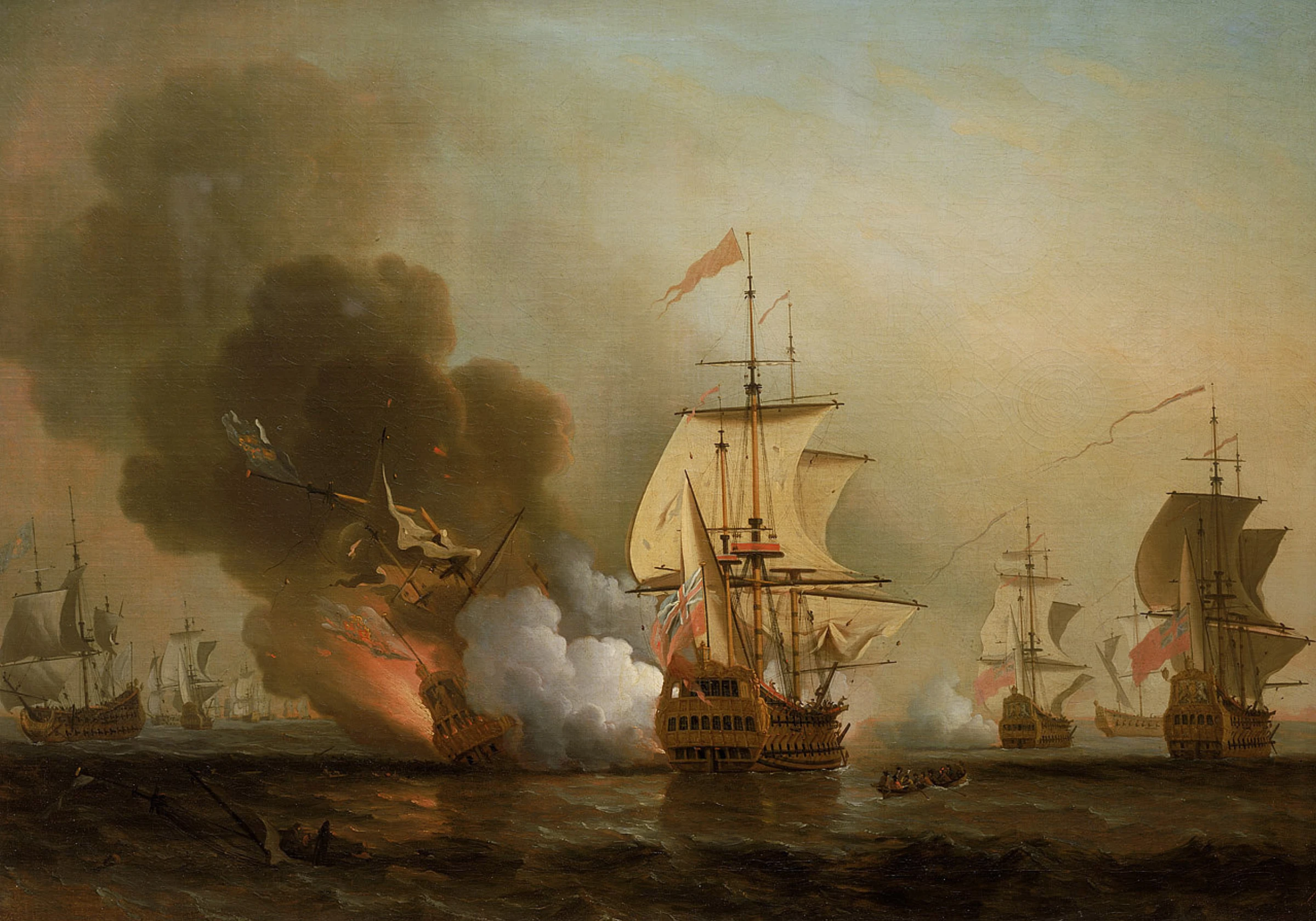
The San José has always tempted simplification. It sank in 1708 during the War of the Spanish Succession, taking with it a cargo whose monetary value has been inflated endlessly in headlines and legal filings. But reducing the wreck to bullion misses the point. A shipwreck of this scale is a layered historical context, not a vault. The dead, the route, the colonial extraction economy, the seabed conditions, the chain of custody, and the politics of state secrecy all matter as much as the coins. Once you accept that, the present controversy stops looking like a sideshow and starts looking like the main event.
The open letter lands after a decade in which the Colombian state has repeatedly promised stewardship while drawing criticism from archaeologists, civil-society groups, and legal claimants. The site’s significance lies partly in what it reveals about empire and maritime violence, and partly in the fact that every contemporary decision about it becomes a test of who gets to narrate underwater heritage. That is why this is not only a Colombian story. It is a live case study in how states convert shipwrecks into cultural capital while trying to control the terms of access.
Allegations of Secrecy and Site Disturbance Have Not Gone Away
The current complaints are specific enough to be hard to dismiss as background noise. The oversight group alleges that interventions in 2016 and 2022 were not properly explained and that the secret coordinates of the wreck may have circulated more widely than the government admits. Those claims intersect with a longer argument about whether officials have documented the site adequately before disturbing it. In underwater archaeology, that sequence matters. Context is not a decorative academic concern. Once you move objects without rigorous recording, you degrade the site’s evidentiary value.
Rodrigo Pacheco Ruiz, the maritime archaeologist cited in the coverage, reportedly compared imagery from 2015 and 2016 and identified selective areas where sediment removal appeared plausible. Even with limited visual evidence, that observation should have triggered a more robust public scientific response than the one Colombia seems to have offered. Governments often justify secrecy around sensitive heritage sites as protection. Sometimes that is valid. But secrecy without trusted disclosure mechanisms creates the opposite outcome: it invites suspicion that protection is being invoked to shield poor process.
The retrieval in November 2025 of a cannon, a porcelain cup, and three coins intensified the problem. Officials described the operation as research-driven, while critics argued that no convincing scientific rationale had been given for intervening in a context that was neither fully documented nor obviously under imminent threat. That gap between state explanation and expert confidence is where institutional trust breaks down. You can defend intervention or defend preservation in situ, but you cannot keep improvising between the two without making the entire project look opportunistic.
There is an important rhetorical trick in many shipwreck disputes: officials present extraction as technical neutrality. It is not. Every object lifted from a deep-water site represents a theory about what counts as risk, what counts as knowledge, and what counts as acceptable damage. Critics of the San José process are effectively saying that Colombia has not yet earned the right to make those choices unilaterally and opaquely.
The Legal Baggage Around the Wreck Is Part of the Cultural Problem
The San José is not merely an archaeological site under debate. It is a site under claim. The most notorious dispute involves the US salvage company Sea Search Armada, which has long argued that it identified the wreck decades ago and deserves a massive payout. That claim has ricocheted through courts and arbitration, turning the galleon into a legal object as much as a historical one. Every contemporary government action therefore carries legal and financial consequences, which helps explain why Colombian authorities may prefer controlled messaging. It does not excuse it.
Colombia tried to shift the balance by designating the wreck a protected archaeological area under the jurisdiction of the Colombian Institute of Anthropology and History. In principle, that should have clarified that the site is part of public heritage rather than a recoverable commercial asset. In practice, the designation has not ended the argument because heritage protection is only as credible as the process attached to it. If critics believe the state is selectively disclosing information or intervening without sufficient scientific consensus, legal protection alone will not restore trust.
The deeper issue is that the San José sits at the collision point of three value systems. There is market value, which sensational coverage loves. There is national-symbolic value, which governments often leverage. And there is knowledge value, which archaeologists insist should govern the site. Those value systems do not align neatly. The danger is that the first two are vivid and politically useful, while the third demands patience, documentation, and restraint. Under pressure, states often privilege the more theatrical values.
artworld.today has covered comparable tensions before in stories about restitution, museum governance, and ownership claims, including the Wellcome Collection’s return of Jain manuscripts. The scales are different, but the principle is similar. Heritage becomes unstable when legal possession outruns ethical clarity.
Why Critics Want a Science-First, Internationally Legible Plan
One striking element in the latest reporting is how consistently critics call for method rather than spectacle. They are not arguing that the site should be ignored forever. They are arguing that a project of this magnitude requires long-term planning, better imaging, public-facing documentation standards, and broader scientific cooperation. That is a serious proposal, not a romantic refusal of action. Deep-water maritime archaeology is expensive and technically difficult. Those realities make method more important, not less.
The scientific argument for caution is straightforward. Seabed environments change, but not every change justifies retrieval. If preservation in situ remains viable, then the burden of proof falls on those who want to disturb the wreck. They must show not only that extraction is possible, but that it produces knowledge that cannot be responsibly obtained otherwise. They must also show that the recovery process itself will not create more interpretive loss than it resolves. Nothing in the recent controversy suggests Colombia has communicated that burden of proof well.
International cooperation also matters because the San José’s meaning exceeds national ownership. It is a Spanish colonial vessel sunk in a British attack off the coast of present-day Colombia, tied to wider histories of Indigenous extraction, Atlantic commerce, and imperial war. A site like that is not politically neutral simply because a modern state controls the waters above it. If Colombia wants global legitimacy for its stewardship, it needs a process that can withstand global scrutiny.
There is a reputational upside to getting this right. A transparent scientific framework could turn the San José from a recurring embarrassment into a model for how contested underwater heritage can be managed without collapsing into treasure rhetoric. That would be genuinely valuable. But it requires the state to accept that secrecy and occasional object retrieval are not a substitute for public method.
What Colombia Should Prove Next
The next useful step is not another dramatic reveal of surfaced objects. It is a documentary one. Colombia should publish a clearer chronology of interventions, explain the decision-making behind the 2025 retrieval, outline the evidentiary basis for any future operations, and define the independent scientific oversight that will govern the site. It should also make plain how the protected-area designation is being enforced and what protocols exist for handling imagery, coordinates, and access.
If that sounds administrative, good. Heritage governance lives or dies in administration. The romance of the San José has already done enough damage by encouraging the fantasy that treasure itself is the headline. The real headline is whether Colombia can convince the world that it knows the difference between excavation and extraction, between stewardship and possession. Until it does, the shipwreck will keep producing political heat instead of historical light.
The sharpest line in the current debate comes from the critics themselves: the ship’s true value lies in its story, not its cargo. That line should be read as a policy standard. If officials act as though the story matters most, they will document patiently, explain decisions, and privilege context over trophies. If they act as though the cargo still defines the site, the controversy will continue, and deservedly so.
There is another reason the dispute keeps resurfacing. Shipwreck politics thrive when governments treat public patience as a renewable resource. Each partial disclosure buys a little time, but it also deepens the sense that key decisions are happening elsewhere, beyond scrutiny, in technical or diplomatic channels ordinary citizens cannot see. For a site already burdened by colonial history and competing claims, that is toxic. If Colombia wants the San José to stand for stewardship rather than opportunism, it has to replace episodic revelation with a durable public record that can be challenged, checked, and defended.