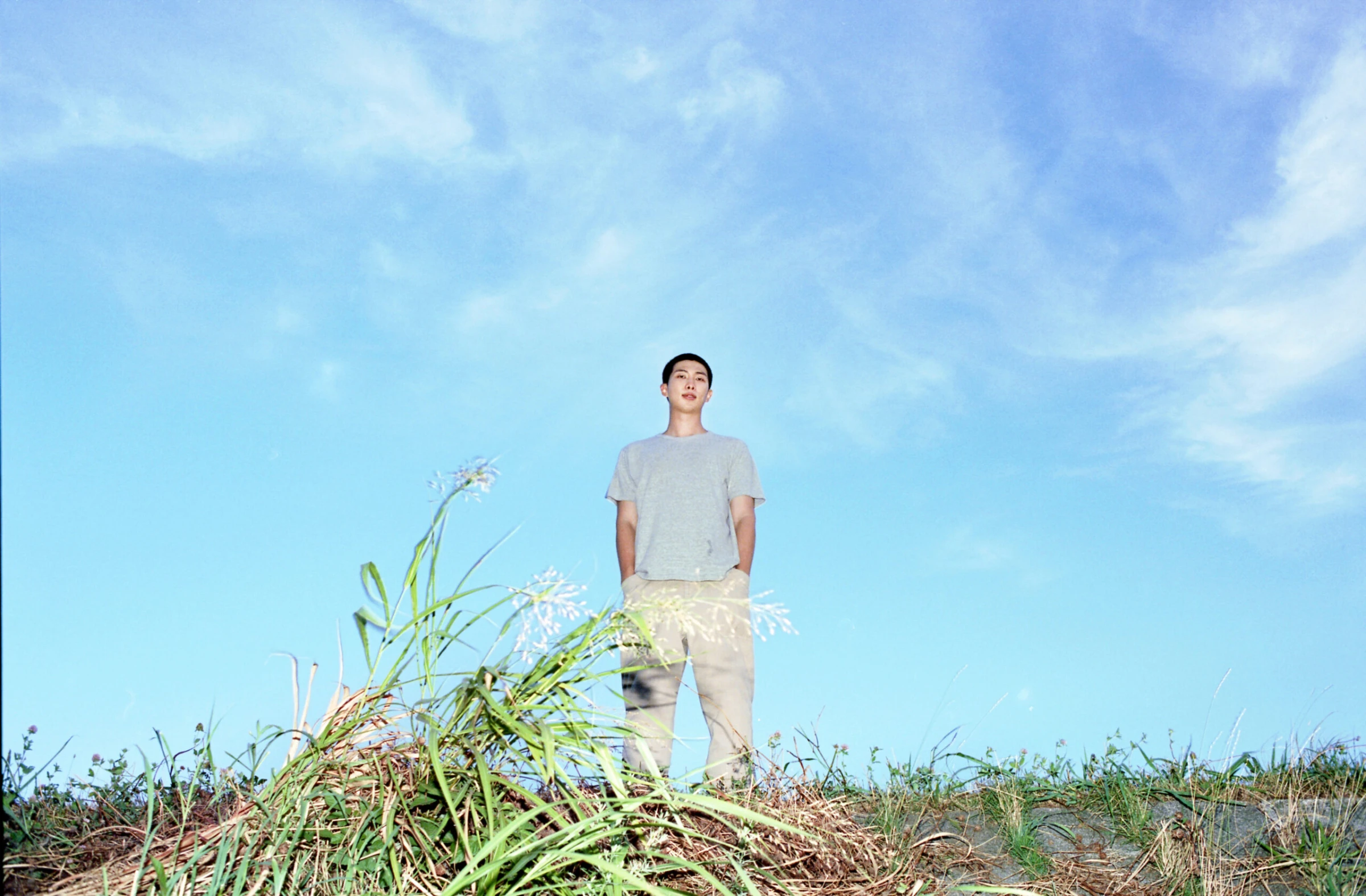
RM of BTS Brings 200 Works to SFMOMA in First Museum Show
The BTS leader's personal collection of Korean modernists goes on view October 3 alongside SFMOMA holdings including Rothko, Agnes Martin, and Matisse
What the Exhibition Includes
RM x SFMOMA: Between You and Me, opening October 3, 2026, at the San Francisco Museum of Modern Art, will be the first-ever museum exhibition featuring artworks from the personal collection of RM, leader of the global pop phenomenon BTS. The exhibition brings together 200 works from the collections of RM and SFMOMA, offering a chance to see modern and contemporary Korean artworks in conversation with artworks from around the world. Many of the artworks have never before been exhibited to the public in the United States, making this a genuinely unprecedented opportunity for American audiences to engage with a strand of modern art history that has remained largely invisible outside Korea. The exhibition runs through February 7, 2027 on Floor 7 of the museum, with member previews October 1 through 3, and general public tickets and the Encore Pass are already on sale. The museum expects significant visitation from BTS's global fanbase, known as ARMY, and has extended hours during the opening weeks to accommodate demand. The museum has also planned a series of public programs, including artist talks, curator-led walkthroughs, and a symposium on Korean modernism, designed to deepen the engagement of visitors who may be encountering this material for the first time. Whether that audience comes for the celebrity and stays for the art, or simply comes and leaves, is the open question that only the exhibition itself can answer.
Among the key Korean artists represented in RM's collection are Yun Hyong-keun, Park Rehyun, Kwon Okyon, Kim Yun Shin, To Sangbong, and Chang Ucchin, alongside works by numerous notable contemporary artists from around the world. The exhibition will highlight shared themes between these works and complementary SFMOMA collection artworks by Korean artist Kim Whanki as well as American and European artists such as Mark Rothko, Agnes Martin, Henri Matisse, Georgia O'Keeffe, and Paul Klee. The specific pairings are carefully chosen: Yun Hyong-keun's dark, absorptive paintings meet Rothko's luminous color fields; Kim Whanki's dot paintings find an unexpected counterpart in Agnes Martin's quiet grids; Chang Ucchin's Korean folk-inflected landscapes sit near Paul Klee's equally intimate, equally strange small worlds. These are not arbitrary juxtapositions but curatorial arguments about what modernism looks like when national boundaries are treated as permeable rather than impermeable. The exhibition also includes work by Kwon Okyon, whose heavily layered surfaces build texture through accumulation and removal, and Kim Yun Shin, whose carved wooden sculptures with titles like Add Two Add One, Divide Two Divide One bring a mathematical rigor to organic form. Together, these artists represent a cross-section of Korean art from the 1930s through the present, a period during which Korea underwent Japanese occupation, war, military dictatorship, and rapid industrialization. The art made during these decades was not insulated from that history but shaped by it, often in ways that only become visible when the work is placed next to Western modernist counterparts from the same period.
A Pop Star Turned Collector
RM, whose real name is Kim Namjoon, has been building his collection for several years. As reported by the New York Times, RM brought 145 works by Korean artists to SFMOMA for this exhibition. His collecting began from a place of cultural curiosity that evolved into a serious commitment. His account of how it started is disarmingly direct: he knew Picasso and van Gogh, but he did not know anyone from his own country. That realization, coming from one of the most globally visible cultural figures of his generation, carries a particular weight. It speaks to the way Korean cultural production, despite the global reach of K-pop and Korean cinema, has not been accompanied by equivalent visibility for Korean modern art. RM's response was not to lament that gap but to start buying, and to buy with enough focus and conviction that the result is now a museum exhibition.
RM is not merely lending works. He is credited as a co-curator of the exhibition, working with exhibition co-curators America Castillo, Curatorial Project Manager at SFMOMA, and Hyoeun Kim, Assistant Curator of Painting and Sculpture at SFMOMA. This curatorial role gives the exhibition a personal structure that a standard institutional loan show would not have. RM's own words describe the vision: the exhibition reflects boundaries between East and West, Korea and America, the modern and the contemporary, the personal and the universal. He does not want to prescribe how the works should be seen. Whether out of curiosity or study, all perspectives are welcome. His only hope is that the exhibition can be a small but sturdy bridge for many. The quote is unusually thoughtful for a celebrity-led exhibition, and it sets a tone that suggests the show will be more than a vanity project. The involvement of professional SFMOMA curators alongside RM ensures institutional rigor while allowing the collector's personal vision to shape the presentation.
Korean Modernism Gets a Global Stage
The exhibition's pairing of Korean artists with canonical Western modernists is its most provocative curatorial move. Yun Hyong-keun's dark, meditative paintings, which use burnt umber and ultramarine pigments absorbed into raw canvas, find a natural counterpart in Mark Rothko's luminous color fields. The SFMOMA pairing of Yun's Untitled (1973) with Rothko's No. 14 (1960) from the museum's collection is the kind of visual argument that can change how viewers understand both artists. Rothko's color fields, so often read as expressions of spiritual yearning, take on a different character when seen next to Yun's pigment-saturated canvases, which are equally spiritual but grounded in a Korean material tradition of calligraphic ink absorption. The comparison does not diminish either artist; it expands the vocabulary available for understanding both.
Kim Whanki's dot-and-line abstractions, already represented in SFMOMA's collection through a gift from the artist's widow, resonate with the quiet surfaces of Agnes Martin's grid paintings. Both artists built their work from the accumulation of small marks across large surfaces, but they arrived at that method from entirely different starting points: Martin from the American desert and Zen Buddhism, Kim from Korean landscape painting and the diaspora experience of working in Paris and New York. Chang Ucchin's rural Korean scenes and Han Youngsoo's photographs of mid-century Seoul offer a different kind of conversation alongside the Western works on view. The exhibition also includes works by Yves Klein, Giorgio Morandi, and Wayne Thiebaud from SFMOMA's collection, broadening the dialogue beyond the obvious East-West binary to include Italian still life, French nouveau realisme, and American pop-inflected painting.
Institutional Backing and What It Means
The institutional and financial backing for RM x SFMOMA is substantial. Lead support comes from Randi and Bob Fisher, the family behind SFMOMA's Fisher Collection and the museum's most significant benefactors. Presenting support is from Dana and Bob Emery. Major support is from Samsung Electronics, a corporation whose involvement signals the intersection of Korean corporate patronage and American museum culture. The partnership of BIGHIT MUSIC, HYBE, and HYBE INSIGHT, the entertainment infrastructure behind BTS, is also recognized. The exhibition carries a surcharge of $10 on weekdays and $12 on weekends above general admission, a pricing decision that reflects the anticipated audience draw from BTS's global fanbase while also signaling that SFMOMA views this as a premium exhibition on the level of its major touring shows.
For SFMOMA, the exhibition is a bet that a pop star's curatorial vision can open a meaningful new audience for Korean modernism. The museum has been investing in this space: its collection includes significant works by Kim Whanki, and the Fisher family's collecting has increasingly looked beyond Euro-American modernism. For RM, it is an opportunity to present a collection built from genuine conviction in a museum context that grants it seriousness. The risk is that the celebrity framing overwhelms the art historical one. The work on view, however, is strong enough to hold its own. Yun Hyong-keun's paintings alone, with their deep blacks and trembling edges, would justify a museum visit. Kwon Okyon's textured surfaces and Kim Yun Shin's carved reliefs add further depth. The question is whether the BTS audience will engage with the work on its own terms, and whether the art world will take the exhibition seriously enough to look past the celebrity wrapper. The answer will shape how museums think about celebrity-led exhibitions for years to come, and may establish a model for how private collections built by non-traditional collectors can enter institutional discourse without losing the personal vision that made them interesting in the first place. If the exhibition succeeds on both fronts, it could open doors for other collectors from outside the traditional art world ecosystem, demonstrating that curatorial insight is not the exclusive province of professionally trained curators and that the passion and focus of a single collector can reveal connections that institutions, constrained by their own collection histories, might overlook. If it fails to bridge the gap between celebrity spectacle and serious museum show, it will serve as a cautionary tale. Either way, the art world will be watching closely, and the conversation that follows the opening will be as important as the exhibition itself.