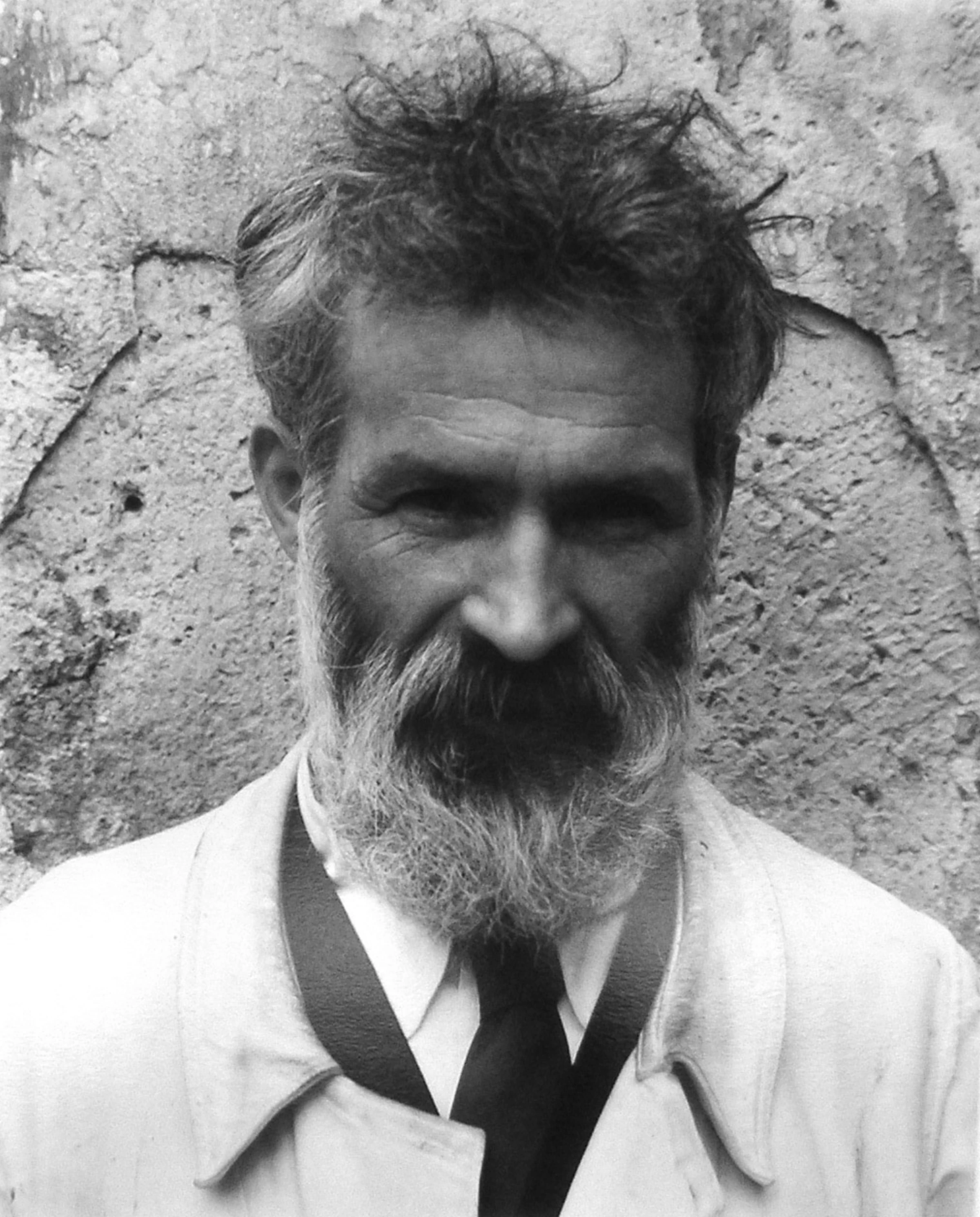
Why Brancusi's Sculptures Still Seduce Audiences in 2026
Major exhibitions at Neue Nationalgalerie and MoMA revisit Constantin Brancusi's radical sculptural language and its lasting grip on modern design
Two Museums, One Obsession
Constantin Brancusi has been dead for nearly 80 years, but his sculptures continue to exercise a peculiar hold over institutions, collectors, and anyone who encounters them in person. This summer, both the Neue Nationalgalerie in Berlin and the Museum of Modern Art in New York have mounted displays dedicated to his work, offering separate but complementary arguments for why Brancusi remains the sculptor against whom all others are measured.
The Berlin presentation focuses on Brancusi's studio practice and the evolution of his sleek, reductive forms, while MoMA's installation draws from its permanent collection to trace how Brancusi's aesthetic principles permeated 20th-century design. Together, the two shows make a case that has only strengthened with time: Brancusi did not merely simplify form. He invented a new relationship between sculpture and space that architects, designers, and fellow artists have been absorbing ever since.
The Auction That Proved the Point
The timing of these exhibitions coincides with a market event that underscored Brancusi's enduring commercial and cultural power. This past spring, Christie's auctioned Danaide (1913), a bronze and gold leaf portrait sculpture, with a promotional campaign that paired the work with Nicole Kidman in a cinematic short film. The tagline was unabashed in its theatricality, but the logic was sound: Brancusi's surfaces, with their mirror-like polish and organic curvature, have always produced a quality close to enchantment in those who spend time with them.
The campaign worked because Brancusi's work genuinely rewards sustained looking. Unlike many modern sculptures that photograph better than they perform in person, Brancusi's pieces demand physical presence. The way light moves across Bird in Space or the subtle asymmetries of The Kiss cannot be fully registered through reproduction. This is part of why museums keep returning to him. A Brancusi exhibition is not a historical exercise. It is an argument for the irreducibility of the object.
From Peasant to Pioneer
Brancusi was born in 1876 in Hobita, a small village in the Carpathian foothills of Romania. He trained as a stonemason before moving to Paris in 1904, where he briefly assisted Auguste Rodin before setting up his own studio. The break with Rodin was decisive. Where Rodin modeled flesh and emotion in clay, Brancusi carved directly into stone and wood, pursuing what he called "the essence of things" rather than their surface appearance.
His early works, such as The Kiss (1907-08), still carried figurative references, but he progressively stripped away detail until what remained was pure form. Bird in Space, which he produced in multiple versions between 1923 and 1940, became his most famous statement: a vertical shaft of polished bronze that suggests flight without depicting any bird. When one version was imported into the United States in 1927, customs officials classified it as an industrial object rather than art, triggering a landmark court case that helped define the legal status of modern sculpture. The court ultimately ruled in Brancusi's favor, a decision that ARTnews has noted as a turning point in how American institutions understood abstraction.
The Studio as Artwork
Brancusi's studio in the Impasse Ronsin became as carefully composed as his sculptures. He arranged and rearranged his works in relation to one another, treating the studio itself as a total environment. After his death in 1957, the contents of the studio were reconstructed at the Centre Pompidou in Paris, where visitors can still experience the space as he intended it. The reconstruction is not an archive. It is a work of art in its own right, and it has influenced how museums think about installation, context, and the relationship between process and product.
The Neue Nationalgalerie's current display engages directly with this legacy. By presenting Brancusi's works alongside documentation of his studio arrangements, the exhibition reconstructs the logic of his spatial thinking. Mies van der Rohe's glass-and-steel pavilion, with its open floor plan and reflective surfaces, turns out to be an ideal architecture for Brancusi's sculptures, which were always designed to be seen in the round, from multiple angles, in changing light.
Why Brancusi Endures
MoMA's installation takes a different approach, positioning Brancusi as a generative force whose aesthetic DNA can be traced through the work of later artists and designers. The museum's collection includes key Brancusi pieces alongside works by Donald Judd, Carl Andre, and others who absorbed his lessons about seriality, material honesty, and the relationship between object and pedestal. The argument is not that these later artists imitated Brancusi but that his work established a set of problems they had to solve.
What makes Brancusi resistant to exhaustion is that his sculptures operate on multiple levels simultaneously. They are abstract without being cold. They are reductive without being minimal in the contemporary sense. They carry the weight of Romanian folk tradition and Parisian modernism in equal measure. And they produce a physical response in the viewer that is closer to what architecture does than what most sculpture attempts. A person standing in front of a polished Brancusi bronze does not simply look at it. They become aware of their own body in relation to it.
This is the quality that the Museum of Modern Art and the Neue Nationalgalerie are counting on. In a moment of immersive digital experiences and algorithmic art, Brancusi's hand-polished surfaces and refusal of complication offer something that screens cannot replicate. The exhibitions are not retrospectives in the traditional sense. They are reminders that some problems in art were solved so definitively that the solutions still feel contemporary decades later.
What Comes Next for Brancusi Studies
The current wave of institutional attention suggests that Brancusi scholarship is entering a new phase. Recent research has focused on his relationship to architecture and design, his influence on postwar minimalism, and the politics of his reception in both communist Romania and capitalist America. The Centre Pompidou's studio reconstruction remains the gold standard for immersive Brancusi experiences, but the Berlin and New York presentations demonstrate that there are still productive ways to contextualize his work for new audiences.
For collectors, the market has spoken clearly. Brancusi's works appear at auction with decreasing frequency but increasing price points, and the Christie's campaign around Danaide confirmed that his sculptures can still generate mainstream cultural attention. The last major Brancusi sale before Danaide was Bird in Space, which fetched $24.5 million at Christie's in 2005, setting what was then a record for a sculpture sold at auction. The trajectory since then has been consistently upward, driven by the simple fact that very few Brancusi works remain in private hands. Most are held by museums, which further constrains supply.
For museums, the lesson is simpler. Put a Brancusi in a room with good light and let people spend time with it. The work does the rest. The enduring mystery of Brancusi is that his sculptures, which are so radically simplified, produce such complex responses. They seem to change as you move around them. They seem to change with the time of day. They refuse to be fully captured by photography, which is why exhibitions remain essential. The Centre Pompidou studio reconstruction remains the most complete Brancusi experience available, but the Berlin and New York presentations prove that there are still fresh curatorial approaches to his legacy. As our earlier coverage of the Uffizi's transformation project demonstrated, institutions that combine historic collections with ambitious architectural interventions can produce revelatory results. Brancusi's work rewards exactly this kind of ambitious presentation.
A Sculptor for the Next Century
The question that hangs over any Brancusi exhibition is whether his work still has the power to shock. In 1913, when his sculptures were first shown in the United States at the Armory Show, viewers were baffled and outraged. Today, his polished bronzes and carved stones look almost familiar, absorbed into the visual vocabulary of modern design. But familiarity is not the same as understanding. The exhibitions at the Neue Nationalgalerie and MoMA argue that Brancusi's work has been admired without being fully reckoned with, and that the reckoning is overdue.
What Brancusi achieved was not simplification in the conventional sense. He did not reduce complexity. He identified the structural core of a form and made that the entire sculpture. Bird in Space is not a bird with details removed. It is the idea of flight rendered as a vertical line. The Endless Column, his monumental sculpture installed in Targu Jiu, Romania, is not a column in the architectural sense. It is a rhyming pattern of geometric units stacked toward infinity. These were not abstractions from nature. They were reconstructions of experience in a language that sculpture had never spoken before. The fact that this language now feels canonical does not diminish its originality. It confirms it.
The exhibitions in Berlin and New York also arrive at a moment when the art world is reconsidering its relationship to craftsmanship and material specificity. After a decade dominated by conceptual art, social practice, and digital media, there is a renewed appetite for work that demands physical presence and rewards close looking. Brancusi represents the extreme case of this demand. His sculptures cannot be understood through documentation alone. They require the viewer to stand in front of them, to walk around them, to watch how light interacts with their surfaces. In this sense, the current exhibitions are not just retrospectives. They are arguments for the irreducibility of the physical object in an age that has tried to dematerialize everything.
Whether the audiences flooding the Neue Nationalgalerie and MoMA this summer will carry that argument forward remains to be seen. But the fact that two of the world's most important museums have chosen to invest their gallery space in a sculptor who died in 1957 suggests that the art world's appetite for Brancusi is not yet sated. His work continues to seduce not because it is fashionable but because it delivers something that few other sculptures can: a feeling of completeness so absolute that the idea of adding or removing a single element becomes unthinkable.