Clara Peeters Masterpiece Found in Storage
A Norwegian curator reattributed a 17th-century still life buried in storage, proving it was painted by the Flemish pioneer Clara Peeters
A Discovery in the Storage Area
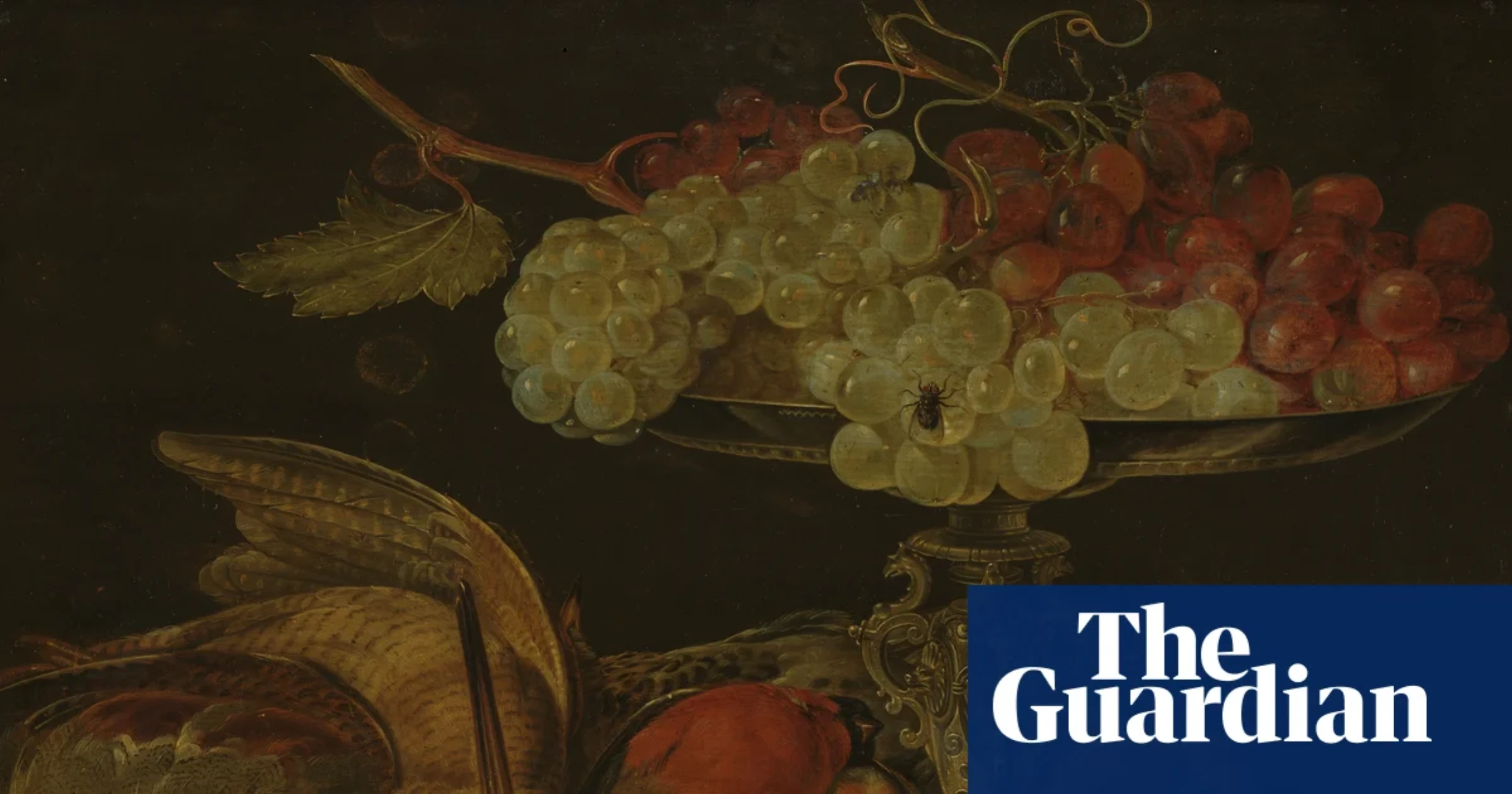
In 2022, Cynthia Osiecki, a curator at the National Museum of Norway in Oslo, was walking through a storage area when she noticed an unattributed still life that stopped her in her tracks. The painting, Still Life with Small Game and Grapes on a Gilded Tazza, depicts nine freshly dead birds, hazelnuts, apricots, and a fly perched on a bunch of grapes, all arranged on a gilded saucer-like dish. Created around 1620, it had once been attributed to the Antwerp artist Ambrosius Brueghel, but early twentieth-century scholars had reclassified it as "anonymous," and it had spent most of the intervening century in storage, unseen and unstudied. The painting's obscurity was a direct consequence of the tendency to dismiss works that did not fit established attribution categories, a practice that has disproportionately affected works by women.
Osiecki, who had been studying the work of the Flemish baroque painter Clara Peeters, began to wonder whether the painting could be by her hand. Peeters, born in Antwerp around 1594, was one of the earliest practitioners of still life painting in Northern Europe and a pioneer of the genre. Works by her hang in the Prado Museum in Madrid, the Ashmolean Museum in Oxford, and the Metropolitan Museum of Art in New York. The Oslo painting, if confirmed as a Peeters, would join a small but significant body of work by an artist who helped define the still life genre at its origins.
The Investigation
Osiecki's path to reattribution was methodical and grounded in material evidence. She examined the wooden panel the Oslo painting was executed on and discovered it came from a supplier Peeters frequently used. Panel makers in seventeenth-century Antwerp stamped their panels with distinctive marks, and matching these marks to known artists' supplies is a foundational technique in attribution scholarship. This single piece of evidence established a direct material link between the painting and Peeters' known working methods.
She then compared the composition to other works by the painter, noting that several featured a tazza, a saucer-like dish on a pedestal, very similar to the one in the Oslo painting. The positioning of the dead birds, the grapes, and the hazelnuts showed consistent stylistic similarities with Peeters' known works. The treatment of light on metallic surfaces and the rendering of texture in feathers and fruit skin all pointed to the same hand.
One obstacle remained: Peeters was famous for signing her paintings, and the Oslo piece bore no signature. But the panel had been damaged by woodworm, and the area eaten away was the bottom edge of the work, the precise location where Peeters typically placed her signature. The evidence pointed to a signature destroyed by insect damage rather than a painting that had never been signed. Further investigation revealed something even more compelling: Peeters was known for embedding miniature self-portraits in her paintings, often as reflections in pewter or glass objects, or on the shiny surfaces of fruit and vegetables. Osiecki detected shapes on some of the grapes in the Oslo painting that, on close examination, resembled outlines of human figures. These may be the remnants of one of Peeters' signature self-portraits, possibly degraded during past conservation work.
From Anonymous to Authorship
Earlier in 2026, the painting was officially reattributed to Peeters. It will be one of the star exhibits in Woman Painter, a major exhibition opening at the National Museum of Norway on October 8, 2026, curated by Osiecki. The show features the work of female artists working across northern Europe and Italy between 1550 and 1650, with paintings by 19 artists including Artemisia Gentileschi, Lavinia Fontana, and Judith Leyster, alongside Clara Peeters. The exhibition is a landmark for the National Museum and for the broader project of recovering women's contributions to European painting.
The reattribution is significant not only for Peeters scholarship but for the broader project of recovering women's contributions to art history. In 2016, Peeters became the first woman ever to be given a solo show at the Prado Museum in Madrid, a milestone that underscored how thoroughly women had been written out of the canonical narrative of European painting. The Oslo discovery adds another work to her known output and demonstrates that the process of recovery is ongoing, often dependent on a single attentive curator with the right expertise.
The Broader Pattern of Rediscovery
The Oslo discovery fits into a wider pattern of recent reattributions of works by women artists. Museums across Europe have been systematically reviewing their storage areas and collections for paintings that may have been misattributed to male artists or consigned to anonymity. The process is slow and requires both expertise and institutional will, but the results are accumulating. The ARTnews report on the Oslo find noted that the National Museum of Norway's director of exhibitions and collections, Nora Ceciliedatter Nerdrum, sees this as part of a structural shift rather than an isolated incident.
The quest to correct the omission of women from the canon began by retrieving known works by women from storage. Now, the search has shifted to identifying works labeled "anonymous" that may be by women whose names were lost. The implications extend beyond individual attributions: each recovered work challenges the assumption that women were marginal to the history of European painting, an assumption that has shaped museum displays, art historical curricula, and market valuations for centuries. The Woman Painter exhibition at the National Museum of Norway, which opens October 8, 2026, will be among the most significant surveys of female artists of the early modern period, bringing together paintings by nineteen artists from across northern Europe and Italy. The show positions the Oslo Peeters not as an isolated curiosity but as part of a coherent tradition of women's artistic production that spanned the continent and persisted across centuries, despite the systematic erasure that followed.
The recovery of works by women also has market implications. As museums reattribute paintings to female Old Masters, the market value of those works increases, sometimes dramatically. The Prado's 2016 Peeters exhibition raised the profile of the artist significantly, and subsequent sales of her work at auction have reflected that increased attention. The reattribution of the Oslo painting will likely have a similar effect, not just for the specific work but for the broader category of female Old Master paintings, which have historically been undervalued relative to works by male contemporaries. As the canon expands to include women, the market follows, creating a feedback loop that further incentivizes museums and collectors to pursue reattributions.
The Oslo discovery also underscores the importance of storage as a site of scholarly inquiry. Museum storage areas are typically understood as the invisible back end of institutional operations, but they are in fact rich archives of unresolved questions. Paintings that were deaccessioned, reclassified, or simply forgotten often sit in storage for decades, their significance unrecognized because no one has had the time, expertise, or institutional support to reexamine them. The reattribution of the Peeters still life is a direct result of a curator walking through storage with a specific research question in mind. It suggests that the most significant art historical discoveries of the coming decades may not come from excavations in the field but from careful reexamination of what museums already possess but have overlooked. The National Museum of Norway, which opened its new building in 2022, has made a deliberate institutional commitment to this kind of research, and the Peeters reattribution is an early result. Other museums would do well to follow this example: the returns on investment in curatorial expertise may not be immediate, but they can be transformative. A single reattribution can reshape an artist's career, alter the market for an entire category of work, and shift the narrative of art history in ways that no acquisition budget can match. The lesson is that the most important discoveries may already be in the building. The Woman Painter exhibition in Oslo will be a test case for what this kind of sustained curatorial investment can produce, and it may well inspire other institutions to undertake similar reviews of their own storage areas with fresh eyes and new questions.
Why This Painting Matters
Peeters' paintings, including the newly attributed work, are meditations on mortality. The dead birds, the ripening fruit, and the luxurious tazza all speak to the transience of life and the futility of material accumulation. As Osiecki explains, Peeters is making the point that you cannot take anything with you when you die, and in the end all are equal. The painting's century in storage is a fitting metaphor for the erasure of women from art history, and its reemergence is a testament to what careful curatorial work can recover. The Woman Painter exhibition in Oslo this October will be a milestone in the ongoing reassessment of female artists of the early modern period, and the rediscovery of the Peeters still life demonstrates that the canon is not fixed, and that the storage areas of European museums may hold more lost masterpieces waiting for a curator with the knowledge and persistence to see them.