Colossal 2,500-Year-Old Lydian Sculpture Found at Sardis
A seven-foot statue of a young man holding fruit unearthed at the ancient Lydian capital in Turkey offers rare insight into an understudied civilization
The Discovery at Sardis
A rare colossal statue dating back approximately 2,500 years has been unearthed at the ancient city of Sardis in Manisa, Turkey. The discovery was announced by Turkey's Ministry of Culture and Tourism on August 4. The sculpture, which depicts a young man holding fruit, was found in two pieces but once stood seven feet tall. It dates to the first half of the fifth century BC, placing it at the beginning of the Classical period in Greek art, a moment of transition from archaic stiffness to naturalistic representation.
The statue's exceptional state of preservation is a result of its unusual afterlife. At some point during the Roman period, the sculpture was repurposed as a paving stone on a colonnaded street, face down, protected from centuries of weather and erosion. This practical reuse, however degrading to the original intent, preserved surfaces and details that would otherwise have been lost. The Ministry of Culture's statement noted that the work offers significant insights into the art and social life of the period, according to The Art Newspaper's reporting.
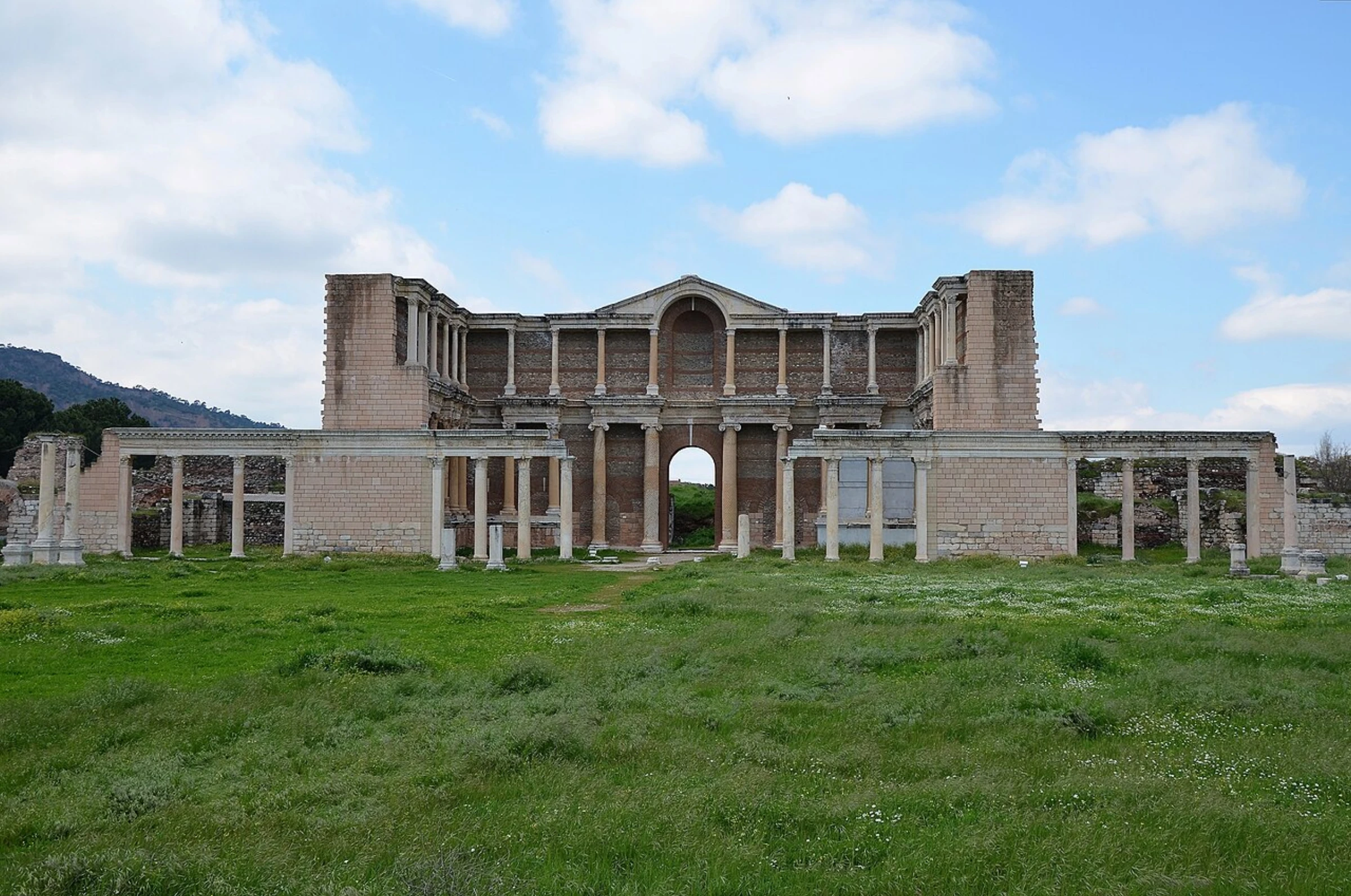
Sardis was inscribed as a UNESCO World Heritage site in 2025, recognizing its importance as the capital of the Lydian civilization. The Lydians, who flourished between the eighth and sixth centuries BC, were known for their extraordinary wealth and for producing some of the earliest coinage in history. The city sat at a crossroads between the Greek world and contemporary Near Eastern cultures, a position that made it a center of trade, innovation, and artistic exchange.
A Sculpture That Defies Categorization
What makes the Sardis sculpture remarkable is not just its size and preservation but its hybrid artistic character. The statue presents a mixture of styles that does not fit neatly into existing categories of Greek or Anatolian sculpture from this period. The upright stance and long flowing hair speak to sculptural traditions of the sixth century BC, while the carving of the face and hands, including visible veins and a naturalistic turn of the neck, are typical of the first half of the fifth century BC. This is a sculptor working with one foot in the archaic past and one in the classical future.
Nicholas Cahill, the field director of the Sardis Expedition, told The Art Newspaper that the combination of old-fashioned hairstyle and clothing with more modern rendering of hands and facial features is quite striking. In his reading, the sculptor knew about developments in Greece and Italy but chose to portray the subject as his ancestors had been portrayed. This was not technical backwardness but a deliberate stylistic choice, one that carried cultural meaning about identity and lineage in a city that had recently fallen under Persian rule.
The garments depicted on the figure add another layer of mystery. The figure wears a Greek-style outer cloak over a tunic-like lighter garment and another item marked by horizontal lines. This specific combination has not been observed in comparable sculptures from Greece or Anatolia during this period. The Ministry's statement suggests the work sheds light on the clothing traditions and visual language of Lydia, a culture whose material record remains far thinner than its historical importance would suggest.
Why Lydia Matters
The discovery underscores how much remains unknown about the Lydian civilization. Despite Sardis being excavated for over 70 years by Harvard University's Sardis Expedition, monumental sculpture from the Lydian period has been virtually nonexistent. Cahill noted that scholars are still almost in the infancy of their studies of ancient Lydia, a striking statement about a civilization that invented coinage, ruled a vast territory, and produced the legendary wealth of King Croesus.
The Lydians occupied a position in ancient history that should make them central to our understanding of the Mediterranean and Near Eastern worlds, yet their material culture has been overshadowed by the civilizations that preceded and followed them. The Greeks wrote about Lydia extensively, often casting Lydians as wealthy, decadent, and culturally influential. The Persians conquered Lydia in 546 BC, ending its independence but not its significance as a provincial capital. The Sardis sculpture dates from this Persian period, when the city was the capital of the western province of the Achaemenid Empire.
Hector Williams, an archaeologist who has worked at the site over multiple decades, called the statue one of the most remarkable discoveries at Sardis. He noted that specialists in Greek sculpture will have a field day with it, a reflection of how the work challenges existing categories. The full study and publication of the sculpture will take time, but the initial assessment suggests it may force revisions to how scholars understand artistic exchange between Greek, Lydian, and Persian traditions during the transitional period between the archaic and classical eras.
A Concurrent Discovery at Aspendos
The Sardis find was followed by another significant archaeological announcement on August 6. Marble sculptures depicting Asklepios, the Greek god of medicine, and his son Telesphoros were discovered at the ancient city of Aspendos, another UNESCO World Heritage site in Turkey. The sculptures date to approximately 1,800 years ago and are Roman-period works. Turkey's Minister of Culture and Tourism Mehmet Nuri Ersoy praised the intricate craftsmanship in a statement on social media, noting that the artworks symbolize the healing process from treatment through recovery.
The proximity of these two announcements is not coincidental. Turkey has invested heavily in archaeological excavation and cultural site development over the past decade, positioning its ancient heritage as both a scholarly resource and a tourism asset. The country hosts more UNESCO World Heritage sites than any other nation in the region, and the steady stream of discoveries from ongoing excavations reflects a deliberate strategy of investment in archaeological fieldwork. Recent discoveries, including the Mayan city identified in Mexico, show that major archaeological finds continue to reshape our understanding of ancient civilizations worldwide.
For the scholarly community, the Sardis sculpture is the more consequential find. Lydian monumental art has been so scarce that each new discovery has the potential to reshape the field. A seven-foot statue from the fifth century BC, with its hybrid style and unprecedented garment combination, may well prompt a reassessment of how artistic traditions moved between Greek, Lydian, and Persian spheres during one of the most dynamic periods in ancient art history.
The discovery also raises questions about what else remains buried at Sardis. The site has been continuously occupied for over three thousand years, with layers of Lydian, Persian, Greek, Roman, Byzantine, and Ottoman civilization stacked atop one another. The fact that a monumental sculpture could survive as a paving stone without being identified until now suggests that other significant artifacts may be similarly hidden in plain sight, repurposed by later civilizations and waiting for archaeologists to recognize their original significance.
The Turkish government's investment in archaeological excavation has produced a steady stream of discoveries over the past decade, positioning the country as a leader in ancient heritage research. The Sardis Expedition, a joint project of Harvard University and Cornell University, has been working at the site since 1958, making it one of the longest-running American archaeological projects abroad. The discovery of the colossal sculpture demonstrates the value of sustained, long-term investment in a single site, as the most significant finds often come not in the first season but after decades of careful excavation and contextual understanding.
The full publication of the sculpture will be awaited with considerable interest by classicists, archaeologists, and art historians alike. In the meantime, the statue will likely be conserved and displayed at a Turkish museum, giving the public an opportunity to encounter a work that has been hidden for two and a half millennia. For a civilization as poorly understood as Lydia, even a single monumental sculpture can change the conversation, opening new questions about identity, artistic exchange, and the cultural complexity of the ancient Mediterranean world. The recognition of Indigenous art traditions in other contexts parallels the scholarly attention now being directed at Lydian visual culture.
The Sardis sculpture also highlights the role of serendipity in archaeological discovery. The statue was not found through a targeted excavation of a promising site but was encountered during ongoing work at a location that has been dug for decades. Major archaeological finds often come not from new sites but from continued investigation of known ones, where deeper layers or previously overlooked contexts yield unexpected treasures. The repurposing of the sculpture as a Roman paving stone, which preserved it, is itself a reminder that ancient civilizations treated earlier art with practical indifference, recycling monumental works into building materials with no regard for their original cultural significance.
The discovery also demonstrates the importance of sustained institutional commitment to archaeological research. The Sardis Expedition has operated at the site for nearly seven decades, supported by Harvard and Cornell universities with permits from the Turkish government. Long-term excavation projects like this one provide the continuity needed to understand a site's full historical arc, from its founding through its successive periods of occupation. Without that sustained presence, discoveries like the Lydian sculpture would never come to light, and the civilization that produced it would remain even more obscure.