Refik Anadol’s DATALAND Sets June Opening in Los Angeles, Framing AI Art as a Museum Category
DATALAND plans to open in June inside The Grand LA, with immersive galleries and a large technical back end, pushing the debate over whether AI art belongs in a dedicated museum structure.
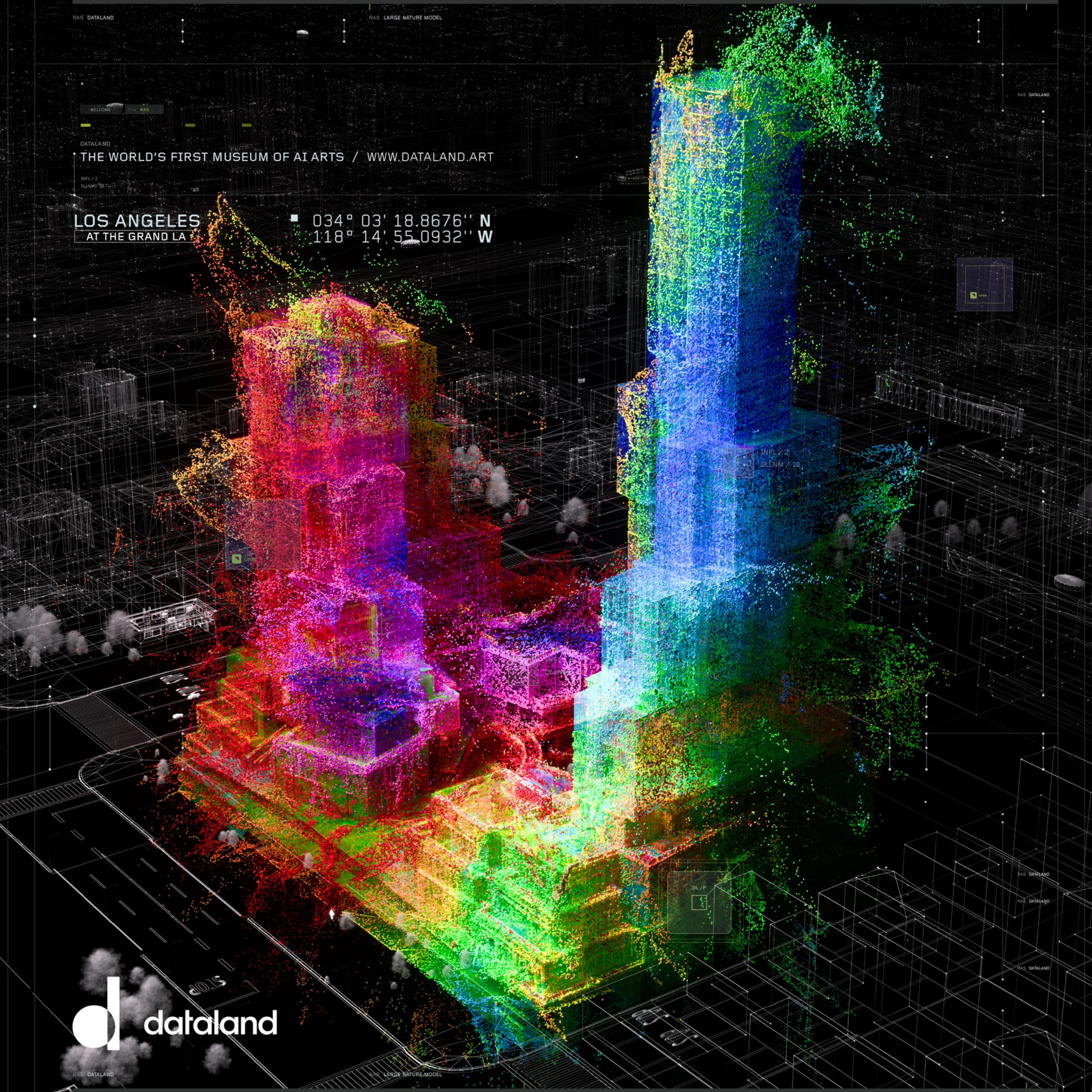
DATALAND, the institution founded by Refik Anadol and Efsun Erkılıç, is scheduled to open to the public in Los Angeles on June 20, positioning itself as a museum dedicated to AI based art. The project’s flagship site sits within The Grand LA, the Frank Gehry designed downtown complex. According to public descriptions from the museum, the venue will include multiple immersive galleries and substantial technical infrastructure built to run large scale machine learning workflows behind the scenes.
The opening lands at a moment when the art world has moved past the first phase of AI discourse, where most conversation centered on novelty and panic. Institutions now face a second phase that is more practical and harder. How should AI works be collected, conserved, credited, and audited? Who validates dataset provenance? What documentation standard is required when a work is model dependent and can shift over time? A dedicated museum inevitably becomes a policy actor, because exhibition choices quickly become de facto standards for artists, curators, and collectors trying to understand legitimacy.
Anadol’s studio has consistently emphasized data transparency and technical disclosure, and DATALAND appears designed to make that argument institutionally visible. Its framing around large nature datasets also signals a strategic attempt to separate this program from purely synthetic image culture. By claiming a nature oriented data pipeline and a public educational mission, the museum is presenting AI art as both aesthetic production and research communication. That hybrid model may appeal to civic funders and technology patrons who want social utility language alongside spectacle.
Still, the project enters a difficult environment. Museums worldwide are managing budget pressure, attendance volatility, and political scrutiny over sponsorship. Any new institution that depends on high compute operations must prove long term financial resilience. It also has to answer sustainability questions with precision, not aspiration. Immersive media can attract audiences quickly, but maintaining critical credibility requires more than sensory scale. Curatorial depth, historical framing, and independent scholarly engagement determine whether a museum becomes a lasting node or a short cycle attraction.
For artists working across software, data, and moving image, DATALAND could expand the commissioning landscape if it builds a genuinely plural program beyond one studio’s visual language. The key indicator to watch is governance: advisory structure, acquisition policy, and curatorial selection mechanisms. If those systems remain narrow, the institution may be perceived as a branded platform. If they broaden, it can function as a real field builder. The museum’s public commitment to education and archival access creates room for the second path, but execution will decide.
Collectors should also pay attention to conservation implications. AI works require documentation far beyond static object records. Model versioning, training data lineage, rendering dependencies, and display hardware constraints all affect value and future display viability. A museum claiming leadership in this domain has an opportunity to publish practical frameworks the market can adopt. In that sense, DATALAND’s launch is not only a culture story, it is infrastructure for an emerging asset class inside contemporary art.
Readers tracking the opening should monitor DATALAND’s official site, background activity from Refik Anadol Studio, and programming context at peer digital institutions including Onassis ONX Studio. The launch itself will draw crowds. The larger issue is whether this institution can set durable professional standards for AI art presentation, scholarship, and stewardship in the decade ahead.