Price Tower Owner Sues Media Over Furnishing Sale
Former Price Tower owner Cynthia Blanchard files defamation suit against media outlets for coverage of the sale of Wright-designed furnishings
What Happened
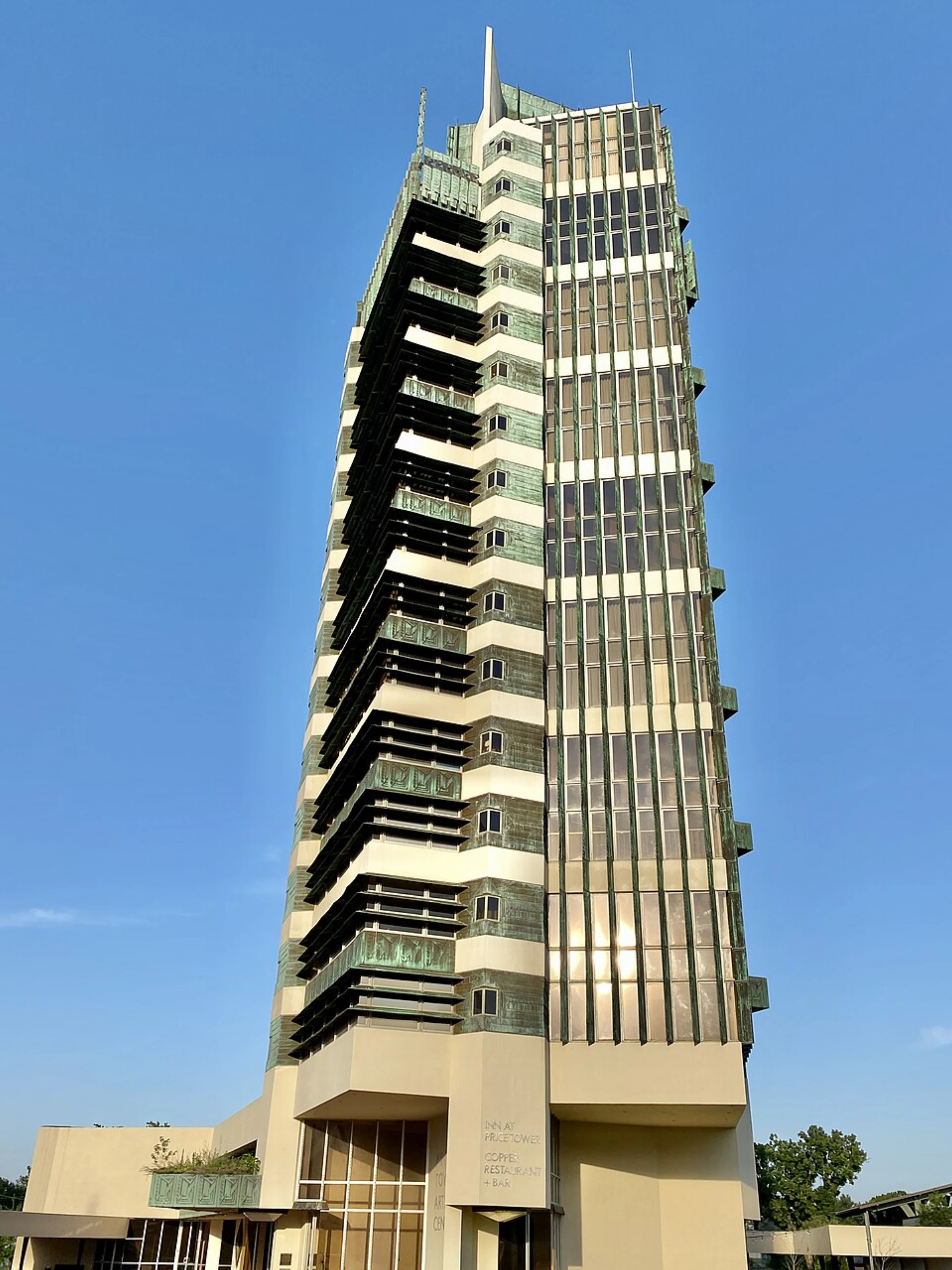
Cynthia Blanchard, the former owner of Price Tower in Bartlesville, Oklahoma, and the Dallas-based company 20cDesign have filed a defamation suit against numerous media outlets, as well as the Frank Lloyd Wright Building Conservancy and its executive director Barbara Gordon, over coverage of the 2024 sale of some of the tower's furnishings. The suit, filed on May 5 in the US District Court for the Southern District of New York, accuses publications including Dwell, Artnet, and Smithsonian Magazine of falsely characterising the dealings as unlawful. The dispute concerns a preservation easement on the nineteen-story building, Frank Lloyd Wright's only skyscraper, completed in 1956 and located forty-five miles north of Tulsa.
The conservancy claims that the easement includes the furnishings inside the building, while Blanchard and 20cDesign's complaint argues that the conservancy's permission was not required to sell the eleven original furnishings but that media outlets covered the sale as illegal anyway. The items included a directory board, architectural copper relief panels, and copper tables, all designed by Wright. The conservancy filed a claim against Price Tower's owners in August 2024 when it discovered that the fittings had been removed. Copper Tree Group, run by Blanchard, bought the tower in 2023 and says it never signed the easement. As Artforum reports, the case raises fundamental questions about the scope of preservation easements and the responsibilities of owners of landmark buildings.
The Preservation Easement Dispute
The dispute centers on the interpretation of a preservation easement that was placed on Price Tower to protect its architectural integrity. Preservation easements are legal agreements that restrict the changes that can be made to a historic property, and they are a common tool used by preservation organizations to ensure that landmark buildings are maintained in a manner consistent with their historical character. The Frank Lloyd Wright Building Conservancy, a Chicago-based organization dedicated to the preservation of Wright's buildings, has argued that the easement on Price Tower includes the building's interior furnishings, which were designed by Wright as integral elements of the building's architectural design. Blanchard and 20cDesign contend that the easement does not cover the furnishings, and that they were within their rights to sell them without the conservancy's permission.
The case highlights the complexity of preservation easements, which can vary significantly in their scope and language. Some easements are narrowly drawn to cover only the exterior of a building, while others extend to interior features, furnishings, and even landscaping. The Frank Lloyd Wright Building Conservancy has been a leader in the use of preservation easements to protect Wright's buildings, and the outcome of the Price Tower case could have significant implications for the organization's work and for the broader preservation movement. If the court rules that the easement does not cover the furnishings, it could weaken the conservancy's ability to protect the interiors of other Wright buildings, many of which contain original furniture, fixtures, and decorative elements designed by the architect.
The Defamation Claim
The defamation suit filed by Blanchard and 20cDesign accuses the media outlets of falsely characterizing the sale of the furnishings as unlawful. According to the lawsuit, the defamatory language includes Artnet's report that 20cDesign acquired the items in a sale that breached the conservancy's preservation easement and Smithsonian Magazine's claim that the furnishings had been protected under a preservation easement but had been sold anyway, without the organization's permission. The Gannett-owned newspaper Bartlesville Examiner-Enterprise reported the story in multiple articles and was sent a cease-and-desist by Blanchard before she filed the suit. Gannett associate general counsel Thomas Curley replied to Blanchard in a January 2025 letter, writing that no one has a right to insist upon only news coverage with which she may agree.
The defamation claim underscores the tension between press freedom and the protection of reputation. Media outlets have a First Amendment right to report on matters of public interest, including disputes over the sale of historic artifacts, but they are also subject to libel laws that prohibit the publication of false statements of fact. The case will likely turn on whether the media outlets' coverage of the sale was substantially accurate, even if it was unfavorable to Blanchard and 20cDesign. The Reporters Committee for Freedom of the Press has noted that defamation suits against media outlets are often used as a tool to intimidate journalists and discourage coverage of controversial topics, and the Price Tower case will be closely watched by media organizations and First Amendment advocates.
What Comes Next
The case is still in its early stages, and no trial date has been set. The defendants, which include major media organizations as well as the Frank Lloyd Wright Building Conservancy, are likely to file motions to dismiss the defamation claim, arguing that their coverage of the sale was protected by the First Amendment and was substantially accurate. The conservancy, for its part, is likely to continue its separate legal action to enforce the preservation easement, which could result in a ruling on whether the easement covers the building's furnishings. The outcome of both cases could have significant implications for the preservation of Frank Lloyd Wright's buildings, many of which are protected by similar easements, and for the broader field of historic preservation.
The case has also drawn attention to the broader issue of preservation easements and their effectiveness as a tool for protecting historic buildings. Preservation easements are a relatively recent legal innovation, and their enforceability has been tested in only a handful of cases. The Price Tower dispute is one of the most high-profile cases involving a preservation easement on a building by a major architect, and the outcome could have significant implications for the use of easements as a preservation tool. If the court rules that the easement does not cover the building furnishings, it could prompt preservation organizations to revisit the language of their easements and to seek stronger legal protections for the interiors and contents of historic buildings. The National Trust for Historic Preservation has been monitoring the case closely, and has filed an amicus brief in support of the conservancy's position.
The dispute also highlights the tension between the economic interests of property owners and the preservation of cultural heritage. Copper Tree Group bought Price Tower in 2023, reportedly with plans to convert the building into a mixed-use development with hotel, retail, and residential components. The sale of the Wright-designed furnishings, which are valuable in their own right, may have been part of a strategy to monetize the building's assets. Preservationists argue that the furnishings are integral to the building's architectural significance and that their removal diminishes the building's historic character. The case is a reminder that the preservation of historic buildings is not only a matter of protecting physical structures but of safeguarding the cultural heritage that those structures embody, including the furniture, fixtures, and decorative elements that were designed as part of the building's original conception.
The Price Tower case also highlights the challenges that arise when historic buildings change hands and new owners have different plans for the property. Copper Tree Group's acquisition of Price Tower in 2023 was seen by some preservationists as a cause for concern, given the company's apparent willingness to sell original Wright-designed furnishings. The case is a reminder that the preservation of historic buildings is not only a matter of legal protections but of the commitment and resources of the owners who steward them. The Price Tower, which is one of Wright's most significant late works, has been a National Historic Landmark since 2007, and its preservation is a matter of national as well as local interest. The defamation suit also highlights the challenges that media outlets face when reporting on complex legal disputes. The coverage of the Price Tower furnishings sale involved nuanced questions about the scope of preservation easements, the rights of property owners, and the obligations of buyers of historic buildings. Media outlets must balance the public interest in reporting on these disputes against the risk of legal liability for errors or mischaracterizations. The Reporters Committee for Freedom of the Press has noted that defamation suits against media outlets are often used as a tool to discourage coverage of controversial topics, and the Price Tower case will be closely watched by media organizations and First Amendment advocates. The Gannett-owned Bartlesville Examiner-Enterprise, which reported extensively on the dispute, received a cease-and-desist letter from Blanchard before the suit was filed, and its response, written by Gannett associate general counsel Thomas Curley, is a robust defense of the paper's coverage.
The case also raises questions about the responsibilities of buyers of historic buildings. Copper Tree Group's acquisition of Price Tower in 2023 was welcomed by some in the Bartlesville community, who hoped that the new owners would invest in the building's preservation and revitalization. The subsequent sale of the Wright-designed furnishings, however, has damaged the relationship between the owners and the preservation community, and the defamation suit has further escalated the conflict. The case is a reminder that the purchase of a landmark building carries with it a responsibility to steward not only the building itself but the cultural heritage that it represents, including the furniture, fixtures, and decorative elements that were designed as part of the building's original conception. The outcome of the case will be closely watched by preservationists, legal scholars, and owners of historic buildings around the country.