Alison Jacques Gallery Faces Sjoo Estate Lawsuit
A legal dispute over three Monica Sjoo paintings tests gallery authority when estate representatives cancel completed art sales
The Dispute Over Three Paintings
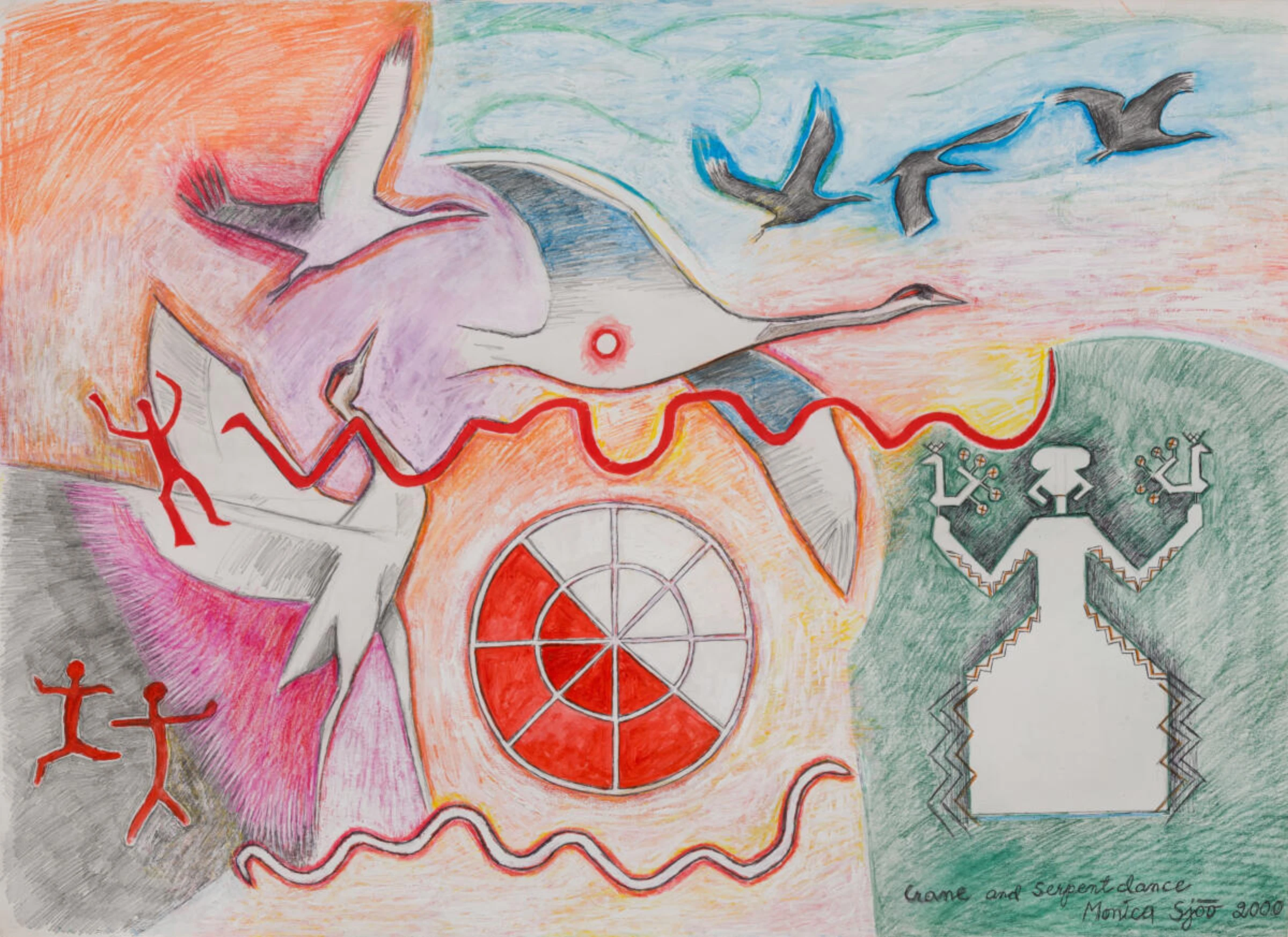
A trio of paintings by Swedish-born artist Monica Sjoo are at the center of a legal dispute between London-based Alison Jacques gallery and Swedish-American couple Yoed and Natasha Anise. The couple allege that Jacques, who represents Sjoo's estate, breached contract conditions in selling the paintings to them and then rescinding the sale. The case, set to be heard in a Central London County Court in March 2027, raises unusual questions about the power of gallery directors to unwind completed transactions when they have second thoughts about the buyer.
The Anises, who run a tech company, first encountered the paintings at Stockholm's Moderna Museet in 2023, during a retrospective of Sjoo's work. They purchased the paintings at a 20 percent discount for 264,000 British pounds, approximately $358,000, before the exhibition closed in October 2023. Marie St. Germain, an art advisor who helped facilitate the sale, assisted the couple through the process. The transaction appeared straightforward until the Anises met Sjoo's relatives, who represent the artist's estate, at a dinner in November 2023 organized to celebrate the opening of Sjoo's retrospective at Modern Art Oxford.
The dinner proved to be a turning point. According to reporting by the Art Newspaper, the event brought together the Anises with members of Sjoo's family who serve as estate representatives. Conversations at the dinner apparently raised concerns about the couple's collecting intentions. Within days, Jacques contacted St. Germain to communicate that the estate wished to cancel the sale, citing Natasha Anise's supposed inexperience as a collector and her statement that she might never buy art again. The paintings, which were scheduled to travel to the Moderna Museet in Malmo for the next leg of the retrospective, were instead held by Jacques and have remained in the gallery's possession since.
The Gallery's Reversal
Days after the dinner, Jacques informed St. Germain that the estate wanted to cancel the sale. The stated reason was Natasha Anise's claim that she had never bought art before and might never buy it again. The paintings were due to travel to the Moderna Museet in Malmo, but they are currently held by Jacques. The gallery's decision to renege on a completed sale, rather than exercise vetting discretion before the transaction was finalized, places this case outside the normal framework of gallery-buyer disputes.
Jacques filed a counterclaim alleging that St. Germain misled a gallery representative about the Anises' credentials by describing the couple as beginning to collect with the potential to become very important supporters for this artist. The counterclaim also states that Natasha Anise said she intended to hang the works in her children's bedrooms. Natasha Anise told the Art Newspaper that her remarks were not serious and that she intended to be a good steward of Sjoo's works. St. Germain offered to return her commission, but the Anises turned her down, acknowledging there was no fault on her part.
The gallery's position rests on the premise that estate representatives have an obligation to ensure that works by the artist they represent are placed with collectors who will advance the artist's reputation. This is a recognized principle in the art world, particularly for estates of historically overlooked artists whose market is still developing. However, the exercise of this vetting function after a sale has been completed, rather than before, creates a legal vulnerability that the Anises' lawsuit is designed to exploit. The case will test whether a gallery's commitment to legacy stewardship can override the contractual rights of a buyer who has already paid for the work.
The Claims and Counterclaims
The couple's lawsuit claims a refund of 264,000 pounds along with the 66,000-pound discount they received, which in their view reflects the works' market value. They also sought reimbursement of St. Germain's fee of 26,400 pounds, travel expenses of 9,091 pounds, and another 26,400 pounds in damages for the loss of what they describe as pleasure, amenity, prestige and heritage value. The total claim exceeds 391,000 pounds, a figure that reflects not only the purchase price but the broader costs and perceived injuries associated with a failed art transaction. The breadth of the claim, which encompasses everything from the advisor fee to damages for loss of what the couple describe as heritage value, signals that the Anises view this dispute as about more than money. They are challenging the principle that a gallery can override a completed transaction based on subjective assessments of buyer worthiness., a figure that reflects not only the purchase price but the broader costs and perceived injuries associated with a failed art transaction.
The case highlights a tension that exists in the secondary market for artist estates: galleries that represent estates often exercise informal vetting power over who purchases works, particularly when the artist's legacy is still being established. Monica Sjoo, who died in 2005, was a foundational figure in the development of feminist art in Britain. Her 1968 painting God Giving Birth sparked protests from Christian groups in the 1970s, and her manifesto Towards a Revolutionary Feminist Art, published in 1971, was one of the first and most militant feminist art manifestos. Her work has gained renewed attention in recent years through exhibitions at major institutions, and the estate has a clear interest in placing works with collectors who will maintain and promote her legacy rather than treating the paintings as decorative assets.
Sjoo's career trajectory makes the estate's concerns particularly understandable. She was an artist who spent decades outside the mainstream art world, excluded by institutions and dismissed by critics who found her radical feminist and spiritual politics uncomfortable. The posthumous recognition she has received through exhibitions at Moderna Museet and Modern Art Oxford represents a belated acknowledgment of her significance. For the estate and its gallery representative, ensuring that works enter collections where they will be cared for and exhibited is not merely commercial preference but a matter of historical justice. The question the court will face is whether that legitimate concern can justify canceling a completed sale.
Implications for Gallery Practice
The outcome of this case could influence how galleries representing artist estates structure their sales contracts and exercise vetting discretion. If the court sides with the Anises, galleries may face greater difficulty unwinding transactions even when they have concerns about the buyer's intentions. If the court sides with Jacques, it would affirm the considerable power that estate representatives wield over the placement of works, even after a sale has been formally completed. The case also draws attention to the role of advisors in mediating between galleries and buyers, and the risks that arise when representations made during the courtship phase of a sale diverge from the buyer's actual collecting profile.
The art world has seen a growing number of disputes involving estate representation in recent years, as the market for historically overlooked artists has expanded. Galleries that take on estates of artists who were marginalized during their lifetime often face a dual mandate: building the market for the work while also protecting the artist narrative from commercial forces that could trivialize or misread it. This tension is particularly acute for artists like Sjoo, whose work was explicitly political and whose reputation was built on opposition to mainstream institutions. The question of who should own her work, and under what conditions, carries ideological weight that it would not carry for a more conventional painter.
The role of art advisors in transactions like this one also deserves scrutiny. Marie St. Germain facilitated the sale and represented the Anises to the gallery, but when the gallery decided to cancel the transaction, St. Germain found herself in a difficult position. She offered to return her commission, but the Anises declined, recognizing that the advisor was not at fault. The case highlights the limited leverage that advisors have when a gallery decides to renege on a sale. Unlike lawyers, art advisors operate without formal regulatory oversight, and their ability to enforce agreements between galleries and collectors depends entirely on the willingness of both parties to honor the terms.
The financial stakes of the dispute are significant but not extraordinary by the standards of the contemporary art market. The total claim of approximately 391,000 pounds reflects the value of the paintings plus associated costs and damages. What makes the case noteworthy is not the amount of money at stake but the principle it will establish. If galleries can cancel completed sales based on subjective assessments of buyer suitability, the entire framework of art commerce becomes less reliable. If they cannot, estates may need to develop more rigorous vetting processes that are applied before rather than after transactions are finalized.
For the estate of Monica Sjoo, the legal battle represents an unwelcome distraction from the broader project of cementing her reputation. The retrospectives at Moderna Museet and Modern Art Oxford have introduced her work to new audiences, and the legal dispute, whatever its outcome, will become part of the history of her posthumous career. The case is set to be heard in March 2027, and until then, the three paintings remain in limbo, held by a gallery that sold them and then decided, for reasons it has yet to fully defend in court, that the sale should not have happened. The outcome will be closely watched by galleries and collectors throughout the art world, as it will establish parameters for estate discretion that extend well beyond this particular transaction.