Frieze Seoul Moves to Zaha Hadid's DDP for 2027
Frieze Seoul will relocate to Dongdaemun Design Plaza in 2027 as its current COEX home undergoes major redevelopment by Heatherwick Studios
What Happened
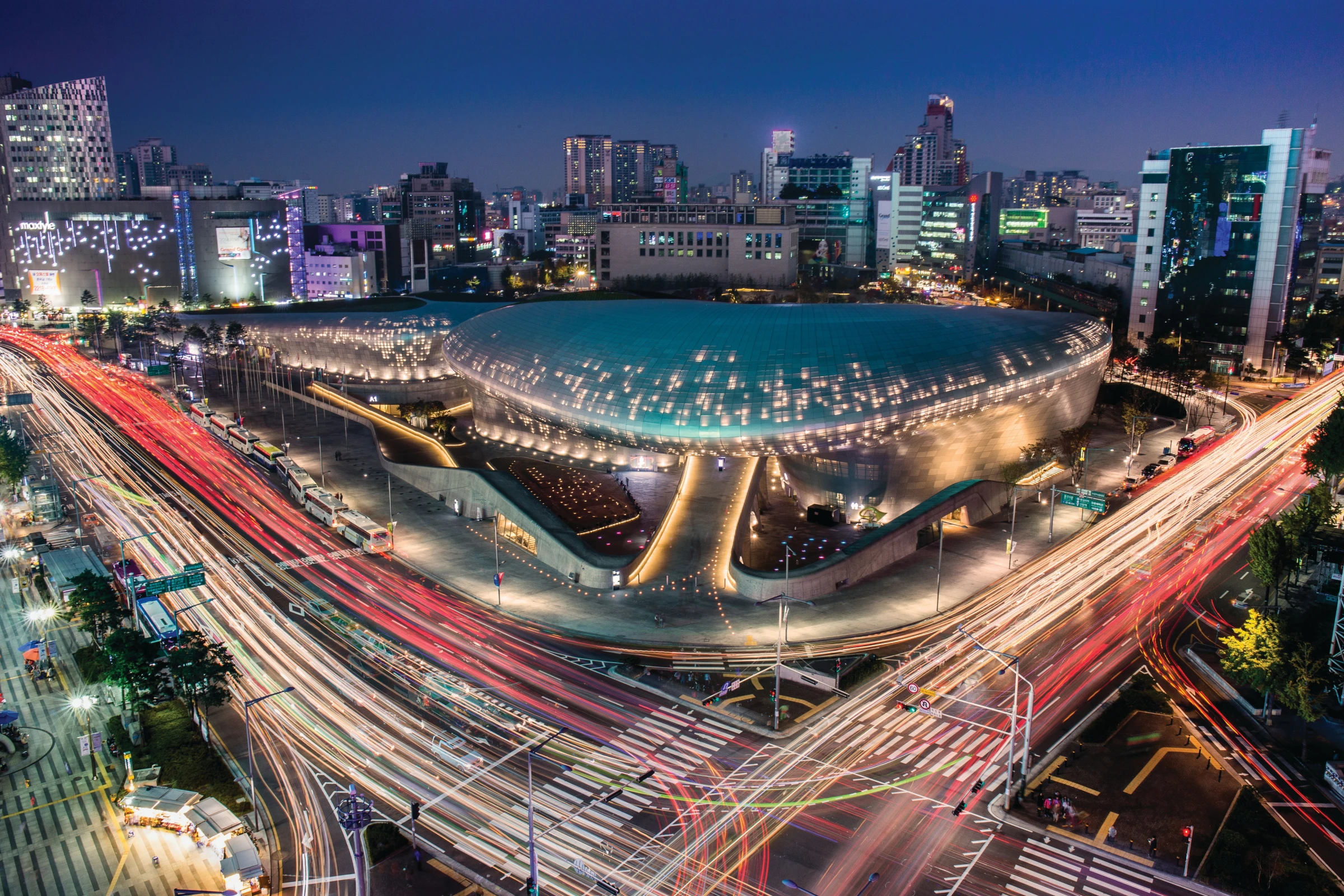
Frieze Seoul will move to Dongdaemun Design Plaza (DDP) for its 2027 edition, leaving its current home at COEX as the convention center undergoes a major redevelopment. The move, announced by Frieze on August 17, sends the fair across the Han river to the curving, aluminium-clad cultural center designed by Zaha Hadid, which opened in 2014 and has become one of Seoul's most recognizable architectural landmarks. The announcement in The Art Newspaper frames the relocation as a response to COEX's redevelopment rather than a strategic pivot, but the choice of DDP carries significant implications for the fair's identity and its position within Seoul's art ecosystem.
DDP is situated across the Han river in the north of the city, about a mile away from Frieze House Seoul, the permanent gallery space the fair established last year. The area is known for design, fashion, and shopping. The building includes Korea's sole public design museum and a history museum. This year it is hosting an edition of Design Miami (1-6 September), which gives DDP a track record with international art and design fairs.
Why DDP Matters
The choice of DDP is not just logistical. Zaha Hadid's building is itself a statement about the kind of cultural institution Seoul wants to project: fluid, futuristic, and globally connected. The building's curving aluminium facade and neo-futurist forms have made it a destination for architecture tourism since its completion, and it sits in Dongdaemun, an area historically associated with the garment trade and 24-hour shopping complexes. Placing Frieze in DDP aligns the fair with a building that signals ambition and contemporary design, rather than with COEX, a convention center that opened in 1979 and has always been more business infrastructure than cultural statement.
Frieze's statement notes that DDP's exhibition halls will give the fair a more concentrated footprint, and that the 2027 edition will be carefully edited as a result, giving each gallery and presentation greater prominence within a single focused environment. This suggests a smaller, more curated fair, which could be a response to broader market conditions or simply a function of the available space. The Dongdaemun Design Plaza's official site lists multiple exhibition halls and event spaces, but the exact square footage available to Frieze has not been disclosed.
The COEX Redevelopment
COEX is undergoing a major redevelopment led by British firm Heatherwick Studios, which will add a modular facade inspired by cabinets of curiosities, as well as renovating the interior spaces. The project is due for completion in 2029. Heatherwick's involvement signals an ambitious redesign, though the convention center's core function as a commercial venue will remain. The Heatherwick Studios project portfolio includes similar large-scale cultural infrastructure projects, and the COEX redesign is likely to be a significant addition to Seoul's built environment when completed.
The fact that Frieze is leaving COEX rather than waiting out the redevelopment tells its own story. A two-year absence from the current venue, combined with the move to a more architecturally distinctive space, gives the fair an opportunity to redefine itself. Whether that redefinition is driven by necessity or strategy, the result is a fair that will look and feel different from the COEX editions that preceded it.
Kiaf Stays Behind
The concurrent art fair Kiaf Seoul, run by the Galleries Association of Korea, will stay at COEX. However, the two organizations will continue to work together, and visitors will still be able to buy a joint ticket. Sunghoon Lee, the president of the Galleries Association of Korea, said in a statement: We wish Frieze Seoul every success in its new venue and I look forward to continuing our strong partnership as we work together to further strengthen Seoul's position as a leading hub for contemporary art in Asia.
The split-venue arrangement could actually benefit both fairs. With Frieze at DDP in the north and Kiaf at COEX in the south, the two fairs create a geographic circuit that encourages visitors to move across the city, engaging with different neighborhoods and galleries in each location. The joint ticket ensures that the audience flows between them. But the arrangement also raises questions about whether the two fairs will diverge in tone and audience, with Frieze occupying the more design-forward, international space and Kiaf maintaining its position in the more traditional commercial venue.
Seoul's gallery ecosystem has been expanding rapidly since Frieze launched its Seoul edition in 2022. The city now hosts major galleries from Europe and the United States alongside a strong domestic gallery scene, and the fair has been a significant factor in raising the city's international profile. The establishment of Frieze House Seoul, a permanent gallery space, signaled a long-term commitment to the market that goes beyond the annual fair. The move to DDP in 2027 reinforces that commitment, placing the fair in a venue that aligns with Seoul's ambitions as a cultural destination rather than merely a commercial one. The building's design credentials, including its sole public design museum, create a context that is more cultural than transactional, which may influence how galleries present their booths and how collectors experience the fair.
What This Means for Seoul's Art Market
Seoul has been positioning itself as a leading hub for contemporary art in Asia, and the Frieze move reinforces that ambition. The city now has a major international fair with a permanent gallery presence (Frieze House Seoul), a concurrent domestic fair (Kiaf), and a new venue that doubles as an architectural destination. The Frieze Seoul fair page lists the 2026 edition at COEX, meaning the 2027 move will be the fair's first venue change since its launch.
The bigger question is whether a more concentrated, edited Frieze at DDP will attract the same caliber of galleries and collectors. A smaller fair can mean more selective participation, which can raise quality but also reduce revenue. The 2027 edition will be the test case. If DDP proves to be a successful venue, the move could cement Frieze Seoul's position as the premier international art fair in the region. If the smaller footprint limits commercial opportunity, galleries may reconsider their commitment. Either way, the move signals that Frieze is willing to reshape the fair in response to both infrastructure changes and market conditions, which is more than most international fairs have been willing to do.
The Asian art fair landscape has been in flux for several years. Art Basel Hong Kong remains the dominant force, but Seoul, Tokyo, and Singapore have all positioned themselves as alternatives or complements. Frieze Seoul's move to DDP could be read as an effort to differentiate itself from the COEX-based Kiaf and from other regional fairs that occupy convention centers. An architecturally significant venue is not a guarantee of success, but it changes the experience of attending a fair in ways that matter to both galleries and collectors. The building itself becomes part of the fair's brand, and DDP's brand, shaped by Hadid's design and its association with fashion and cultural programming, is a strong one. Frieze's official Seoul fair page will need to communicate the venue change clearly to international visitors, many of whom will be navigating the new space for the first time in 2027.
The move also raises practical questions about logistics, capacity, and the fair's ability to accommodate its full program of special sections, talks, and satellite events. DDP's exhibition halls are designed for cultural programming rather than commercial fair booths, which could mean adjustments to booth construction, lighting, and circulation. Galleries accustomed to COEX's convention center infrastructure will need to adapt to a space with different proportions, ceiling heights, and technical capabilities. These are not insurmountable challenges, but they add complexity to an already complex undertaking. Frieze has experience with venue changes, having moved its London fair to different locations over the years, and the organization's operational expertise should smooth the transition. But the 2027 edition will be watched closely by the market as a signal of whether Seoul's art fair ecosystem is maturing or fragmenting. The city has invested heavily in its cultural infrastructure over the past decade, with new museums, gallery districts, and cultural spaces opening across the metropolitan area. The DDP itself has been part of that investment, hosting major exhibitions, fashion weeks, and design events that have drawn international audiences. For Frieze, the move represents an opportunity to align with that broader cultural strategy rather than remaining tied to a convention center whose primary function is commercial trade shows. The fair's identity, since its launch in Seoul in 2022, has been defined in part by its venue, and the shift to DDP will require galleries and collectors to recalibrate their expectations of what Frieze Seoul looks and feels like.
The 2027 edition will also be the first major test of whether an architecturally significant but smaller venue can sustain the commercial energy that an international art fair requires. Collectors who have grown accustomed to the scale and familiarity of COEX may find DDP curving corridors and irregular gallery spaces disorienting, or they may find them refreshing. The answer will determine not just the success of the 2027 fair but the trajectory of Seoul position within the global art market for years to come.