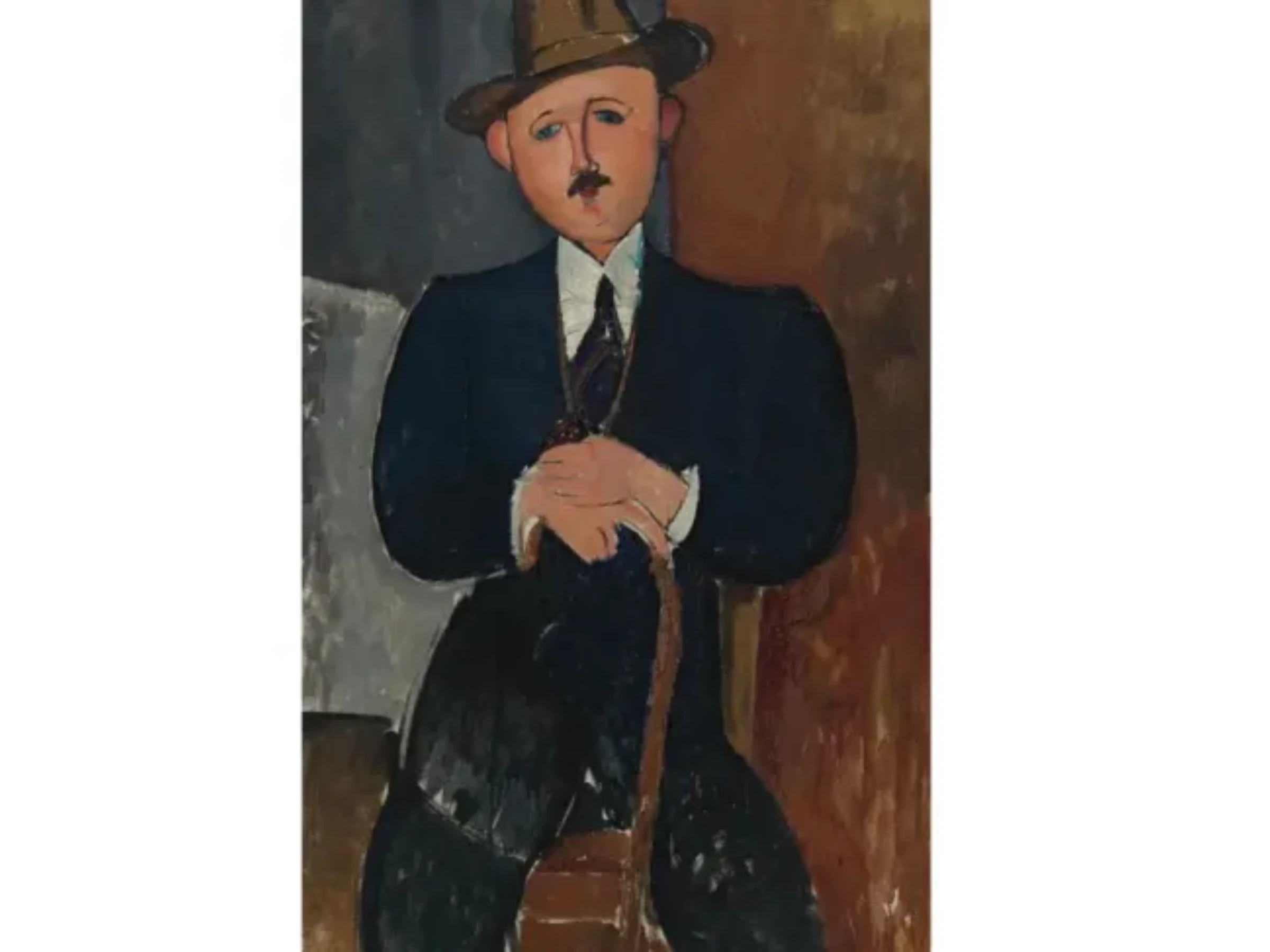
Judge Orders David Nahmad to Return Nazi-Looted Modigliani
Billionaire dealer David Nahmad faces a 30-day deadline to return Amedeo Modigliani's Seated Man with a Cane to the heirs of Oscar Stettiner
The Judicial Mandate for Restitution
In a decisive blow to billionaire art dealer David Nahmad, a New York Supreme Court judge has ordered the immediate return of a masterpiece by Amedeo Modigliani. The painting, titled "Seated Man with a Cane" (1918), is to be delivered within 30 days to the family of Oscar Stettiner, a Jewish antiques dealer who was forced to leave the work behind in his Paris shop while fleeing the Nazi occupation during World War II. This ruling, handed down on June 16, brings a semblance of closure to a legal battle that has spanned eleven grueling years and highlighted the persistent difficulties of recovering Holocaust-looted art from the world's most powerful collectors.
The legal odyssey began in 2011 when Philippe Maestracci, a French farmer and grandson of Stettiner, initiated action to recover the painting. By 2015, the case had reached the New York courts, aided by Mondex, a firm specializing in the recovery of looted art. The stakes were immense: the painting was purchased by the Nahmad family in 1996 for $3.2 million, but its current market valuation is estimated at over $25 million, reflecting both the scarcity of Modigliani's portraits and the high premium placed on works with a documented history of restitution. You can find more details on the court's determination at Artforum.
The complexity of this case lies in the intersection of private property rights and historical atrocity. For many heirs of Holocaust victims, the battle is not merely about financial compensation but about the restoration of a severed lineage. The Modigliani, as an object of desire for the global elite, has spent decades transitioning from a stolen artifact to a legitimate asset in a high-end portfolio. This transition is often facilitated by a lack of rigorous provenance checks at the point of sale, a systemic failure that continues to plague the secondary art market. The judicial order serves as a stark reminder that the passage of time does not extinguish the claim of the original owner when the acquisition was rooted in systemic theft.
The Nahmad Defense and Identification Disputes
Throughout the litigation, the Nahmads employed a strategy common in high-stakes provenance disputes: questioning the identity of the work itself. The defense argued that the painting in their possession was not the same Modigliani once owned by Oscar Stettiner. This line of reasoning was pursued aggressively, even after an April court decision had already determined that the work rightfully belonged to the Stettiner estate. The Nahmads filed a motion for reconsideration, attempting to introduce fresh eyewitness testimony to cast doubt on the painting's identity.
According to the Nahmads' filings, a godson of Jean Van der Klip—the individual who owned the painting before its sale to Christie's—recalled a Modigliani painting that was "standing, not seated," and lacked a cane. They further bolstered their claim by referencing research from Marc Restellini, a renowned expert on Modigliani. Such tactics are often viewed by critics of the art market as "provenance scrubbing" or strategic delay, designed to exhaust the resources of the original owners' heirs. The persistence of these claims, even in the face of judicial findings, underscores the opacity and fragility of documentation in the mid-century art trade. For further context on the expert's role, refer to the The Art Newspaper reports on Modigliani scholarship.
This dispute over "identity" is a recurring motif in looted art cases. By introducing slight discrepancies in descriptions or relying on the faulty memories of witnesses from decades ago, defendants can create a "reasonable doubt" that stalls legal proceedings. In the case of the Nahmads, this strategy has been deployed with surgical precision, turning a clear-cut case of restitution into a debate over the physical attributes of a canvas. The court's rejection of this defense signals a growing impatience with the use of archival ambiguity to protect illicit gains. It suggests that the burden of proof is shifting, placing more responsibility on the current possessor to prove a clean title rather than on the victim to prove an exact match.
Systemic Delays in Holocaust Restitution
The case of the Modigliani is a microcosm of the broader struggle for restitution. Many families of Holocaust victims face a daunting uphill battle when confronting the "big names" of the art world. The use of holding companies, such as International Art Center—the entity that purchased the work at Christie's and stored it in Switzerland—often creates a layer of corporate anonymity that complicates legal discovery. The Swiss storage of the work further added a layer of jurisdictional complexity to the proceedings, as freeports often act as legal black holes for high-value assets.
The psychological and financial toll on the heirs is significant. Philippe Maestracci's pursuit of the painting has lasted more than a decade, a timeframe that reflects the systemic inertia of the legal system when dealing with billionaire defendants. The contrast between the $3.2 million purchase price in 1996 and the $25 million current value illustrates how looted art becomes a speculative asset, where the increase in value often outpaces the legal momentum for its return. This tension is central to the ongoing debate over the ethics of the secondary art market and the responsibility of auction houses like Christie's in vetting provenance before a sale. Similar battles for restitution are often documented in the ARTnews archives, where the intersection of law and aesthetics is frequently contested.
Furthermore, the role of the "expert" in these cases is often compromised. Specialists in a particular artist are frequently employed by the galleries or collectors who stand to lose the work. This creates a conflict of interest where the definition of "authenticity" or "identity" is skewed toward the interests of the holder. The Nahmads' reliance on Marc Restellini is a prime example of how academic expertise can be weaponized in the service of asset preservation. When an expert's opinion is used to override a clear chain of custody, the integrity of the entire provenance system is called into question, necessitating a more independent, judicial approach to verification.
The financial burden of these lawsuits is often an insurmountable barrier for the heirs. Legal fees in New York Supreme Court can quickly reach hundreds of thousands of dollars, and the process of tracking a work through multiple international borders and shell companies requires expensive archival research. Mondex, the firm that aided Maestracci, operates on a model that recognizes this gap, but many other families are left without the means to pursue their claims. This dynamic ensures that the art market remains a space where wealth can effectively shield a stolen object from its rightful owner, creating a tiered system of justice where the ability to recover one's heritage is dependent on one's current financial status. This struggle highlights the urgent need for an international treaty on looted art that bypasses national statues of limitation.
The Future of the Modigliani and the Precedent for Restitution
Despite the judge's order, the painting may not be returned immediately. David Nahmad has informed The Art Newspaper that he intends to appeal the ruling, claiming it was made without sufficient consideration of the new eyewitness testimony. His attorney's strategy appears to be one of attrition. As Phillip C. Landrigran, attorney for Maestrac la, pointed out, such appeals can extend the timeline by years, effectively denying the heirs the use and ownership of their heritage for another generation.
Whether this case ends in a quick handover or another five years of litigation, it sets a critical precedent. The court's willingness to see through the identity-dispute defense suggests a shifting tide in how judges handle looted art cases. As the art world moves toward greater transparency, the ability of collectors to hide behind "misidentification" is diminishing. The resolution of the Stettiner case will be watched closely by other families seeking the return of their ancestral treasures, signaling whether the rule of law can finally override the influence of the art market's most powerful players.
This case also highlights the need for a global, centralized registry of looted art that is independent of the commercial interests of auction houses. Without such a system, the recovery of works like the Modigliani will continue to rely on the initiative and financial resources of individual heirs. The ultimate victory in this case will not be the recovery of a single painting, but the affirmation that the rights of victims outweigh the speculative value of a masterpiece. As we look toward future restitutions, the Modigliani case stands as a testament to the endurance of memory and the slow, painful process of correcting historical theft in the same halls where that theft was once celebrated as "provenance."
The Modigliani case also exposes the moral failure of the "good faith purchaser" defense. For decades, the art market has protected buyers who claim they did not know a work was looted, even when the provenance was suspiciously vague. By ordering the return of the work regardless of the Nahmads' initial purchase intent, the court is effectively declaring that stolen art can never be legally "cleansed" by a series of sales. This is a revolutionary shift in the legal landscape of the art world, suggesting that the original theft creates a permanent stain on the title that no amount of money or time can erase.