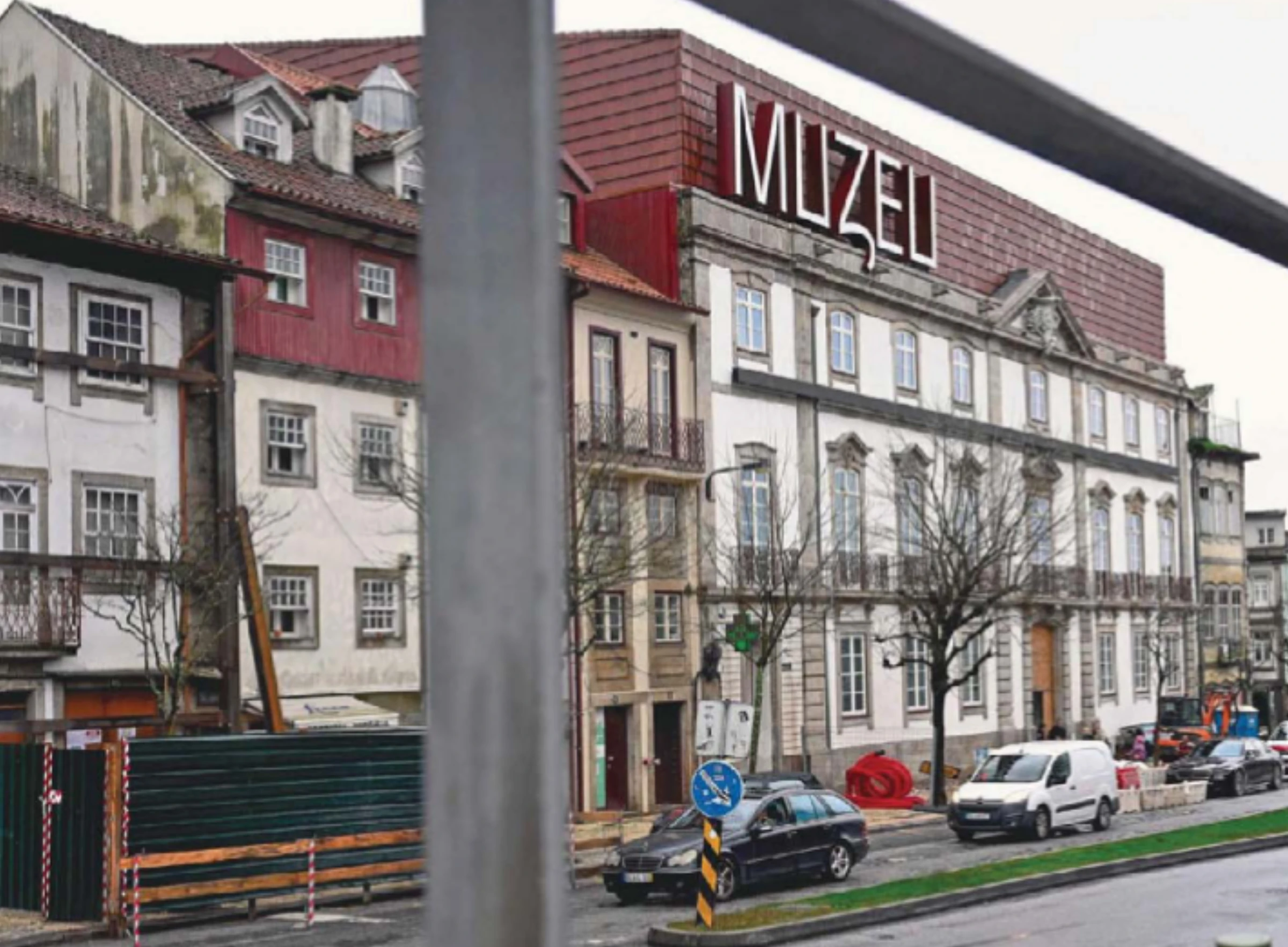
Muzeu DST Opens in Braga With a Worker-First Model for Private Museum Infrastructure
A new museum backed by Portugal’s DST Group opens in Braga with free-entry policies, worker training, and a programming model that treats labor culture as institutional policy.
Portugal has added a new institutional player to its contemporary art map, and the most consequential detail is not the opening date, the architecture, or the collection size. It is governance. Muzeu, Thought and Contemporary Art DST, opens in Braga as a museum built out of a private industrial group’s long-running cultural infrastructure, but structured around labor access rather than donor spectacle. The project comes from DST Group, which has framed the museum as part of the company’s internal and civic ecosystem, not as a detached branding exercise.
The timing is deliberate. The museum opens to workers first before broad public access, with opening-week free admission and a symbolic closure on International Workers’ Day. That sequencing matters in a European museum climate where institutions are often under pressure to prove social relevance while still relying on conventional patron structures. Muzeu’s leadership is explicitly arguing for a different baseline: cultural infrastructure as a component of labor policy, education, and democratic participation. The institutional statement published by <a href="https://www.dstsgps.com/press-room/news/7-muzeu-a-factory-of-the-future-takes-shape/?page=1&startDate=&endDate=&category=" target="_blank" rel="noopener">DST’s own newsroom supports that framing.
The inaugural exhibition draws from a collection of more than 1,500 works and includes international names alongside Portuguese artists. According to reporting, the opening checklist includes more than 100 works by 96 artists. The curatorial argument is built around political modernity and social futures, and that is reinforced architecturally by the reuse of a former courthouse in Braga’s historic center. The building was transformed by Portuguese architect José Manuel Carvalho Araújo into four levels of exhibition space with a top-floor auditorium designed for active programming, not occasional gala use.
One reason this opening deserves market attention is that DST is not entering culture cold. The group has built a layered cultural apparatus over years: biennial support, photography and literature prizes, public art initiatives, educational partnerships, and collecting through in-house channels. Those mechanisms can create continuity where many private museums struggle after launch cycles. For collectors and curators, the practical question is whether Muzeu can convert this internal continuity into stable public programming and sustained scholarly output in northern Portugal, where institutional density differs from Lisbon.
There is also a harder policy question underneath the opening narrative. If a private employer ties museum access, training, and cultural literacy to workplace life, what obligations follow for governance transparency, curatorial independence, and labor representation? Muzeu’s proposition is ambitious precisely because it blends categories that are usually kept separate: employer, collector, and civic institution. The museum will be judged not by opening rhetoric but by how it handles those tensions over the next 24 months, especially as public debate across Europe intensifies around funding, political speech, and institutional accountability.
For now, Muzeu enters the field with a model that many institutions talk about but few operationalize: culture as infrastructure, not programming garnish. If its leadership sustains open access, public argument, and institutional rigor, Braga could become a case study for how private-sector museum projects move beyond prestige architecture into measurable social utility. In a cycle where museum openings often blur into interchangeable announcements, this one has a clearly legible thesis and a testable institutional claim.
There is also a regional competitive dimension. Braga sits within a broader Portuguese cultural circuit that is increasingly interconnected with Porto and Lisbon programming calendars, yet still uneven in terms of collection access, production budgets, and international curatorial visibility. A museum with DST’s resources can either consolidate local infrastructure or simply absorb attention without building ecosystem depth. The early indicators to watch are practical: commissioning budgets for living artists, publication cadence, partnerships with independent spaces, and whether education programming is staffed as core institutional work instead of outsourced temporary labor.
For private collectors, Muzeu’s launch may influence acquisition behavior in Portugal because it normalizes a model in which industrial capital presents itself as a cultural long-term steward rather than only a lender or donor. That can increase competition for significant works, but it can also widen opportunities for co-commissioning and regional loan circuits if governance is handled openly. The museum has already positioned itself as a place for debate around democracy and social conditions. If that public commitment survives beyond opening season, Muzeu could matter less as a single new venue and more as a template for how corporate collections become accountable public institutions.
<
p
>
T
h
e
m
u
s
e
u
m
a
l
s
o
e
n
t
e
r
s
a
c
i
t
y
w
i
t
h
g
r
o
w
i
n
g
c
u
l
t
u
r
a
l
i
n
f
r
a
s
t
r
u
c
t
u
r
e
l
e
d
b
y
l
o
c
a
l
a
n
d
r
e
g
i
o
n
a
l
p
u
b
l
i
c
a
c
t
o
r
s
.
F
o
r
i
n
t
e
r
n
a
t
i
o
n
a
l
r
e
a
d
e
r
s
t
r
a
c
k
i
n
g
i
n
s
t
i
t
u
t
i
o
n
a
l
g
e
o
g
r
a
p
h
y
i
n
P
o
r
t
u
g
a
l
,
B
r
a
g
a
’
s
m
u
n
i
c
i
p
a
l
d
e
v
e
l
o
p
m
e
n
t
s
t
r
a
t
e
g
y
a
n
d
i
t
s
p
r
o
x
i
m
i
t
y
t
o
P
o
r
t
o
m
a
k
e
i
t
a
u
s
e
f
u
l
t
e
s
t
c
a
s
e
f
o
r
d
e
c
e
n
t
r
a
l
i
z
e
d
c
u
l
t
u
r
a
l
g
r
o
w
t
h
b
e
y
o
n
d
L
i
s
b
o
n
.
S
e
e
<
a
h
r
e
f
=
"
h
t
t
p
s
:
/
/
w
w
w
.
c
m
-
b
r
a
g
a
.
p
t
/
e
n
"
t
a
r
g
e
t
=
"
_
b
l
a
n
k
"
r
e
l
=
"
n
o
o
p
e
n
e
r
"
>
B
r
a
g
a
M
u
n
i
c
i
p
a
l
i
t
y
<
/
a
>
f
o
r
c
i
v
i
c
p
l
a
n
n
i
n
g
c
o
n
t
e
x
t
.
<
/
p
>