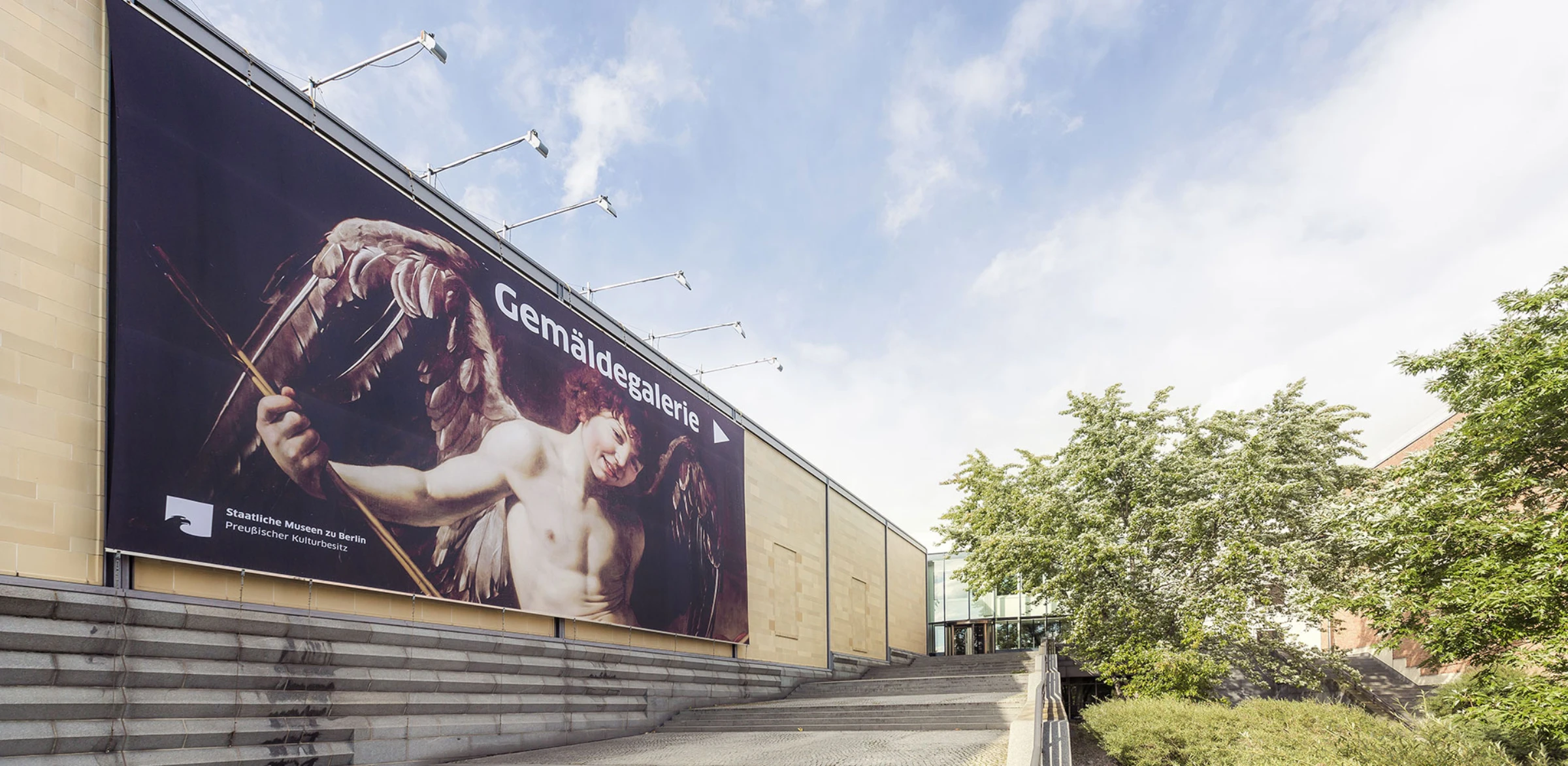
Berlin's Gemäldegalerie Digitizes Lost-Works Archive, Reopening a Major WWII Art-History Gap
The museum has completed high-resolution digitization of glass negatives documenting hundreds of paintings destroyed in 1945 fires.
Berlin's Gemäldegalerie has completed a major digitization project that brings high-resolution access to photographic records of paintings destroyed in 1945, including works by Rubens, Veronese, van Dyck, and paintings attributed to Caravaggio. The project centers on a surviving glass-negative archive, photographed systematically from the 1920s through the final years of the war, and now prepared for public access in the museum's online systems.
The institutional stakes are large. Wartime loss records often survive as sparse catalog entries or small printed reproductions that limit attribution work, provenance reconstruction, and conservation history. By contrast, high-quality negatives can preserve surface detail, compositional structure, and documentary clues that become legible only when scholars can zoom, compare, and download.
The historical background is well known but still difficult to absorb: hundreds of large-format works were stored for protection in the Friedrichshain flak tower near the end of the war, then lost in fires in May 1945. Those losses created one of the most consequential absences in any Old Master collection. What the current project does is not restitution in a legal sense, but a restoration of research conditions.
The museum's technical method is also notable. Rather than moving fragile plates through industrial scanning workflows, the team re-photographed negatives in controlled archive conditions, then processed files for database publication. That conservative approach reduces handling risk while still producing usable scholarly material. It is the kind of pragmatic infrastructure work institutions often underfund because it lacks spectacle, even though it yields long-term public value.
The core institutional framework can be followed through Gemäldegalerie within Staatliche Museen zu Berlin. As the files move into searchable interfaces, the project will likely become a reference model for other museums with analog archives tied to wartime displacement and destruction.
For provenance research, the implications are immediate. Museums routinely receive inquiries from owners, heirs, and researchers who suspect a surviving work might correspond to a painting listed as lost. Better images cannot settle every claim, but they narrow uncertainty and improve screening. That alone can prevent years of circular speculation.
For curators and historians, digitized negatives can also alter narratives about an artist's development, workshop practice, or regional circulation. Works once omitted from teaching collections due to poor visual documentation can re-enter comparative analysis, especially when paired with existing holdings in SMB collection databases and related archives.
The project arrives at a moment when museums are being pushed to prove that digitization budgets serve more than audience metrics. Here, the answer is clear: preservation, accountability, and research access converge in one initiative. The archive becomes usable without exposing fragile originals to repeated handling, and the public record of wartime loss becomes more transparent.
The broader lesson for institutions is straightforward. Cultural memory is not preserved by declarations alone; it is preserved by technical labor, catalog discipline, and publication standards that make evidence durable. Berlin's effort does not close the wound of 1945, but it materially changes what can be known, taught, and investigated in 2026.
This initiative should also be understood as a preservation strategy for future crises. Once fragile analog records are digitized and redundantly stored, institutions are less vulnerable to localized damage, staffing turnover, and catalog fragmentation. That resilience matters for museums managing multi-century collections under increasingly volatile political and environmental conditions.
For the public, the project changes the ethics of access. Loss archives should not remain visible only to specialists who can travel or secure permissions through opaque channels. Publishing these records in navigable digital form expands who can study, teach, and question the historical record, and that expansion is itself a curatorial achievement.
As more institutions confront unresolved losses from war, expropriation, and displacement, Berlin's work offers a realistic benchmark: stabilize the archive, digitize at quality, publish with context, and keep improving the record over time.