Mexico Moves to Stop Colorado Antiquities Sale
Mexico is trying to halt a Colorado sale of 80 artifacts, testing how hard source nations can push against US antiquities auctions in real time
Mexico’s Colorado Challenge Targets a Familiar Market Weak Point
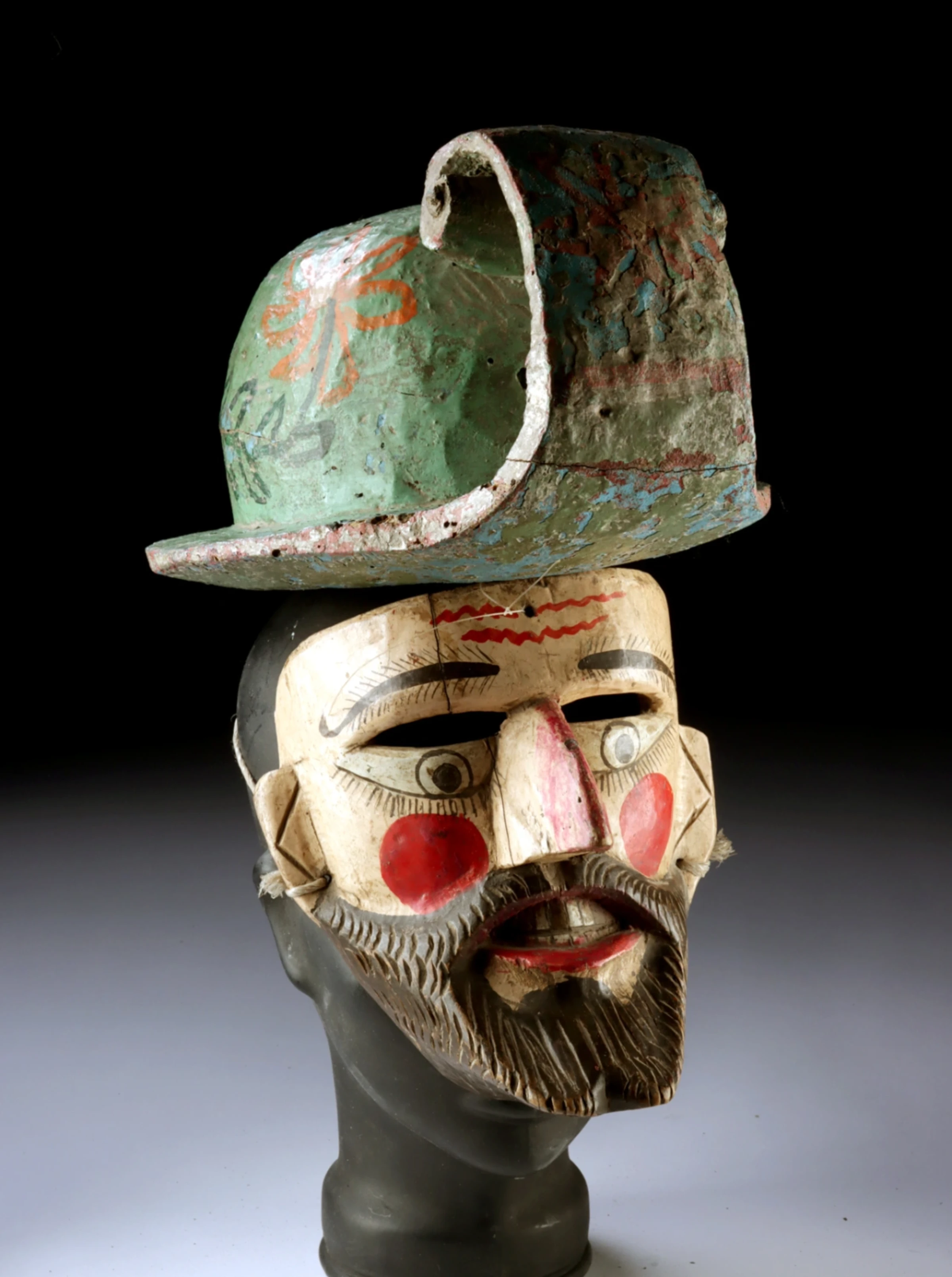
Mexico has moved to stop an auction in Colorado that includes 80 artifacts of Mexican origin, forcing a local US sale into the center of a long-running fight over who gets to define lawful circulation in antiquities. According to ARTnews, the sale was organized by Artemis Fine Arts in Louisville, Colorado, under the title “Fine/Visual Art, Ancient, Ethnographic Art,” and Mexico’s National Institute of Anthropology and History, or INAH, flagged the works as part of its heritage protection mandate. On one level this is a straightforward diplomatic protest. On another, it exposes a structural truth about the market: source countries now monitor regional auction houses almost as closely as they watch blue-chip firms in New York, London, or Paris. The era in which smaller sales could pass below the geopolitical radar is over. That matters because local auction rooms often function as the most porous part of the trade, where documentation standards, historical due diligence, and legal risk tolerance can vary more widely than major players like to admit.
The immediate facts are stark enough. Mexico is not objecting to a single star lot but to a broad group of objects, which suggests a systemic concern rather than a one-off ownership dispute. INAH’s intervention also reminds buyers that a country can challenge the legitimacy of a sale even if the lots are physically outside its territory and even if an auction house believes it has met ordinary commercial norms. That tension, between market custom and patrimony law, is where many of today’s most consequential heritage conflicts now sit. Anyone pretending this is simply a niche legal quarrel is missing the scale of the shift.
Why INAH Has Become a Permanent Presence in Auction Oversight
INAH is not an occasional protest machine. It is a standing state institution charged with defending archaeological heritage and asserting Mexico’s claim over objects considered part of the national patrimony. That means auction interventions are not symbolic side projects; they are one of the agency’s routine tools. Over the last several years Mexico has repeatedly contested sales in Europe and the United States, arguing that pre-Hispanic objects cannot be reduced to ordinary collectibles because they are embedded in living national and Indigenous histories. From the Mexican state’s perspective, once an object falls into the category of archaeological heritage, the burden is not merely to establish marketability but to answer a more basic question: how did it leave the country, under what legal framework, and with what chain of custody?
This is where the Colorado dispute acquires broader importance. Regional auctioneers sometimes rely on estate histories, older private holdings, or inherited collections to justify consignments. That may satisfy a conventional buyer who wants a plausible ownership story. It does not automatically satisfy a source nation pursuing repatriation or cancellation. Mexico’s strategy, visible again here, is to widen the zone of accountability by confronting the market before the hammer falls rather than after an object disappears into another private collection. That proactive posture mirrors the logic behind other restitution battles, including the increasingly public fights over Nazi-looted art, such as the case covered earlier by artworld.today in our report on the restituted Georg Kolbe fountain. The legal histories differ, but the market lesson is comparable: weak provenance has become harder to hide inside respectable sales language.
The choice of Artemis Fine Arts also matters. Houses that specialize in ancient or ethnographic material often occupy a delicate space between scholarship, collecting enthusiasm, and commercial urgency. Their cataloguing language can be precise, even educational, yet the basic business model still depends on turning contested cultural material into tradable lots. When a state agency objects, it forces that model into public view. Collectors who once treated these disputes as background noise now have to reckon with reputational risk, resale risk, and the possibility that a seemingly ordinary purchase could become effectively unplaceable later.
The Auction House Problem Is Not Just Legal, It Is Cultural
The cultural politics here are harder than the legal paperwork. Antiquities auctions have long benefited from a language of admiration: stewardship, preservation, connoisseurship, rescue. That rhetoric frames private ownership as a form of care. Source nations increasingly reject that premise, especially when the objects in question emerge from archaeological traditions that were historically stripped, exported, and aestheticized for foreign buyers. Mexico’s challenge in Colorado is therefore about more than stopping one sale. It is about refusing the market’s preferred moral vocabulary. If the state can recast these objects not as admired survivors but as alienated heritage, the terms of debate change fast.
This is why even a modest-looking sale in Colorado can become a serious test case. The US has many venues through which culturally sensitive objects can circulate, from specialist dealers to smaller auction houses to online platforms. Enforcement is uneven, and the market often banks on fragmentation. A diplomatic protest reassembles that fragmentation into a single story of extraction and commodification. Once that story lands, the auction house must defend not just provenance files but its own role in legitimizing demand. That is a more awkward conversation than the trade likes to have, especially at a moment when museums, trustees, and major collectors are far more alert to restitution optics than they were a decade ago.
There is also a public-facing asymmetry. Mexico can articulate a clear principle that resonates beyond legal specialists: archaeological heritage is not an ordinary category of property. Auction houses, by contrast, tend to answer in narrower procedural terms about ownership records, consignor representations, and compliance. Those are necessary responses, but they rarely win the larger moral argument. In 2026, moral framing is not peripheral to the art market. It drives outcomes.
There is a policy dimension here that deserves more attention than it usually gets. Once governments like Mexico normalize immediate auction interventions, they also educate the market. Consignors learn that older collection labels are not magic shields. Buyers learn that categories like “ethnographic art” and “ancient art” do not neutralize national patrimony claims. And auction houses learn that a challenge issued by INAH or by the Mexican Ministry of Culture can travel far beyond one sale catalogue. It can affect future consignments, press coverage, and the willingness of institutions to touch comparable material. In that sense, every intervention produces both an immediate dispute and a longer educational aftershock for the trade.
What Buyers, Museums, and Dealers Should Watch Next
The immediate question is whether the Colorado sale proceeded unchanged, was modified, or was paused under pressure. But the more important question is what this incident teaches everyone downstream. For buyers, the warning is obvious: if an object sits in a category frequently challenged by source nations, the bargain is never just price plus premium. It includes litigation risk, reputational drag, and the possibility that future lending, resale, or publication becomes difficult. For museums, especially smaller institutions tempted by donations from private antiquities collections, the case is another reminder that acquisition due diligence cannot be outsourced to prior market circulation. If a sale was public, that does not mean it was uncontroversial.
Dealers and auction houses should also notice the tempo. Source nations are faster, more digitally alert, and more willing to intervene in real time than before. That shift rewards firms that can produce deep documentation quickly and punishes those that lean on habit or opacity. Even when an object is not seized or formally repatriated, public objection can depress bidding, limit future scholarship, and turn a seemingly attractive consignment into a reputational liability. The trade may dislike that environment, but it is now the operating environment.
There is also a strategic choice facing US market participants. They can keep treating these objections as episodic public-relations flare-ups, or they can acknowledge that the rules of commercial comfort have changed. Houses that operate in antiquities will increasingly need publication-grade provenance notes, clearer export histories, and a public explanation for why an object is ethically saleable even when legally consignable. Those are not identical standards. The firms that survive the next phase of scrutiny will be the ones willing to address both.
What comes next is unlikely to be a clean resolution. Heritage disputes usually produce a mix of legal maneuvering, negotiation, and selective withdrawal rather than a dramatic single verdict. Still, Mexico’s Colorado intervention makes one thing plain. The center of gravity in antiquities ethics keeps moving away from the market’s old assumption that circulation itself confers legitimacy. In 2026, circulation invites scrutiny first, and only then asks whether legitimacy can be proved.
The museum sector should pay attention here because private-market disputes often become future institutional headaches. Objects that survive a contested sale can reappear years later as promised gifts, estate donations, or long-term loans. At that point a museum inherits not just an object but the unresolved ethical argument attached to it. That is one reason why aggressive source-country interventions are changing collection policy far beyond the auction room itself. They are rewriting what responsible stewardship looks like before an object ever reaches a museum registrar.