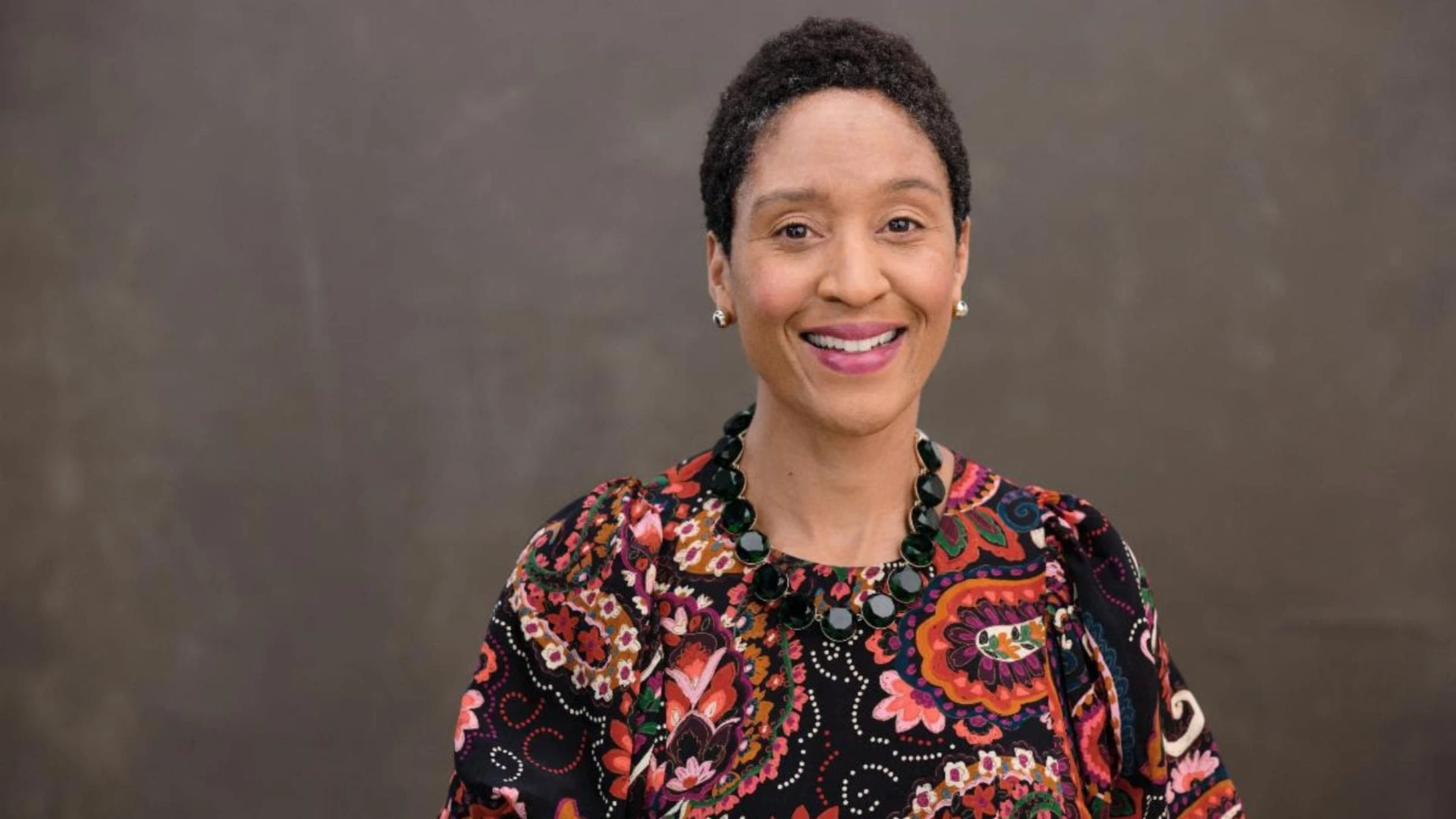
MoMA Names Makeda Best to Lead Photography in 2026
MoMA's appointment of Makeda Best puts a scholar of labor, race and visual culture in charge of one of photography's most influential museum departments
MoMA has chosen a curator whose work treats photography as social evidence, not just a canon of masterpieces
The Museum of Modern Art has named Makeda Best as its next Joel and Anne Ehrenkranz Chief Curator of Photography, with the appointment taking effect in September. The immediate facts were first reported by Artforum and confirmed in MoMA's own official announcement. Best arrives from the Oakland Museum of California, where she has served as deputy director of curatorial affairs since 2023, after earlier roles at the Harvard Art Museums and the California College of the Arts. The move fills one of the most visible curatorial jobs in photography after several years of interim leadership following Clément Chéroux's departure for the Fondation Henri Cartier-Bresson in Paris.
This matters because MoMA's photography department is not just another museum silo. It helped define the medium as a museum category in the twentieth century and still exerts outsize influence over exhibition history, collecting priorities, publication agendas, and the broader terms through which photography enters art history. When MoMA changes leadership here, other institutions pay attention. Collectors pay attention. Artists pay attention. Scholars pay attention. The department's decisions ripple far beyond Midtown, shaping what kinds of photographic practice appear central, timely, and institutionally secure.
Best's record suggests a department that may widen its frame rather than simply rotate the canon
Christophe Cherix, MoMA's director, praised Best in the museum's statement for crossing into sociology, environmentalism, labor, performance, and civic life. That language is unusually revealing. It points toward the substance of Best's scholarship, which has consistently treated photographs as tools for understanding power, work, race, and collective memory rather than as isolated aesthetic trophies. At Oakland she oversaw curatorial programming across the museum. At Harvard she led photography within a broader reinstallation project. Her 2020 book on civil rights era military imagery and her later exhibition work showed a scholar interested in how pictures circulate through institutions, archives, and public argument.
That profile makes her a strong fit for a department that could easily drift into comfort. MoMA's collection is incomparable, but large collections can become self-confirming machines. They can keep proving that they were right in the past instead of asking what the medium means now. Best's track record suggests a more porous approach, one that looks at photojournalism, vernacular images, documentary practice, Black visual culture, and photographic systems of knowledge alongside the blue-chip history the museum already owns in abundance. If she succeeds, the department may become less a hall of settled masterpieces and more a site where photography's political and social uses are argued through exhibitions and acquisitions alike.
The appointment also lands at a moment when museums are rethinking how photography functions inside contemporary institutions
Photography departments face a structural problem in 2026. The medium is everywhere and nowhere at once. Museums still inherit a modernist model in which photography is a specialized department with its own collecting history, yet the most compelling current work spills into installation, moving image, performance, publishing, social practice, and digital circulation. Best's own public statements acknowledge that complexity. In MoMA's release she describes photography as essential to understanding who we are as a society, a concise claim that turns the medium away from connoisseurship alone and toward public literacy. That is a smart institutional position at a time when image culture shapes politics, labor, surveillance, protest, and daily life.
MoMA has already been edging in this direction. The museum's recent exhibition program has emphasized expanded histories and media crossover, while its photography collection page foregrounds the department's long timeline and educational mission. Best now inherits the challenge of converting that rhetoric into durable programming choices. Which artists get collected? Which archives get prioritized? Which historical narratives are expanded, and which are finally retired? Those decisions will determine whether MoMA's talk of photography's civic role becomes a real curatorial shift or simply a polished hiring narrative.
There is also a practical leadership dimension. Best is not being hired just to mount elegant shows. She will oversee acquisitions, loans, publications, gallery installations, and a department whose history can be both prestigious and constraining. The post requires administrative authority as much as intellectual clarity. Her experience at Oakland, a museum where curatorial work is closely tied to public-facing institutional strategy, may prove as important as her academic credentials. MoMA does not need another pure specialist. It needs someone who can align scholarship, collections, staffing, and public relevance inside a very large machine.
That administrative test is easy to underrate because curatorial hiring is usually discussed in terms of taste and ideas. In reality, the chief curator of photography at MoMA is managing tempo as much as content. The department must balance the demands of a permanent collection that anchors the museum's history, a global contemporary field that moves quickly, and audiences whose familiarity with photography ranges from highly specialized to completely casual. Best will have to decide how often the department leans into scholarship, when it uses recognizable names to draw broad attention, and how it handles the conservation and display issues that come with a medium spanning fragile vintage prints and newer production forms. Leadership here is not just about vision. It is about sequencing, priorities, and the discipline to make an institutional worldview legible year after year.
That means the appointment will be judged in mundane but decisive places: wall labels, acquisition lists, publication choices, and whether the department can connect historical material to the flood of contemporary image debates without sounding opportunistic. Curators at this level are always writing history in installments. Best now has the chance to determine which installments MoMA thinks the field most urgently needs.
What MoMA gains is not neutrality but a point of view about what photography should do next
Every senior curatorial appointment is sold as excellence, experience, and fit. The more interesting question is what kind of argument the institution is making through the hire. In this case the argument seems fairly clear. MoMA could have chosen a safer candidate defined mainly by market-friendly taste or by stewardship of an already accepted canon. Instead it selected a curator whose reputation is tied to interpretation, context, and the politics of images. That does not make the choice radical. It does make it directional. The museum is signaling that photography's future relevance lies in how it connects formal history to contemporary social meaning.
That direction has consequences. It may strengthen ties between the photography department and adjacent fields such as architecture, design, film, and contemporary art. It may produce a more serious engagement with institutional photography histories beyond Europe and the United States. It may also intensify debate over what belongs in a photography department at all. Some traditionalists will want a steadier emphasis on masterpieces, vintage prints, and the conservation of already consecrated histories. Others will push for the department to move even more aggressively into networked image culture, social archives, and under-collected communities. Best will be judged by how sharply she can navigate those pressures without flattening the department into consensus programming.
Readers who followed our recent guide to photography market signals will recognize the larger pattern. The medium's institutional standing is being renegotiated at the same time that collectors, fairs, and museums are all trying to define what counts as photographic seriousness after years of digital saturation. MoMA's hire is therefore not just a personnel update. It is a statement about where one of the field's most powerful institutions believes authority in photography should come from now.
What comes next is the real test: acquisitions, exhibitions, and whether the museum takes its own rhetoric seriously
Best does not fully take the department over until September, which means the clearest signals will come later: the first acquisitions she champions, the first exhibition projects she advances, the balance she strikes between twentieth century holdings and newer photographic practice, and the extent to which she uses MoMA's platform to widen the conversation around image literacy. Those choices will reveal whether the museum intends a genuine recalibration or a more modest refresh of its public image.
For now the appointment looks like an intelligent move by a museum that understands photography can no longer be defended on formal prestige alone. It has to be argued as a medium that helps audiences read institutions, histories, and public life. Best has spent years making exactly that case. If MoMA lets her do the job in full, the department could become less predictable and more necessary. That would be good not only for the museum, but for a field that too often mistakes inherited authority for present-day urgency.
The hire also arrives at a moment when museums are under pressure to justify why specialized departments still matter inside multidisciplinary institutions. Best's success or failure will therefore be watched as a referendum on more than her own program. Can a photography department remain distinct without becoming insular? Can it defend medium-specific knowledge while also engaging the broader politics of images? MoMA has effectively bet that the answer is yes, provided the department is led by someone who treats photography as a way of thinking through society rather than merely arranging a sequence of masterpieces. That is the wager behind the announcement, and it is why the appointment deserves more than a one-day personnel headline.