Louvre Sends 26 Islamic Art Masterpieces to Smithsonian
The Louvre loans 26 Islamic art treasures to the Smithsonian's National Museum of Asian Art in a historic first US tour opening September 26
A Historic Loan Between Two Cultural Giants
The Musee du Louvre in Paris has loaned 26 artworks from its Islamic art collection to the Smithsonian Institution for the exhibition From the Louvre: Masterpieces of Islamic Art, which opens September 26 at the National Museum of Asian Art in Washington, D.C. and runs through January 18, 2027. This marks the first time any of these works will be displayed in the United States, and the National Museum of Asian Art serves as the exhibition's only American venue. The loan represents one of the most significant cultural exchanges between French and American museums in recent years and underscores the growing prominence of Islamic art within mainstream museum programming.
The exhibition encompasses paintings, metalwork, jade, ceramics, glass, and architectural elements from the seventh through nineteenth centuries, created across Islamic regions stretching from modern-day Spain to India. The geographic and temporal range of the works reflects the Louvre's commitment to presenting Islamic art as a continuous tradition spanning multiple civilizations rather than a collection of disconnected regional artifacts. By bringing these objects to an American audience, the Smithsonian and the Louvre are collectively advancing a vision of Islamic art as a foundational component of global cultural heritage, one that has historically been underrepresented in US museum collections relative to its artistic significance and historical reach.
Masterpieces of Metalwork and Mughal Jade
Among the treasures traveling to Washington is the Baptistery of Saint Louis, a brass basin inlaid with silver and gold that was crafted in fourteenth-century Syria and Egypt. The basin holds a remarkable European provenance: it was later used in France to baptize King Louis XIII, giving it a dual identity as both an Islamic masterpiece and a French royal object. The basin's complex history encapsulates the ways in which Islamic artworks have circulated through European institutions, acquiring new meanings and associations as they moved across cultures and centuries. Its inclusion in the Smithsonian exhibition provides an opportunity to examine how an object's significance shifts depending on the context in which it is displayed and the audience that encounters it.
Two jewel-embedded ivory pen cases thought to have been commissioned by the seventeenth-century Mughal emperor Jahangir are also among the loaned works. The pen cases were acquired in 1912 by Louis Cartier, who used them as reference pieces for his jewelry designs. This detail highlights the cross-pollination between Islamic decorative arts and European luxury craftsmanship, a theme that runs throughout the exhibition. The pen cases also illustrate the role of private collectors and commercial figures in shaping the trajectory of Islamic art objects, from their original creation to their eventual entry into museum collections. The Artforum report on the exhibition notes that these objects were originally enjoyed by a select few before entering the Louvre, where they became accessible to the public as masterpieces.
Curatorial Vision and Institutional Collaboration
The exhibition is co-curated by Souraya Noujaim, director of the Islamic art department at the Musee du Louvre, and Simon Rettig, associate curator for the arts of the Islamic world at the National Museum of Asian Art. The curatorial partnership reflects a broader trend in international museum collaboration, where lending institutions take an active role in shaping the interpretation of their objects abroad rather than simply shipping works and delegating presentation to the host institution. Noujaim's involvement ensures that the Louvre's curatorial perspective on its Islamic art holdings is conveyed to American audiences, while Rettig's expertise in Islamic art interpretation provides the local context necessary to make the exhibition resonate with Smithsonian visitors.
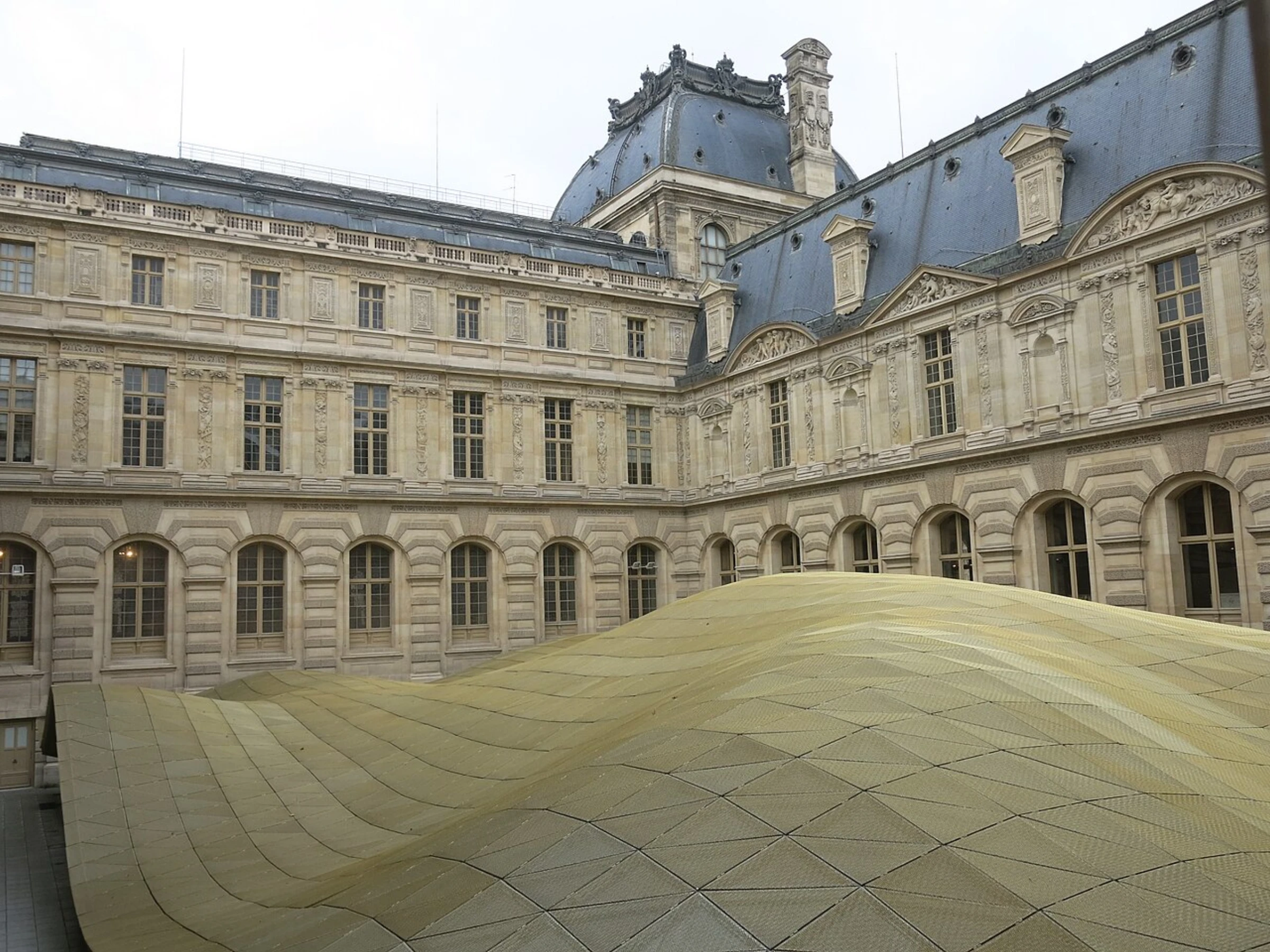
Chase F. Robinson, director of the National Museum of Asian Art, framed the exhibition as an examination of how masterpieces are shaped not only by their makers but also by the public that celebrates them. This curatorial framing moves beyond the conventional approach of presenting Islamic art as exotic or ornamental, instead positioning these objects as works whose status as masterpieces has been produced through centuries of appreciation, collection, and institutional display. The exhibition's narrative arc invites visitors to consider how the category of masterpiece itself is constructed, and how Islamic art has gradually moved from private enjoyment to public recognition within Western museum systems. The Louvre's Islamic art department, housed in the glass-roofed Cour Visconti designed by architects Mario Bellini and Rudy Ricciotti, opened in 2012 and represents one of the most significant museum investments in Islamic art presentation anywhere in the world.
What This Means for Islamic Art in American Museums
The Smithsonian exhibition arrives at a moment when American museums are increasingly investing in Islamic art collections and programming. The Metropolitan Museum of Art renovated its Islamic art galleries in 2011, the Louvre opened its own Islamic art wing in the Cour Visconti in 2012, and institutions across the country have been acquiring and exhibiting Islamic art as part of a broader effort to represent the artistic traditions of the Islamic world. The Louvre-Smithsonian loan strengthens this trend by giving American audiences access to works that have never before left Paris, and by establishing a model for international collaboration that goes beyond single-object loans to encompass comprehensive curatorial partnerships.
The exhibition also highlights the long-standing ties between the Louvre and the Smithsonian, two institutions that have collaborated on scholarly exchanges, conservation projects, and collection research for decades. The National Museum of Asian Art has been expanding its Islamic art programming in recent years, and this exhibition represents a significant escalation of that commitment. For the Louvre, the loan provides an opportunity to showcase its Islamic art department on an international stage at a time when the museum is navigating debates about the restitution of cultural objects and the colonial histories embedded in its collection. By presenting these works in Washington, the Louvre is asserting its role as a global custodian of Islamic art while also opening itself to scrutiny about how that custodianship was established and what responsibilities it entails. This dynamic echoes broader institutional reassessments taking place across major museums, similar to the Uffizi's transformation efforts and other European institutions rethinking their presentation of global art traditions.
Visitors to the Smithsonian will have a rare opportunity to encounter objects that have never been seen in the United States and may not travel again. The exhibition's limited run through January 2027 makes it a singular event in the American museum calendar, and its focus on objects that bridge Islamic and European histories gives it a relevance that extends beyond the specialist audience for Islamic art. As museums on both sides of the Atlantic grapple with questions of representation, restitution, and cultural diplomacy, From the Louvre: Masterpieces of Islamic Art offers a model for how international loans can advance public understanding of shared cultural heritage while also prompting necessary conversations about how that heritage was assembled and who gets to claim it. The exhibition's co-curatorial structure, combining expertise from both lending and receiving institutions, sets a standard that other international museum partnerships would do well to follow.
The objects traveling to Washington also tell stories that extend far beyond their original creation. The Baptistery of Saint Louis was not always known by that name. It was produced in the Mamluk workshops of Syria or Egypt around 1320-1340 and bears the signature of Mohammed ibn al-Zain, a master metalworker whose six surviving works represent the pinnacle of Mamluk decorative arts. The basin's surface is covered with intricate scenes of hunting, horsemanship, and courtly life, rendered in silver and gold inlay against the dark brass ground. Its journey from an Islamic court workshop to the baptismal font of French royalty encapsulates the complex pathways through which objects move between civilizations, and its display at the Smithsonian will give American audiences their first opportunity to examine this extraordinary object in person. The fact that the basin was used to baptize a French king adds a layer of historical irony that the exhibition's curators are likely to explore: an object created by Islamic craftsmen became a sacred vessel in a Christian ceremony, its origins largely forgotten for centuries.
The exhibition also arrives at a politically charged moment for Islamic art programming in the United States. Federal funding for cultural exchange programs has faced budget pressures, and museums have had to navigate tensions between presenting Islamic art as a celebration of cultural achievement and addressing contemporary political debates about the relationship between the Islamic world and the West. The Louvre-Smithsonian collaboration sidesteps these tensions by focusing on the objects themselves and their artistic merit, allowing the craftsmanship and historical significance of the works to speak without heavy curatorial editorializing. This approach has its critics, who argue that museums have an obligation to contextualize Islamic art within the broader history of cultural exchange, colonialism, and contemporary geopolitics. But it also has its defenders, who maintain that the objects are powerful enough to command attention on their own terms and that over-contextualization can diminish the direct encounter between viewer and artwork. The balance that Noujaim and Rettig strike between these competing imperatives will be closely watched by curators at other institutions contemplating similar exhibitions.