Leonardo Drew Joins Hauser & Wirth in 2026
Leonardo Drew joins Hauser & Wirth, signaling how mega-galleries are betting on artists with museum scale, formal rigor, and durable market authority
Leonardo Drew's move to Hauser & Wirth is a market signal, not just a roster update
Leonardo Drew has joined Hauser & Wirth for worldwide representation, with the gallery set to debut a new sculpture, Number 451, at Art Basel and stage Drew's first solo exhibition with the firm in New York in fall 2027. The bare facts sound straightforward: a major artist, a major gallery, another consolidation in a top-heavy market. But Drew is not a decorative add. He is one of the few American sculptors of his generation whose work can carry museum-scale ambition, public-art presence, and blue-chip market confidence at the same time. When a gallery as large as Hauser & Wirth makes room for him, it is saying something about where it believes cultural authority and commercial durability still overlap.
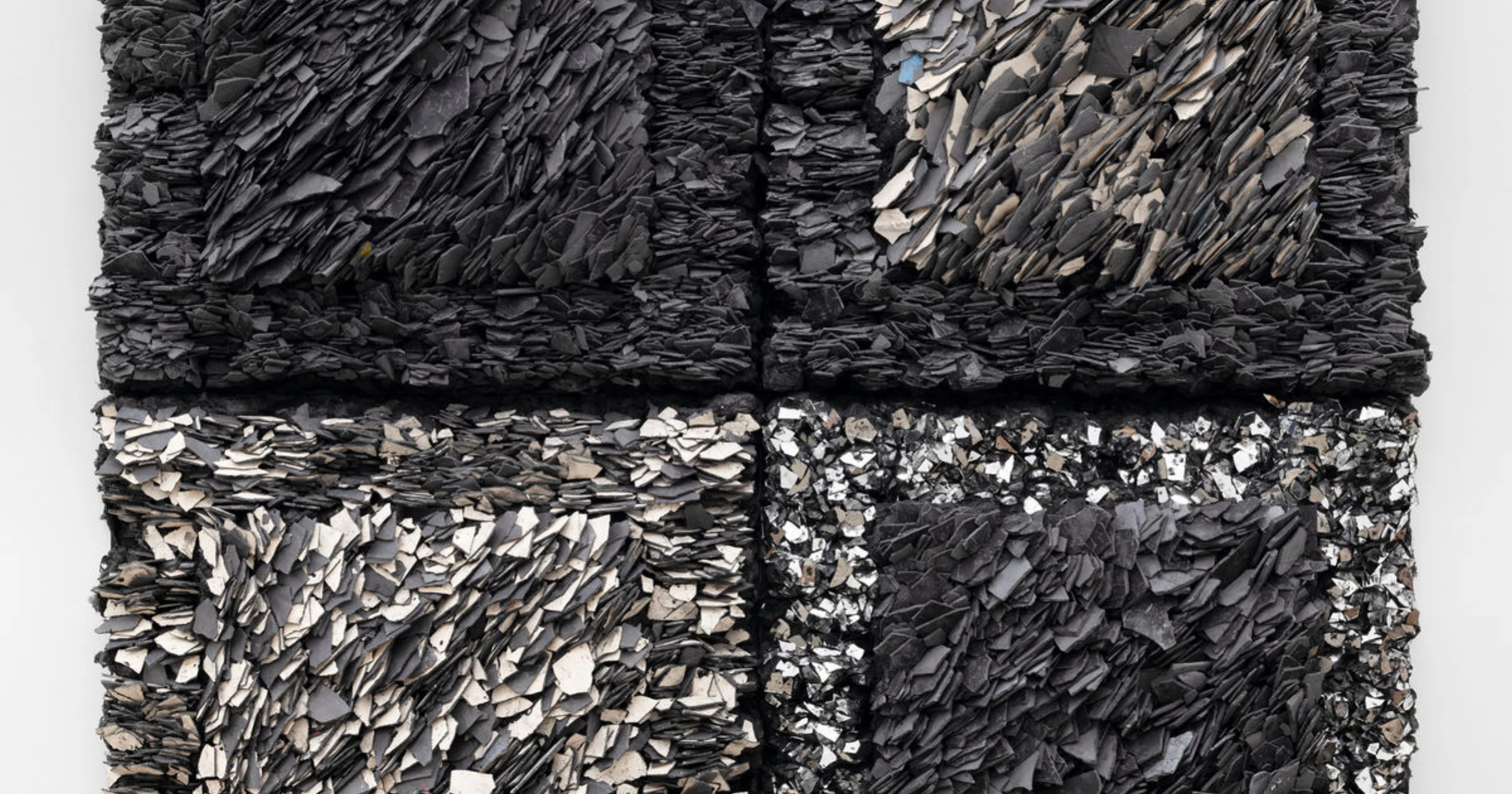
Drew's sculpture has long operated in that overlap. His weathered surfaces often look salvaged from ruin, even though, as Art21 notes, they are built from new materials that he subjects to burning, oxidation, and other processes of decomposition. That distinction matters. Drew is not scavenging authenticity from the world; he is manufacturing entropy as a formal language. The work feels archaeological because it stages time, labor, and damage so persuasively. Hauser & Wirth is not simply buying into an established name. It is aligning itself with an artist whose sculpture can still make seriousness look expensive rather than quaint.
Drew's institutional record makes him unusually valuable to a global gallery machine
Large galleries increasingly want artists whose market story does not depend on novelty alone. Drew fits that requirement almost perfectly. He has the biography of a rigorously earned career, the kind institutions trust: born in Tallahassee in 1961, raised in Bridgeport, trained at Cooper Union, shaped by residencies and museum shows rather than instant fair hype. His practice has also proved unusually portable across contexts. On the Galerie Lelong artist page, recent works sit comfortably inside a commercial presentation, but they do not feel reduced by it. On museum projects such as the Wadsworth Atheneum's two-part Leonardo Drew installation, the same vocabulary expands into outdoor and architectural space without becoming merely monumental.
That matters because the mega-gallery model depends on artists who can perform in several registers at once. A booth presentation has to read fast; a museum show has to reward slow looking; public commissions have to survive photography, sponsorship, and civic programming. Drew's work does all three. It can function as a compact wall-bound relief or blow outward into installations that feel like collapse frozen mid-event. Hauser & Wirth, which has built much of its authority by managing artists across gallery, publishing, education, hospitality, and institutional partnerships, knows how useful that flexibility is. Drew gives the gallery more than inventory. He gives it scale, seriousness, and a language of material transformation that still looks urgent in a market bloated with soft spectacle.
The timing is sharp as well. Art Basel remains the place where galleries test which artists can hold attention under conditions of saturation, fatigue, and ruthless comparison. Presenting a new Drew there is a confidence move. It suggests the gallery believes his work can cut through the annual haze of polished surfaces and strategic overproduction. That is plausible. Drew's sculpture rarely flatters the room. It clots, ruptures, and accumulates. Even when impeccably fabricated, it keeps one foot in abrasion and instability. In a fair economy that often rewards immediate legibility, that kind of resistance can be a branding advantage precisely because it still feels earned.
Why Drew still matters beyond the blue-chip optics
The risk with any representation story is that criticism gets replaced by career bookkeeping. Bigger gallery, bigger booth, bigger museum show, bigger prices. None of that explains why Drew continues to matter. What matters is that he has sustained a formal and psychological pressure inside sculpture that many of his peers have diluted. His grids, fragments, burns, and clustered accumulations carry memories of waste, housing, infrastructure, and bodily fragility without sinking into illustration. Art21's profile is especially useful here because it stresses his childhood proximity to landfills and the way those memories return through structures of decomposition and rearrangement. The work is not autobiographical in a confessional sense. It is autobiographical at the level of material thinking.
That is why Drew keeps attracting institutions. His sculptures offer a contemporary language for ruin that is neither romantic nor purely political slogan. They can speak to urban abandonment, ecological exhaustion, racialized histories of neglect, and the violence built into systems of value, yet they do so through density and rhythm rather than wall-text moralizing. The Wadsworth project made this particularly clear. There, Drew's forms were not static trophies but environments for public movement, reflection, and bodily encounter. He understands that sculpture is not only something looked at. It is a way of pressuring the space around the viewer.
There is also a deeper historical usefulness to Drew's practice. American sculpture over the last several decades has repeatedly swung between cool systems and theatrical excess. Drew occupies an unstable middle. His work is highly structured, often grid-based, but it refuses the clean detachment of minimalism. It is emotionally loaded without becoming expressionist theater. That balance is hard to maintain, and it is one reason his best works still feel more durable than the current flood of instantly recognizable installation brands. Hauser & Wirth is betting on that durability. So, likely, are collectors who want work that can look historically grounded when today's fair-season noise has passed.
It is worth stressing that Drew's appeal is not merely American. His sculpture translates unusually well across the global institutional circuit because it carries no single-site anecdote that curators must over-explain. A work can enter a white-cube gallery, a museum atrium, or an outdoor commission and still preserve its charge of pressure, damage, and accumulation. That portability is one reason the artist has remained visible across decades without becoming stylistically complacent. Hauser & Wirth's international platform will likely intensify that reach, but it may also clarify a harder truth about the current market: galleries are willing to invest heavily in difficulty when that difficulty arrives with enough proven institutional legitimacy to be managed confidently.
What the Hauser & Wirth deal changes next
The immediate next step is easy to name: Art Basel this month, then a New York solo exhibition in fall 2027. The harder question is what kind of Drew the gallery will choose to amplify. One possibility is the canonical version: the master of weathered accumulation, installed with crisp authority and framed as a late-modern American sculptor with cross-market appeal. Another, more interesting possibility is that Hauser & Wirth leans into the unrulier side of the work, emphasizing architecture, entropy, and the way Drew turns fabricated matter into something that feels socially bruised. The difference matters. One path makes him safe. The other keeps him alive.
There is a practical museum consequence as well. Once an artist enters a bigger representation system, exhibition calendars, catalogues, and institutional loans often become more coordinated. That can help scholarship by making ambitious projects easier to realize, but it can also standardize the artist too quickly. Drew's strongest work depends on surprise, irregularity, and the feeling that matter itself has become unstable. If the new partnership keeps that instability visible, the move will look like an expansion of his field. If it polishes the work into prestige roughness, then the deal will have revealed the usual contradiction of mega-gallery success: more visibility, less friction.
There is a useful comparison with our earlier guide to how to evaluate artist management agencies. Representation announcements are often sold as inevitable upgrades, but they are really governance decisions about who gets to control pacing, placement, publication, and institutional framing. A mega-gallery can increase visibility while narrowing the range of acceptable readings. Drew's work has survived smaller systems because it can absorb contradiction. The test now is whether it can survive optimization.
One reason this announcement will travel so far across the field is that it offers reassurance to multiple constituencies at once. Curators can read it as confirmation that Drew's museum-scale ambitions will have deeper production backing. Collectors can read it as further proof that the secondary market for serious contemporary sculpture still clusters around artists with long institutional histories. Younger artists, more ambivalently, can read it as evidence that the path to sustained visibility still runs through systems large enough to convert reputation into infrastructure. That layered readability is exactly why the move feels bigger than a single booth placement.
For now, the move looks smart for both sides. Hauser & Wirth gains an artist whose museum record and formal toughness still command respect. Drew gains a platform with the infrastructure to circulate large projects globally and turn each appearance into a cross-channel event. But the most important thing is not the fit. It is the pressure the fit reveals. The top end of the art market is still searching for artists who can make material intelligence, institutional legitimacy, and commercial appetite point in the same direction. Leonardo Drew is one of the few who can. That is why this roster change matters, and why it should be read as more than routine gallery churn.