Kunsthaus Zurich Pairs Lassnig and Munch for First Time
First-ever exhibition pairing Maria Lassnig with Edvard Munch opens in Zurich with 150 works on the body, perception and mortality
A Landmark Dialogue Between Two Painters
From October 2, 2026, through February 21, 2027, the Kunsthaus Zurich will present the first exhibition to directly pair the works of Austrian painter Maria Lassnig (1919-2014) with those of Norwegian artist Edvard Munch (1863-1944). Titled "Maria Lassnig and Edvard Munch. Flow of Paint = Flow of Life," the exhibition brings together approximately 150 works, including 78 paintings, to trace the affinities and divergences between two artists separated by more than half a century but united by their investigation of the body, perception, and the cycle of life. The exhibition title borrows from a 1996 Lassnig painting and references a central idea shared by both artists: painting as the expression of existential experience.
The project was initiated by Berlin-based scholar and curator Hans Dieter Huber and developed in collaboration with Sandra Gianfreda of the Kunsthaus Zurich and Brigitte Kolle of the Hamburger Kunsthalle, as part of a four-year collaboration between the two institutions. Peter Pakesch of the Maria Lassnig Foundation provided extensive assistance. The result is an exhibition that establishes a new art-historical relationship between two painters who never met but whose work speaks a shared language of vulnerability, color, and existential inquiry. The exhibition will travel to the Hamburger Kunsthalle after its Zurich run, giving audiences in Germany a second opportunity to see these works in dialogue.
The scale of the project is significant. With 150 works including 78 paintings, the exhibition offers a comprehensive insight into both artists' output. Exceptional loans from the Munch Museum in Oslo and the Maria Lassnig Foundation in Vienna set up numerous unprecedented juxtapositions. Many of these works have rarely been shown outside their home institutions, and some have never been displayed in conversation with the other artist's work. The exhibition is as much an act of art-historical reimagining as it is a display of individual masterpieces.
How Lassnig Saw Munch
Maria Lassnig engaged intensively with art history throughout her career, and Munch was one of her most important points of reference. She described him as an artist who "reached the deepest layers of the soul and its threat." His influence is visible not only in her expressive treatment of color but also in her free brushwork and lifelong passion for experimentation. The exhibition makes this connection explicit through works like Lassnig's 1983 painting "Chain of Tradition," in which she positioned herself within an artistic lineage behind Diego Velazquez, Munch, and Vincent van Gogh, a kind of family tree of painterly succession. The painting has been successfully located for this exhibition and will be shown publicly for the first time after a lengthy absence.
While Munch focused on the cycle of life, death, and renewal, Lassnig consistently directed her gaze inward. Her "body awareness paintings" were born from a direct sense of her own physical presence, translating inner states into unmistakable painterly form. The exhibition traces how both artists explored human vulnerability, illness, and death, the connection between human beings and nature, and the relationships between humans and animals. The juxtapositions reveal striking resonances in the differences of style and period, allowing viewers to see Munch through Lassnig's eyes and discover both bodies of work in a fresh light. For those unfamiliar with Lassnig's approach, her body awareness method involved painting what she felt from inside her body rather than what she saw in a mirror, creating works that depict sensation rather than appearance.
The influence runs deeper than subject matter. Lassnig's expressive use of color, her willingness to leave areas of canvas unfinished, and her habit of returning to the same themes across decades all find precedents in Munch's practice. Munch's late paintings, with their loose brushwork and intensified color, are particularly close to Lassnig's mature work. The exhibition allows visitors to see these connections not as influence in a simple sense but as a deeper affinity, two artists who independently arrived at the conviction that painting could serve as a direct record of physical and emotional experience. This shared commitment to painting as bodily expression places them outside the dominant currents of conceptual and minimalist art that shaped the 20th century, and the exhibition makes a quiet but forceful argument for their importance as alternative modernists.
The Kunsthaus Zurich and Its Munch Collection
The exhibition also highlights the deep historical ties between the Kunsthaus Zurich and Edvard Munch. In 1922, under director Wilhelm Wartmann, the Kunsthaus mounted a comprehensive survey of Munch's work with over 70 paintings and more than 430 works on paper. Munch himself described it as one of his "most comprehensive and best solo exhibitions" and among his finest artistic experiences. The first Munch paintings entered the Kunsthaus collection that same year, and further exhibitions and acquisitions over subsequent decades have made the museum's Munch holdings the largest outside Norway. This exhibition draws on that collection while bringing in major loans.
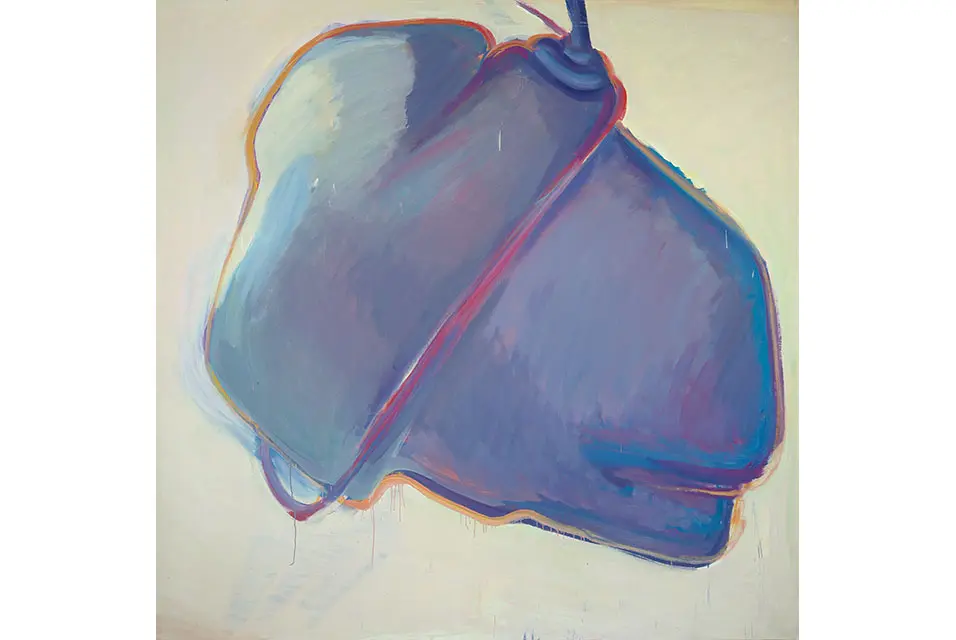
Maria Lassnig also has a significant history with the Kunsthaus. In 2002, she received the Roswitha Haftmann Prize, Europe's best-endowed award for contemporary visual art, presented annually at the Kunsthaus. The following year, the institution staged a solo exhibition of her work, and in 2004 it acquired her painting "Balled-Up Violence" (Geballte Gewalt), 1988, which features prominently in the current exhibition. Other works entered the Collection of Prints and Drawings. These overlapping institutional histories give the exhibition a particular resonance for the Kunsthaus, as it simultaneously celebrates its Munch legacy and its commitment to Lassnig. For more on Lassnig's generation of painters, see artworld.today's coverage of Mary Heilmann, another painter who transformed postwar abstraction through personal gesture and color.
What Visitors Can Expect
The exhibition is accompanied by a lavishly illustrated catalogue containing essays, an interview with writer Siri Hustvedt conducted by Sandra Gianfreda, quotations from both artists, poems by their contemporaries, and brief statements by contemporary artists. The inclusion of Siri Hustvedt, whose work has long explored the intersection of neuroscience, philosophy, and art, signals the exhibition's ambition to reach beyond art history into broader questions about perception and embodiment. A film program in cooperation with ARTHOUSE Kino Piccadilly and a podium discussion will accompany the show, extending the conversation into other media.
The Kunsthaus Zurich is one of Switzerland's most important art museums, with a collection spanning 800 years of art history and approximately half a million visitors annually. The exhibition opens October 2 and runs through February 21, 2027, giving visitors a sustained period to engage with this unprecedented dialogue. The timing places it during the busy autumn exhibition season, when Zurich's cultural calendar is at its peak. For those planning a visit, the Kunsthaus Zurich visitor information includes details on tickets, hours, and guided tours. The artworld.today guide to Van Gogh's signatures offers additional context on how painters inscribed themselves within artistic traditions, a theme central to this exhibition.
What makes this exhibition distinctive in the current landscape of museum programming is its willingness to let two bodies of work generate meaning through juxtaposition rather than through narrative. There is no overarching text that explains why these two artists belong together. Instead, the exhibition trusts the works themselves to make the case, placing paintings side by side and allowing visitors to discover the connections on their own. This is a curatorial strategy that requires confidence in both the artists and the audience, and it reflects a broader trend in European museum programming toward dialogue-based exhibitions that favor comparison over chronology. The result is an exhibition that feels less like a lecture and more like a conversation, one that the viewer is invited to join rather than simply overhear.
For visitors who want to deepen their engagement with Munch before seeing the exhibition, the Kunsthaus Zurich's permanent collection includes several major Munch paintings that provide context for the loans from Oslo. The museum's history with Munch, dating back to the 1922 survey, means that its curators have decades of experience presenting his work to audiences who may be more familiar with his iconic scream than with the full range of his output. The exhibition aims to correct this imbalance, showing Munch as a painter of bodies, landscapes, and existential states, not just a maker of images that have been reproduced on coffee mugs and tote bags. Lassnig, who is less well known to general audiences, benefits from the pairing, gaining visibility through proximity to one of the most recognized painters in Western art history. The exhibition's timing, opening in October 2026 and running through February 2027, places it during Zurich's busiest cultural season, when the city's galleries, museums, and independent spaces present their most ambitious programs. Visitors who plan their trip around this exhibition will find a city at the height of its cultural energy, with opportunities to see work by contemporary artists in the city's commercial galleries alongside the historical masterpieces on view at the Kunsthaus. The museum itself, which reopened its new extension in 2021, offers one of the most spacious and well-designed exhibition environments in Europe, giving both Munch and Lassnig the large-scale paintings they demand. The museum's architecture, designed by David Chipperfield, provides a fitting complement to the exhibition's ambition, with galleries that can accommodate the scale of Munch's canvases and the intensity of Lassnig's colors.