Trump Administration Ordered to Explain Kennedy Center Tarp
A federal judge demands answers as a tarp continues to obscure the John F. Kennedy Center facade after orders to remove the president's name
The Tarp of Defiance
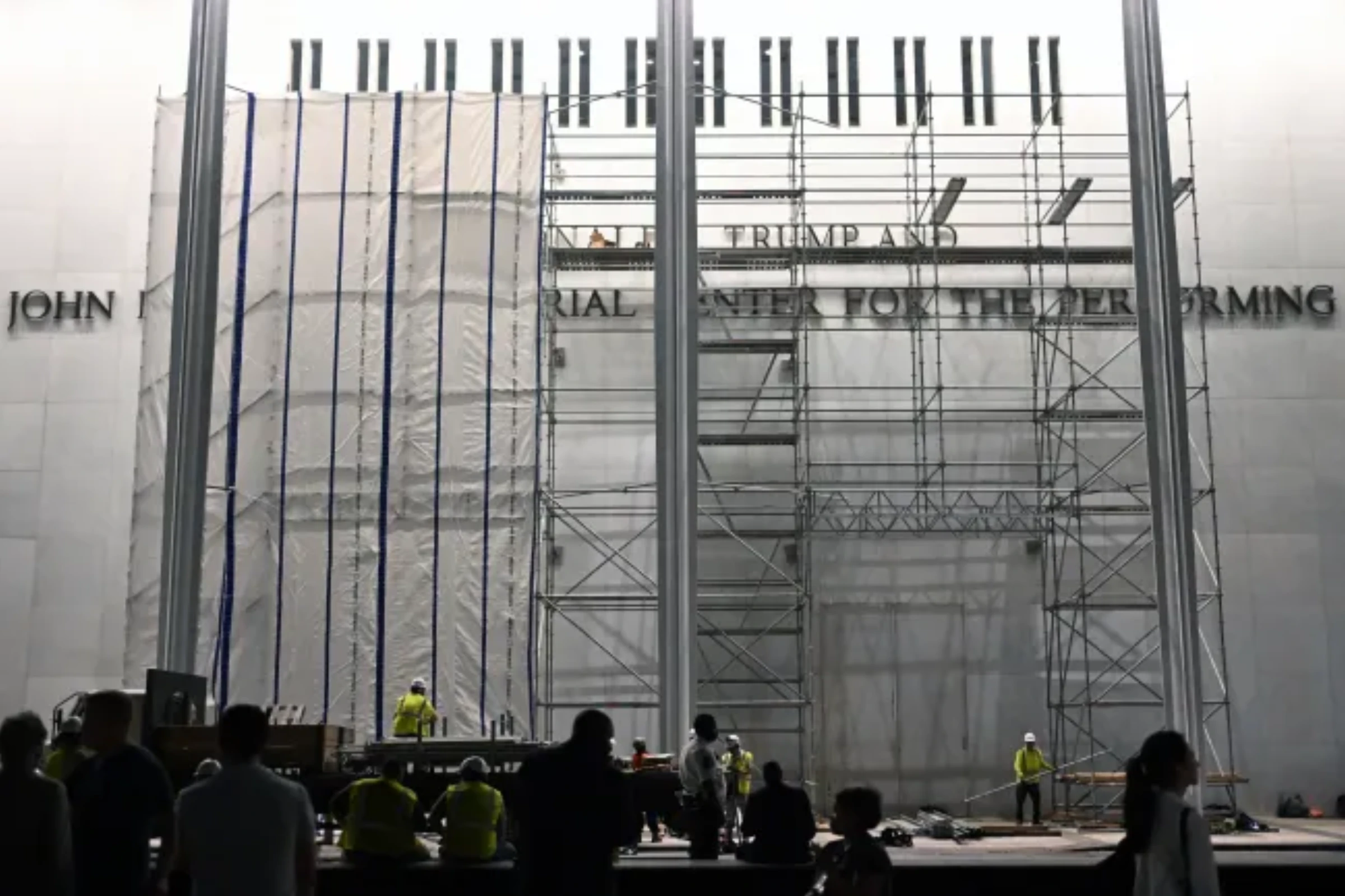
A legal battle over the visual identity of the John F. Kennedy Center for the Performing Arts has escalated into a standoff involving federal judges and the Trump administration. Nearly a month after US District Judge Christopher Cooper ordered the removal of President Trump's name from the building's facade, a massive tarp remains in place, partially obscuring the site from public view. This lingering obstruction has led Judge Cooper to issue a new order demanding a full report by July 31st, explaining both the purpose of the tarp and the administration's broader plans for the facility. The situation has evolved from a simple request for nomenclature removal into a broader conflict over institutional control and public transparency, as detailed by Artforum.
The tarp was originally installed on the morning of June 13th. According to reports, its primary purpose was to shield the actual process of removing the president's name from the view of onlookers, many of whom were gathered in enthusiastic anticipation. However, the fact that the tarp remains long after the work should have been completed suggests a strategy of concealment rather than mere operational necessity. Recent photographs reveal a blank space where the name—added in December 2025—once stood, yet the administration has not fully uncovered the facade.
Institutional Overhaul and Political Friction
The controversy over the signage is set against a backdrop of aggressive institutional restructuring. In March, the Trump-helmed Kennedy Center board voted to shut down the performing arts center for a two-year period starting July 4th. This shutdown is intended to facilitate a $257 million renovation overhaul, funded by Congress. The scale of the project is immense, with the President himself calling for the complete removal of the building's heating system to be replaced by new marble, a move that signals a desire for an aesthetic and structural rebirth of the center in his own image.
However, these ambitions have hit a legal wall. When Judge Cooper ordered the name's removal in late May, he also temporarily blocked the administration's construction plans. This judicial intervention has sparked a volatile reaction from the White House. President Trump responded on Truth Social on May 30th by attacking Judge Cooper personally, alleging a total conflict of interest and claiming that the judge's wife is an "anti Trump Hater." This rhetoric underscores the high stakes of the conflict: the Kennedy Center is not merely a venue for the arts, but a symbolic battleground for the administration's vision of national heritage and institutional branding.
The Activist Response and Legal Escalation
The continued presence of the tarp has drawn sharp criticism from arts advocates and political figures alike. Mallory Miller, co-founder of the activist group Hands Off the Arts and a former employee of the Kennedy Center, argues that the administration's reluctance to unveil the facade is a calculated move. Miller suggests that the White House is attempting to delay the public's realization that the name is gone until they can exhaust all possible legal appeals. This interpretation frames the tarp as a tool of political theater, designed to maintain a facade of control while the legal reality shifts beneath them.
The legal pressure is mounting. On Monday, Democratic Representative Joyce Beatty filed a fresh lawsuit, explicitly accusing the administration of using the tarp as an act of "petty defiance." By framing the issue as a deliberate attempt to obscure a public building, Beatty's lawsuit seeks to move the conversation beyond the specifics of the name removal and into the realm of government transparency and the rule of law. The Kennedy Center has attempted to mitigate the damage by quickly establishing an endowment fund to supplement the $257 million allocated by Congress, hoping to ensure that the stalled restoration project can eventually move forward regardless of the political outcome.
Implications for Public Arts Institutions
The standoff at the Kennedy Center reflects a growing tension between political power and the autonomy of cultural institutions. When a sitting president's name is etched into the stone of a national landmark, the subsequent removal becomes more than a clerical change; it becomes a public erasure. The use of a tarp to hide this process, and the subsequent judicial demand for a report, highlight the fragility of institutional stability when it is entwined with personal political branding. The outcome of the July 31st report deadline will likely dictate whether the center can return to its primary mission of artistic excellence or remains a pawn in a larger political game.
Ultimately, this conflict underscores the danger of treating national arts institutions as extensions of a personal brand. As the July 4th deadline for the planned renovation approaches, the world will be watching to see if the tarp comes down or if it serves as a permanent shroud over a fractured institutional identity. The intersection of federal law and cultural heritage here suggests that the fight for the facade is actually a fight for the soul of the institution.