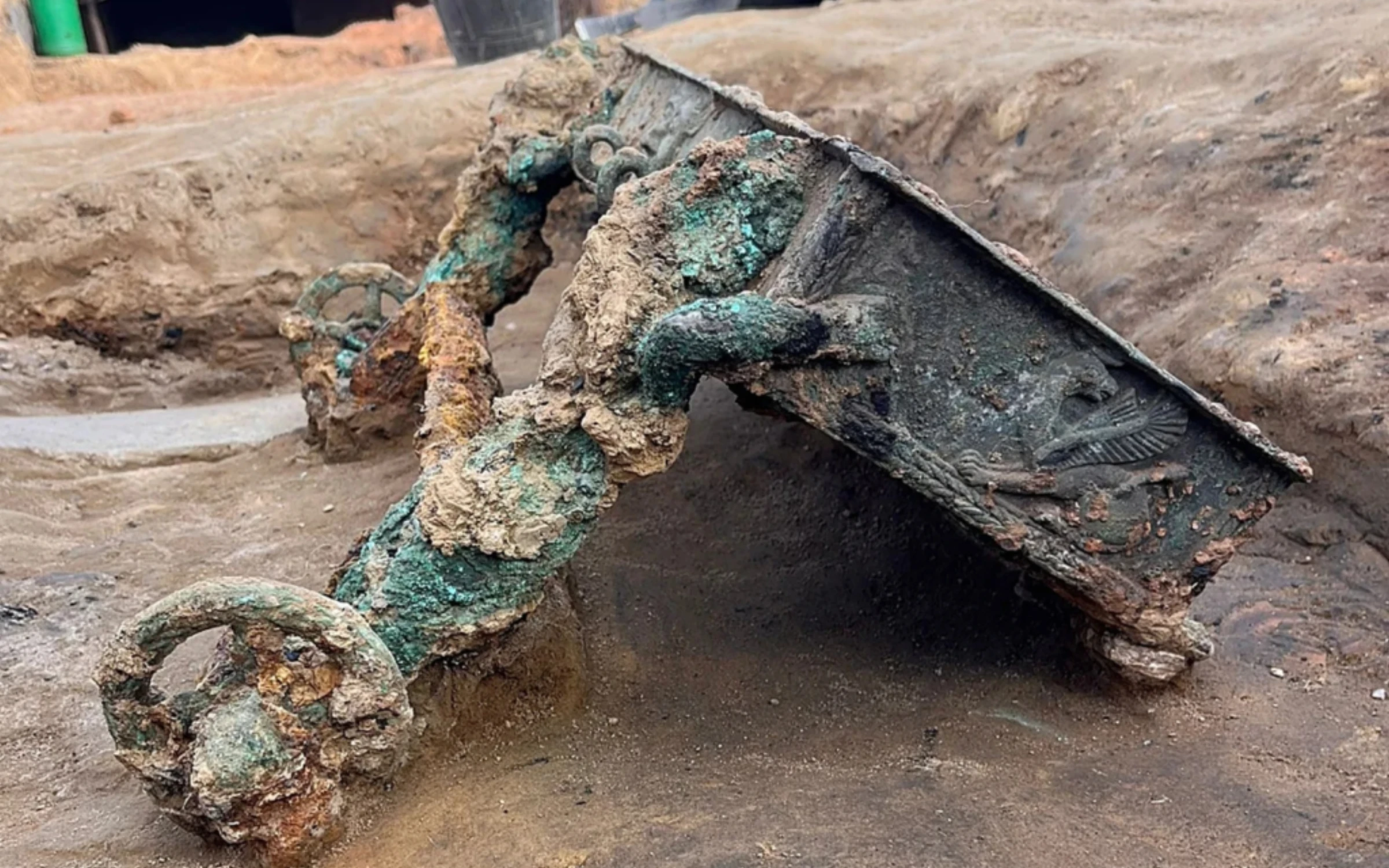
First-of-Its-Kind Bronze Votive Chariot Unearthed in Spain
Archaeologists at the Casas del Turuñuelo site have discovered a unique bronze votive chariot, marking a major breakthrough in Iberian Peninsula prehistory
A Monumental Find at Casas del Turuñuelo
In a discovery that fundamentally shifts the understanding of early metalwork on the Iberian Peninsula, archaeologists at the Casas del Turuñuelo site in Guareñña have unearthed an extraordinary bronze votive chariot. This specimen is the first of its kind ever found in the region, representing a level of craftsmanship and symbolic complexity previously unseen in local archaeological records. The find was presented on Wednesday at the headquarters of the Spanish National Research Council (CSIC) in Madrid by co-directors Esther Rodríguez and Sebastián Celestino, who described the object as having unparalleled decorative and iconographic complexity. For a detailed look at the site's significance, visit the official report on the discovery.
The chariot is not merely a tool of transport but a votive object, designed for ritual offerings rather than practical use. Its existence suggests a sophisticated religious and social structure in the area, where bronze was used not just for weaponry or tools, but for high-art manifestations of spiritual devotion. The sheer detail of the bronze work points to a specialized class of artisans whose skills were likely shared across borders, linking the Iberian Peninsula with broader European Bronze Age networks.
The Significance of the Iberian Bronze Age
The Iberian Peninsula during the Bronze Age was a crossroads of cultural exchange, but the lack of high-status complex objects like this chariot had long left a gap in the historical narrative. The discovery at Casas del Turuñuelo fills this void, providing tangible evidence of a society capable of producing intricate, large-scale bronze artworks. The presence of a votive chariot implies the existence of a ritualized landscape, where specific sites were designated for the deposition of wealth and art to appease deities or mark territorial boundaries.
Comparisons with similar finds in Central Europe and the Mediterranean suggest that the inhabitants of the Iberian Peninsula were not isolated, but were active participants in a wide-ranging prestige economy. The exchange of bronze technology and iconography allowed for the development of a shared visual language of power and spirituality. By analyzing the specific patterns and motifs on the chariot, researchers can now begin to trace the exact influences and trade routes that brought this level of artistic sophistication to Guareña.
Technological Mastery and Artistic Intent
The a-typical nature of the chariot's construction reveals a profound mastery of metallurgy. The use of lost-wax casting and intricate engraving demonstrates a precision that rivals contemporary works from more well-documented regions of the ancient world. Every inch of the chariot's surface is laden with meaning, from the geometric precision of the wheels to the symbolic figures that likely adorned the chassis. Such complexity was not merely for show; it served to elevate the status of the offering, making the ritual act of deposition a significant event in the community's social life.
Furthermore, the preservation of the bronze suggests a specific environmental context at Casas del Turuñuelo that has protected the object from severe corrosion. This allows for a detailed chemical analysis of the ore used, which can reveal whether the bronze was sourced locally or imported from distant mines. The integration of art and technology in this piece proves that prehistoric Iberian society had a sophisticated understanding of both material science and visual storytelling.
Redefining Prehistoric Narratives
This discovery forces a re-evaluation of the existing theories regarding the "cultural lag" often attributed to the Western edge of Europe. The bronze chariot proves that the Iberian Peninsula was not a periphery, but a center of innovation and artistic achievement. The scale and quality of the find suggest that there are likely many more undiscovered sites of similar importance, hiding the true extent of the region's prehistoric wealth.
As the research continues, the focus will shift toward understanding the broader context of the Casas del Turuñuelo site. The goal is to determine whether this chariot was an isolated luxury import or the product of a local workshop that served a regional elite. Regardless, the object stands as a testament to the human drive to create beauty and meaning long before the written record began. The unveiling of this chariot is not just a win for Spanish archaeology, but a pivotal moment in the reconstruction of the ancient European art map.