Revenge or Heist: $4.6M Art Theft in Italy
Ten thieves spent eight hours looting 30 artworks from an Italian fuel company, but experts suspect the raid was personal, not commercial
The Raid
On the night of Monday, July 27, 2026, approximately ten disguised individuals broke into the headquarters of Lilli Petroli, an Italian fuel distribution company in L'Aquila, in the Abruzzo region of Italy. Using a company truck to tear down a large iron entrance gate with a cable, the thieves spent eight hours systematically emptying display cases and moving out large sculptures from the building's lobby and offices. They departed around 6 a.m. on Tuesday morning, having made off with roughly 30 artworks valued at 4 million euros ($4.6 million). The stolen works included bas-reliefs attributed to Pablo Picasso, sculptures by Italian artist Giacomo Manzu, including a 1,200-pound bronze of a ballerina, and works by Bruno d'Arcevia and Mario Moretto.
The scale and organization of the raid are unusual. Art theft from private collections is typically a crime of opportunity, involving one or two individuals who take what they can carry. The Lilli Petroli heist involved a coordinated team, heavy equipment to breach the perimeter, and enough time and manpower to remove artworks weighing over a ton. The thieves were captured on the building's video surveillance system, but their disguises and the use of a company vehicle suggest a level of planning that goes beyond opportunistic theft.
The Victim and the Collection
Mauro Lilli, the owner of Lilli Petroli and the collector of the stolen artworks, told the Italian newspaper Il Messaggero that the thieves "made a mess of the premises" and "spared nothing." Lilli confirmed that the works were not insured, a detail that has drawn attention from the art insurance industry and raises questions about the responsibility of private collectors to protect their holdings. The presence of works attributed to Picasso and Manzu in a corporate headquarters in Abruzzo is itself noteworthy, suggesting a collection assembled over years by an owner with both resources and a personal commitment to art.
The fact that the works were not insured is a critical detail. Insured artworks are registered in databases maintained by organizations like the Art Loss Register, which makes them difficult to resell and easier to recover if stolen. Uninsured works may not be registered, making them more attractive to thieves who intend to hold them for ransom or use them as collateral in the illicit art market. The absence of insurance also means that Lilli has no financial recourse if the works are not recovered.
Revenge, Not Trafficking
The most provocative assessment of the heist comes from Christopher Marinello, a recognized expert in art theft and the founder of Art Recovery International. In an interview with the art publication Ocula, Marinello dismissed the theory that the theft was connected to coordinated art trafficking rings, noting that the stolen works are easily identifiable and would not fetch high prices after being stolen. "These are not top-tier works of art," Marinello said. "It appears to me as some sort of revenge, more of an attack on the company or on Mauro Lilli himself."
Marinello's assessment shifts the focus of the investigation from the art market to the personal and business relationships of the victim. If the theft was motivated by revenge rather than financial gain, the stolen artworks may have been taken to send a message rather than to be sold. This would make the recovery more difficult, as the works may not surface on the art market for years. The Italian police and the Cultural Heritage Protection Unit (TPC) of the Carabinieri military police are investigating the crime, including the exit route taken by the thieves to determine whether the art was transported out of the region or stored nearby.
Italy's Art Crime Infrastructure
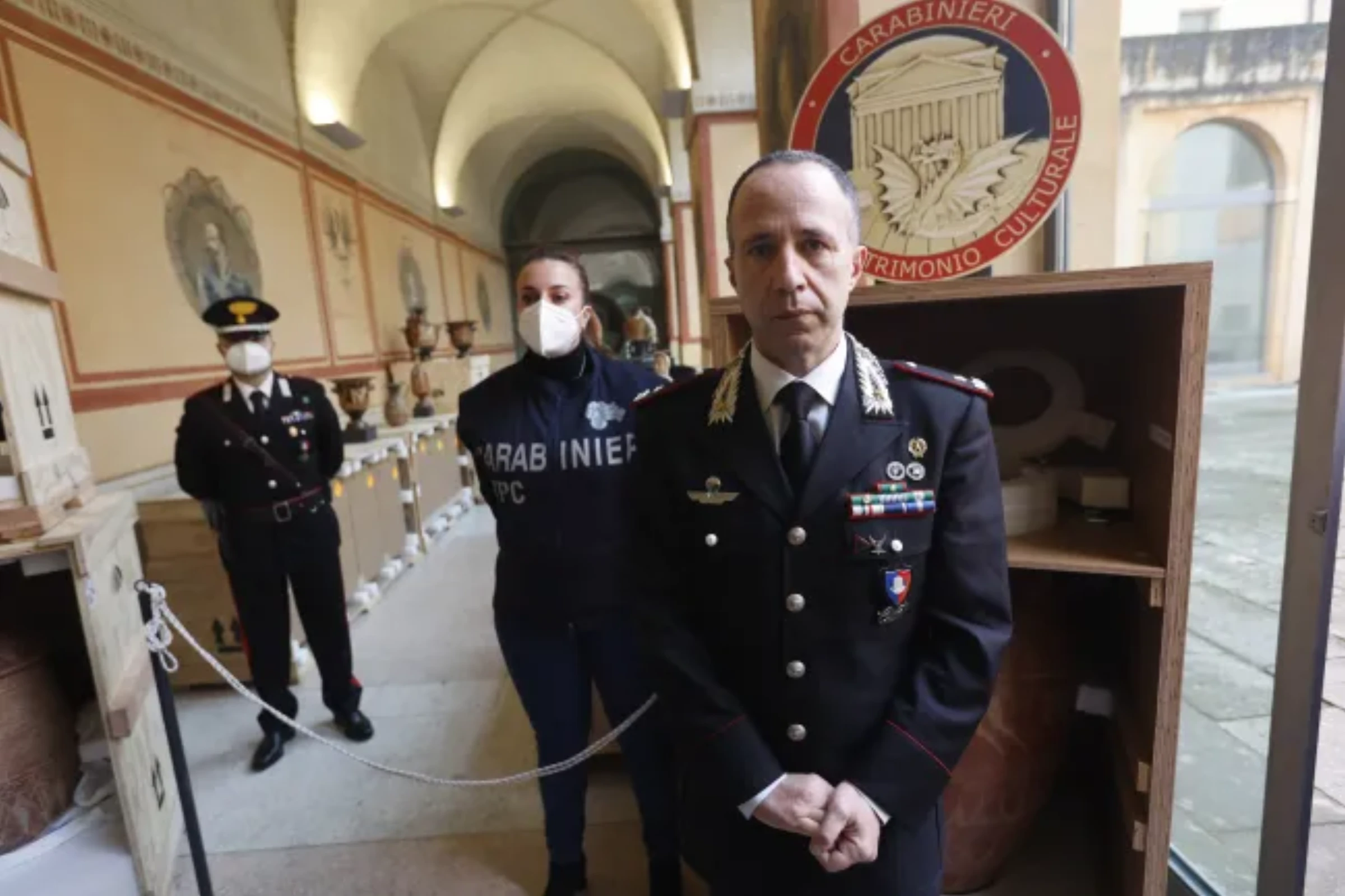
Italy has one of the most sophisticated art crime investigation units in the world. The Carabinieri TPC, established in 1969, is the world's first specialized police force dedicated to combating cultural property crimes. The unit maintains a database of stolen artworks, coordinates international recovery efforts, and has been responsible for recovering thousands of stolen cultural objects over the past five decades. The TPC's involvement in the Lilli Petroli case signals that the investigation is being treated with the same seriousness as major museum thefts, despite Marinello's assessment that the works are not top-tier.
The case also highlights the vulnerability of private corporate collections. Unlike museum collections, which are typically protected by professional security systems, environmental controls, and insurance, corporate art collections may be displayed in office buildings with standard commercial security. The Carabinieri have warned private collectors about the risks of inadequate security, but many corporate collections remain underprotected, particularly in smaller cities and regions where art theft may be less anticipated.
What Comes Next
The investigation will focus on identifying the thieves from surveillance footage, tracing the stolen artworks, and exploring the personal and business relationships of Mauro Lilli. If Marinello's revenge theory is correct, the investigation may need to shift its focus from the art market to the circumstances and conflicts that could have motivated such an elaborate act of retaliation. The case is a reminder that art theft is not always about art. Sometimes it is about power, revenge, and the use of cultural objects as weapons in personal conflicts. For private collectors, the lesson is clear: insure your collection, register it with international databases, and invest in security that goes beyond standard commercial measures. For the art world, the Lilli Petroli case is a test of whether the sophisticated infrastructure of art crime investigation can adapt to crimes that do not fit the conventional pattern of theft for profit. Art theft is often romanticized in popular culture, from Thomas Crown to the Gardner Museum heist, but the reality is usually more mundane. Most stolen artworks are never recovered, and the majority of art thefts are not sophisticated operations but crimes of opportunity by amateur thieves who underestimate the difficulty of selling identifiable stolen works. The Lilli Petroli raid, with its coordinated team and heavy equipment, falls into a different category, and the investigation will need to consider motives beyond the conventional financial calculus.
The case also raises questions about the role of private corporate art collections in the broader cultural ecosystem. Corporate collections have become a significant feature of the art world, with companies using art as a form of investment, decoration, and cultural signaling. But the security and insurance practices surrounding these collections vary widely. Unlike museums, which operate under professional standards for security, climate control, and insurance, corporate collections may be displayed in office buildings with standard commercial security and minimal environmental controls. The U.S. Immigrations and Customs Enforcement and other international agencies have documented numerous cases of corporate art collections being targeted by thieves, often with inside knowledge of building layouts and security systems.
The Lilli Petroli case may also prompt a review of Italy's approach to protecting private art collections. Italy's cultural heritage laws are among the most stringent in the world, requiring permits for the export of artworks and restricting the modification of historic buildings. But these laws focus primarily on public heritage and museum collections. Private collections, particularly those held in corporate settings, may fall into a regulatory gap where neither cultural heritage law nor commercial security standards provide adequate protection. The Italian government may need to consider whether additional regulations or incentives are needed to ensure that significant private collections are properly secured, insured, and documented. The Lilli Petroli case may also become a reference point for insurance industry practices around private art collections. Insurance companies typically require certain security standards as a condition of coverage, and the absence of insurance at Lilli Petroli suggests that either the security standards were not met or the collector chose to self-insure, accepting the risk of loss. If the theft leads to tighter insurance requirements for corporate art collections, it could have ripple effects across the private collecting world, where the balance between security costs and risk acceptance has long been contentious.
For Mauro Lilli, the personal dimension of the theft may be the most significant. The collection he assembled over years, including works by artists of the caliber of Picasso and Manzu, was not just a financial asset but a personal statement and a part of the identity of his company. Whether the theft was motivated by revenge, business rivalry, or some other factor, the loss of the collection represents the loss of something that cannot be replaced by insurance or legal recovery. The artworks may eventually be recovered by the Carabinieri, but the sense of violation and the disruption to the company and its owner will persist long after the investigation concludes. The Lilli Petroli case is a reminder that art theft, however it is motivated, is not a victimless crime. It is a violation of trust, of cultural patrimony, and of the personal relationships that collectors build with the works they choose to live with and share with their communities. The recovery of the stolen works, if it happens, will be a triumph of investigative work. But the prevention of the next heist requires a broader conversation about security, insurance, and the responsibilities of private collectors in a context where art functions as both a cultural treasure and a target for those who would exploit it.