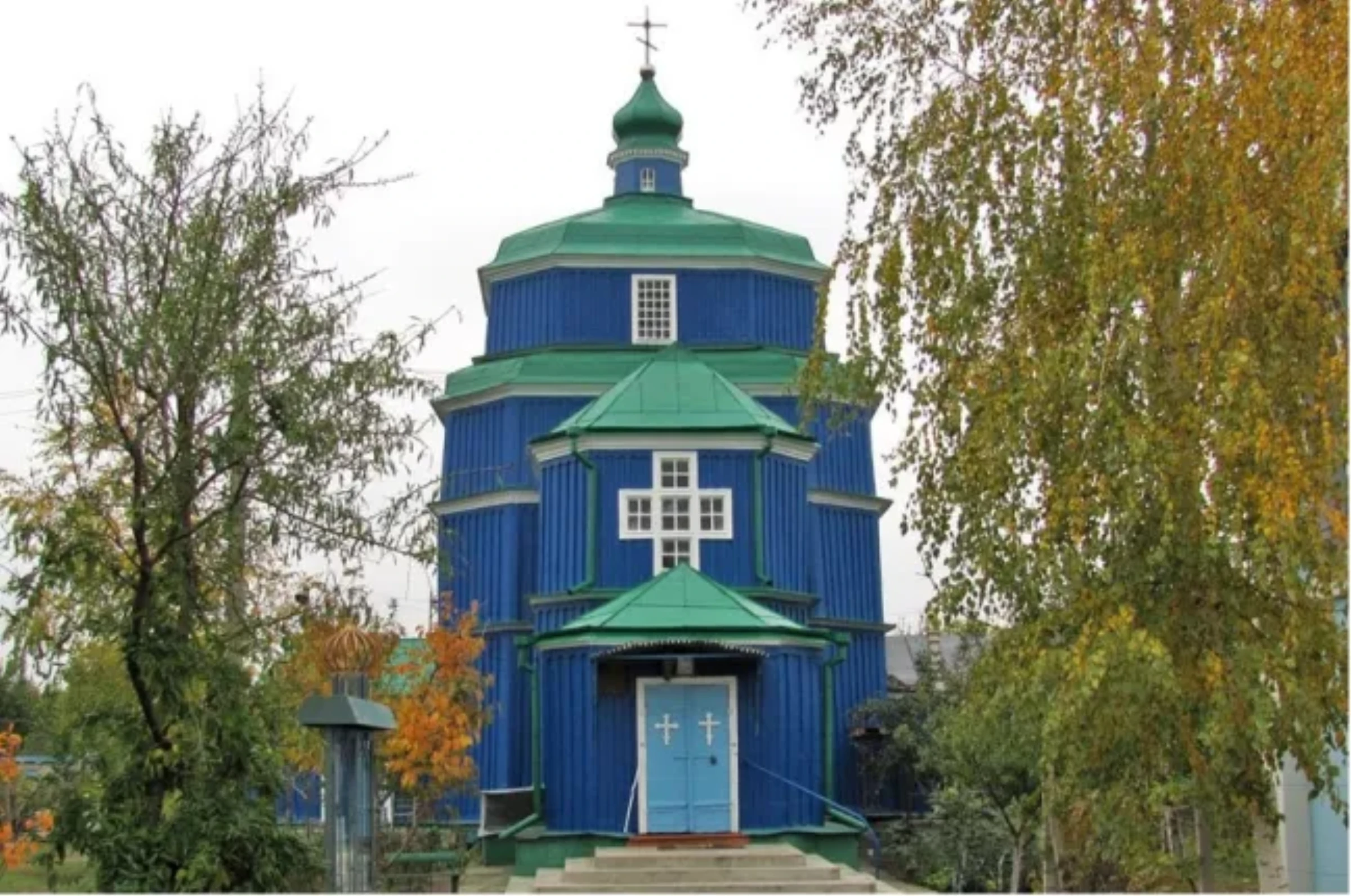
Russian Strike Destroys Last Cossack Wooden Church
A 1725 wooden church in Beryslav, the last surviving example of Cossack architecture, was destroyed by a Russian drone strike
The Destruction
Over the weekend of August 2-3, 2026, a Russian drone strike destroyed the Holy Presentation Church in Beryslav, in the Kherson region of Ukraine. The church, built in 1725 within a fort near Zaporizhzhia and transported to its current location at Beryslav in 1784, was the last surviving example of wooden Cossack architecture in the country. The Kherson Regional State Administration confirmed the destruction in a Facebook post, stating that "the church withstood many historical shocks and Soviet anti-religious campaigns, but was destroyed by fire due to the Russian attack."
Oleksandr Alchiev, the head of the Beryslav City Military Administration, wrote that the church "was a unique architectural monument of national significance that had been an integral part of the history of our city for almost three centuries." The loss of the Holy Presentation Church removes the last physical witness to a tradition of wooden ecclesiastical architecture that once defined the Cossack settlements of southern Ukraine. Unlike stone monuments, wooden churches cannot be easily reconstructed from fragments, and the building techniques that produced them have largely been lost.
The Broader Pattern
The destruction of the Holy Presentation Church is not an isolated incident. As of July 2026, the Ukrainian Ministry of Culture estimates that Russia has damaged or destroyed approximately 2,000 cultural heritage sites since the invasion began in 2022. Just days before the church's destruction, a Russian missile hit the roof of the Kharkiv Art Museum, causing extensive damage and wounding six people, including a baby. Other damaged sites include the Dormition (Assumption) Cathedral in Kyiv, the Hryhorii Skovoroda National Literary and Memorial Museum, the Chernobyl Museum, and the Kyiv-Pechersk Lavra, one of the most historically significant monasteries in Eastern Orthodoxy.
The scale and systematic nature of the destruction has led to accusations that Russia is deliberately targeting Ukrainian cultural heritage as part of a broader strategy of cultural erasure. By destroying the physical evidence of Ukrainian cultural identity, the argument goes, Russia is attempting to undermine the claim that Ukraine possesses a distinct national culture worthy of sovereignty. Whether each individual site is targeted or collateral damage, the cumulative effect is the same: the gradual erasure of the built evidence of Ukrainian history.
Wooden Architecture and Irreplaceable Loss
The loss of the Holy Presentation Church is particularly significant because wooden architecture is uniquely vulnerable to destruction and uniquely difficult to replace. Wooden churches were once common across Eastern Europe, built by local craftsmen using techniques passed down through generations. The churches were constructed without nails, using interlocking joints and wooden pegs, and their survival depended on regular maintenance and protection from fire and moisture. Few examples have survived to the present, and those that have are irreplaceable cultural artifacts.
The Holy Presentation Church had survived for nearly three centuries, enduring the collapse of the Cossack Hetmanate, the absorption of Ukraine into the Russian Empire and then the Soviet Union, and the Soviet anti-religious campaigns of the 1920s and 1930s that destroyed thousands of churches across the Soviet Union. Its survival was a testament to the resilience of local communities that maintained the building through political upheavals that sought to erase the cultural traditions it represented. A single drone strike accomplished what three centuries of political turbulence could not.
International Response and Documentation
The destruction of cultural heritage in Ukraine has prompted a significant international response. UNESCO has documented damage to hundreds of cultural sites and has partnered with Ukrainian authorities to implement emergency protection measures, including the installation of protective shielding over statues and mosaics and the relocation of collections to secure storage. The Ukrainian Ministry of Culture has created a digital registry of damaged cultural property, which serves both as a documentation tool and as evidence for potential war crimes prosecutions.
The International Criminal Court has issued arrest warrants for Russian officials accused of directing attacks on cultural heritage, and several cases involving cultural destruction in Ukraine are under investigation. The 1954 Hague Convention for the Protection of Cultural Property in the Event of Armed Conflict, to which both Russia and Ukraine are parties, provides the legal framework for these prosecutions. However, the convention's effectiveness depends on enforcement, and the destruction of the Holy Presentation Church demonstrates that it has not deterred continued attacks.
What Comes Next
The destruction of the Holy Presentation Church is a loss that cannot be repaired. While the Ukrainian government and international organizations can document the damage, prosecute war crimes, and protect remaining sites, the church itself is gone. The loss of the last surviving example of wooden Cossack architecture means that a chapter of Ukrainian cultural history is now accessible only through photographs, drawings, and descriptions. For the people of Beryslav, who lived alongside the church for generations, the loss is not just architectural but personal and communal. The empty space where the church stood is now a monument to the destruction of cultural heritage as a weapon of war, and a reminder that the protection of cultural property in conflict zones remains one of the most urgent and least addressed challenges in international cultural policy. The loss of the Holy Presentation Church also raises questions about how digital documentation can serve as a form of preservation. The Google Arts and Culture platform and other digital archives have created detailed records of endangered cultural sites, but a digital model is not a substitute for the physical building. It is a record of what was lost, not a means of recovery.
The Ukrainian government has called on the international community to provide additional support for cultural heritage protection, including funding for emergency repairs, documentation of damaged sites, and the relocation of threatened collections to safe storage. Several European museums have responded by hosting exhibitions of Ukrainian art that was evacuated from conflict zones, drawing attention to the cultural dimension of the war and providing temporary safe haven for works that cannot be displayed in their home institutions. The International Criminal Court has included cultural destruction in its investigations of alleged war crimes in Ukraine, and the outcome of these cases will set important precedents for the prosecution of cultural property crimes in future conflicts.
The destruction of the Holy Presentation Church also underscores the vulnerability of wooden architecture worldwide. From the stave churches of Norway to the temples of Japan, wooden structures represent some of the most distinctive and fragile achievements of human building traditions. The loss of the last Cossack wooden church is a reminder that these structures survive only through a combination of luck, maintenance, and protection from the forces that would destroy them, whether natural or man-made. The international community has developed frameworks for protecting cultural heritage in conflict, but the enforcement of these frameworks remains inconsistent, and the destruction in Ukraine demonstrates that the consequences of inconsistency are measured in irreplaceable losses. The question of reconstruction also looms. Ukraine has already announced plans to rebuild damaged cultural sites, and international organizations have pledged support for reconstruction efforts. But reconstruction raises its own questions: can a rebuilt wooden church, constructed using modern techniques and materials, carry the same cultural significance as the original that survived three centuries? The authenticity of a rebuilt structure is always partial, and the loss of the original building techniques means that even a faithful reconstruction is a modern interpretation rather than a continuation of the original tradition.
The destruction of the Holy Presentation Church also highlights the particular vulnerability of religious architecture in conflict zones. Churches, mosques, temples, and synagogues are often the most prominent and historically significant buildings in their communities, making them both symbols of cultural identity and potential targets. The Hague Convention provides special protections for religious buildings, but these protections are only as strong as the willingness of combatants to respect them. In Ukraine, where the war has been accompanied by a broader struggle over national and cultural identity, the targeting of religious buildings has a political significance that goes beyond the architectural loss. Each destroyed church is a blow to the community it served and to the cultural landscape it helped define. The documentation of these losses, through photographs, archival records, and digital models, preserves the memory of what was lost but cannot replace the lived experience of a building that has been part of a community's daily life for centuries. The people of Beryslav have lost not just a building but a landmark, a gathering place, and a connection to the generations that built and maintained it. For Ukraine, the cumulative loss of cultural sites is a wound to the national identity that will take longer to heal than the physical reconstruction of damaged buildings, and the international community's response to this cultural destruction will be a measure of its commitment to the principles of heritage protection that it has codified in international law but has frequently failed to enforce. The loss of the Holy Presentation Church is a call to action, and the response will determine whether the international community is serious about protecting the cultural heritage that belongs not just to Ukraine but to the world.