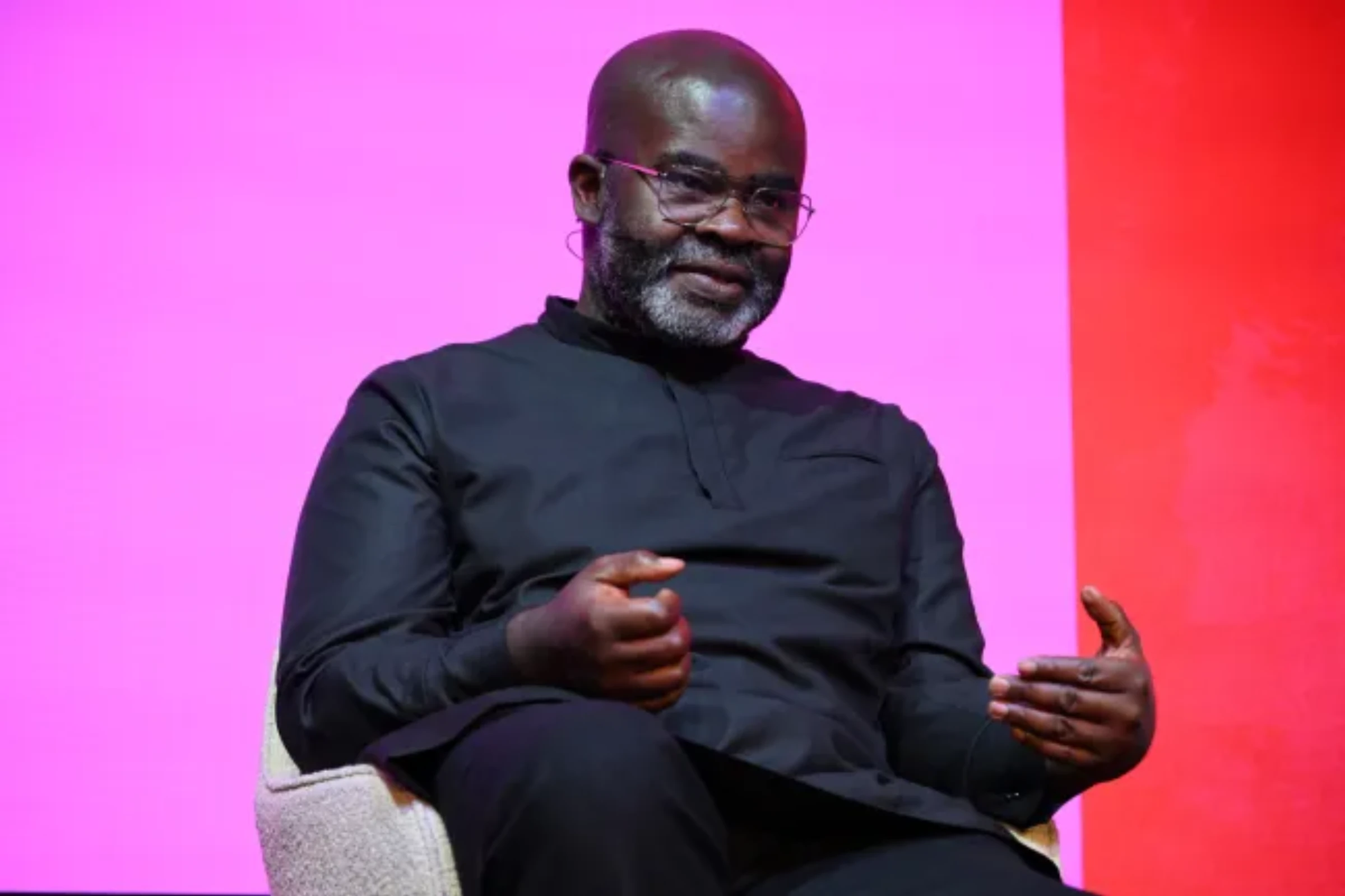
Misan Harriman Exits Southbank Centre Amid Smear Campaign
Photographer and activist Misan Harriman resigns from the Southbank Centre following a targeted campaign by right-wing British press regarding his activism
A Resignation Under Pressure
Misan Harriman, the chair of London's influential Southbank Centre, has announced his departure from the role, bringing an end to a tenure marked by both artistic achievement and intense political volatility. While Harriman maintains that his exit was planned since January and coincides with the end of his second term, the timing is inextricably linked to a virulent smear campaign orchestrated by the UK's right-wing press. The Telegraph and Daily Mail have spent months labeling the photographer and entrepreneur as antisemitic, a charge that triggered a wider cultural war within the London arts scene and forced the Southbank Centre into a defensive posture
The conflict began when Harriman used his Instagram platform to share a video questioning why the British press was ignoring a Muslim victim of an arson attack in Golders Green. He followed this with a post regarding the rise of the Reform party. Right-wing commentators quickly seized on these posts, accusing him of equating the ascent of a political party with the Holocaust. This leap in logic was used to frame Harriman not as a political activist, but as a purveyor of antisemitic rhetoric, effectively weaponizing his identity as an outspoken supporter of Palestine to alienate him from the institutional center of the arts.
This campaign was not a random occurrence but a calculated attempt to delegitimize a Black man in a position of cultural power. By framing political commentary as hate speech, the right-wing press successfully shifted the conversation from the substance of Harriman's activism—the protection of marginalized victims of violence—to his personal character. This is a classic tactic of the 'culture war,' where the goal is not to debate an idea, but to destroy the person holding it, ensuring that the boundaries of institutional leadership remain safely within the confines of a sterilized, non-threatening consensus.
The Divide Between the Press and the Creative Class
The response to the attacks on Harriman revealed a deep chasm between the traditional British media and the contemporary creative community. While the Telegraph and Daily Mail pushed a narrative of hate, more than 100,000 people signed an open letter defending Harriman. The signatories included some of the most influential figures in global art and music, such as Brian Eno, Tracey Emin, and Greta Thunberg. For these supporters, the campaign against Harriman was not about fighting antisemitism, but about silencing a Black man who dares to criticize the state's failure to protect all its citizens equally.
Harriman's own response has been one of defiance. He has called for a massive increase in "press literacy," arguing that the public is being fed a singular, distorted viewpoint by outlets that prioritize narrative over truth. This conflict highlights a broader trend where the arts are no longer a sanctuary from political polarization but are instead the primary battlefield. When the chair of a major cultural institution is targeted by a national newspaper, it is an attempt to purge the institution of any leadership that deviates from the approved conservative consensus.
The clash between the 100,000 signatories and the tabloid editors is a battle over the definition of truth. For the creative class, truth is found in the lived experience of marginalized people and the courage to speak against injustice. For the tabloid press, truth is a tool for maintaining the social hierarchy, used to label any dissent as 'extremism.' This division suggests that the UK is currently experiencing a fundamental breakdown in the shared reality that is necessary for a functioning public sphere, with the arts becoming the most visible casualty of this fragmentation.
Institutional Fragility and the Cost of Activism
The Southbank Centre's handling of the situation—confirming the exit while maintaining that it was "planned"—suggests a desire to minimize fallout. However, the reality is that Harriman's tenure has been a litmus test for the institution's commitment to its own values of inclusivity and challenge. Harriman is not just an administrator; he is a 2024 Academy Award nominee and the first Black man to shoot the September cover of British Vogue. His profile makes him an ideal target for those seeking to dismantle the "progressive" image of the British arts establishment.
The harassment Harriman faced reached a level of visceral cruelty, with a Telegraph subscriber suggesting in a comment that the Israeli intelligence agency Mossad should "deal with" him. This transition from political disagreement to explicit threats of violence is a characteristic of the current digital age, where social media is used to amplify the reach of right-wing tabloids. The fact that Harriman felt the need to address these comments publicly underscores the mental and emotional toll that high-profile activism takes on institutional leaders as the boundaries between public service and private harassment vanish
The institution's reluctance to unequivocally condemn the smear campaign—instead opting for the bureaucratic safety of 'planned departures'—is a failure of leadership. When an institution allows its leaders to be targeted by threats of state-sponsored violence without a fierce and public defense, it signals that the cost of activism is simply too high. This creates an environment where the only people who can lead are those who are willing to be silent, effectively neutering the Southbank Centre's capacity to be a truly radical cultural hub.
This resignation, while framed as a natural end of a term, is effectively a casualty of the same war that saw Helen Cammock's work removed from the NPG. Both cases demonstrate a systemic intolerance for any form of dissent that challenges the British establishment's view of its own righteousness. Whether it is the removal of a video installation or the resignation of a high-profile chair, the message is clear: you can be a leader in the arts, but only if you do not cross the invisible line of political acceptability.
The Legacy of a Polarizing Tenure
Despite the noise, Harriman's legacy at the Southbank Centre will likely be measured by his effort to democratize the space. His insistence on bringing marginalized voices to the forefront and his refusal to be intimidated by the press have set a precedent for future chairs. By treating his platform as a site for active engagement rather than passive administration, he has redefined what it means to lead a cultural institution in a time of crisis.
The departure of Misan Harriman marks the end of an era of explicit confrontation. Whether his successor will be a "safe" choice—someone who avoids the gaze of the Telegraph—or another disruptor will determine the future trajectory of the Southbank Centre. If the institution pivots toward a more cautious, silent leadership, it will be a victory for the smear campaign. If it continues to embrace the provocative and the political, it will prove that the creative class is still capable of resisting the narrative control of the tabloid press and that truth, as Harriman puts it, is still on the line
Ultimately, Harriman' la exit is a reminder that the arts are not a separate realm from politics; they are the very place where politics is given form and voice. His tenure showed that a Black man in power can be an agent of change, but it also showed that the systems of power in the UK are still designed to punish those who challenge the status quo. The legacy of his time at the Southbank Centre is not the controversy, but the courage to be a target in the pursuit of a more just and truthful cultural landscape.
The vacuum left by Harriman's departure will be a critical moment for the Southbank Centre's board. If they prioritize institutional stability over intellectual courage, they risk turning one of London's most vital cultural hubs into a bland, non-offensive corporate space. The true test of the Southbank's commitment to a diverse and challenging artistic program will be who they choose next. If they select a candidate who is merely a 'safe' administrator, they will have conceded that the tabloid press has the final say in who is fit to lead the arts in Britain. Conversely, if they appoint another disruptor, they will signal that the institution is willing to stand by its leaders in the face of political warfare.