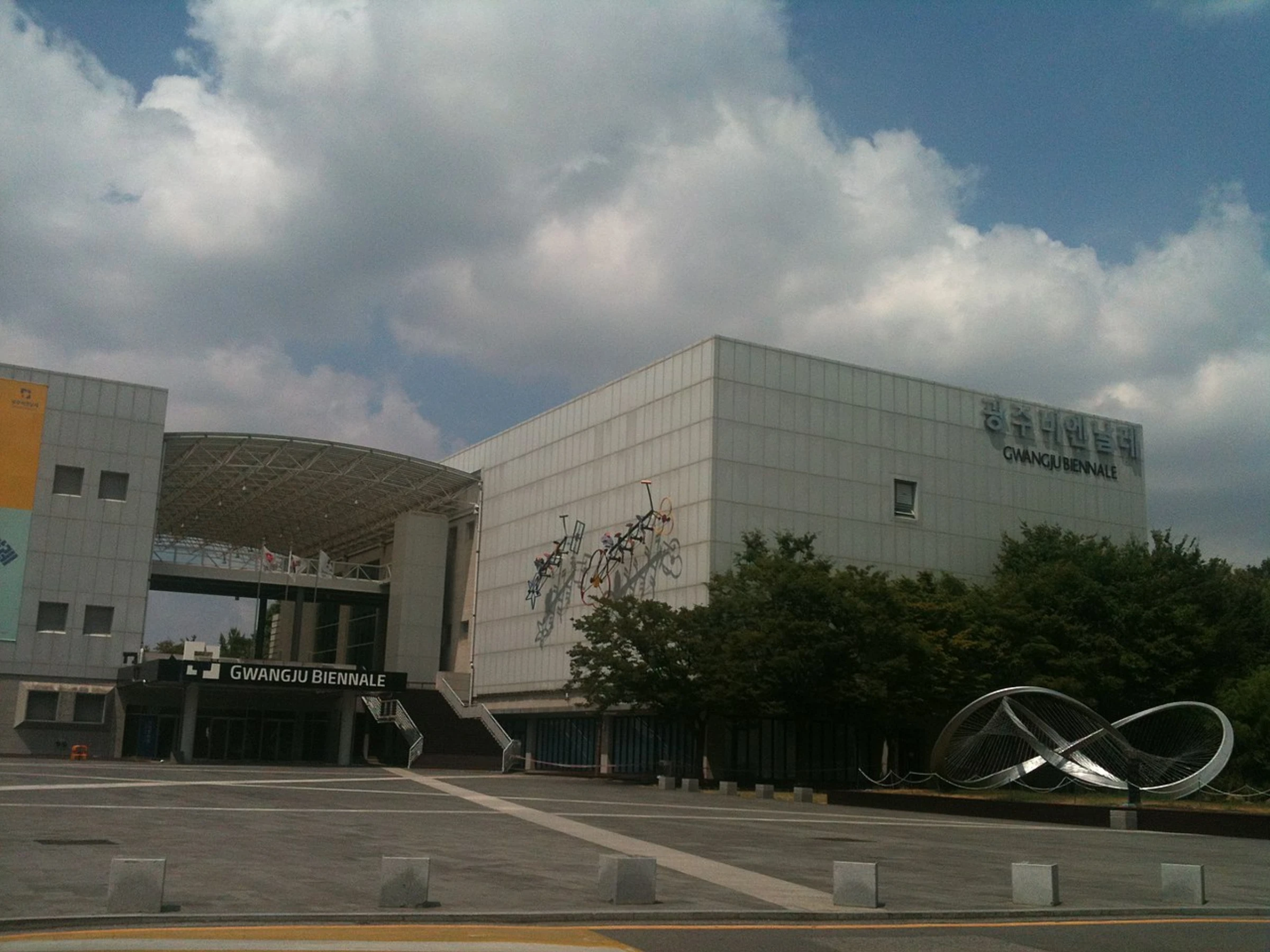
Taiwanese Artists Accuse Gwangju Biennale of Censorship
Taiwanese artists at the 2026 Gwangju Biennale allege organizers renamed their pavilion in political censorship under Chinese pressure
What Happened
Taiwanese artists participating in the 16th iteration of the Gwangju Biennale have alleged that exhibition organizers changed the name of their pavilion in an act of political censorship. The group's proposal was submitted by the National Taiwan Museum of Fine Arts (NTMoFA) and accepted under the name Taiwan Pavilion, but was unilaterally changed on posters promoting the event to NTMOFA. Other national and institutional names on the poster remained unrevised, including Mongolia, UNESCO Creative Cities Network (UCCN), and the international artist-initiated platform Stateless Mind. The pavilion's curator Chen Hsiang-Wen and its ten participating artists condemned the change, which comes amid threats to the nation's sovereignty by China, whose President Xi Jinping has pledged to reunify the two countries and has insisted that other countries not officially recognize Taipei in order to maintain diplomatic ties with Beijing.
The 16th Gwangju Biennale, themed You Must Change Your Life after the last line of Rainer Maria Rilke's 1908 sonnet Archaic Torso of Apollo, runs from September 5 to November 15, 2026. The controversy erupted on August 15, when the Taiwanese group posted a statement on Instagram condemning the name change. The statement noted that more and more, artists across the international art world are having their works altered or removed because of their nationality, gender, faith, or political positions, and that major powers are increasingly using diplomatic pressure and economic resources to interfere beyond their borders. As Artforum reports, the Gwangju Biennale Foundation has characterized the dispute as an administrative difference concerning participant classification and naming conventions that does not concern the content of an exhibition or freedom of expression.
The Biennale's Democratic Legacy
The Gwangju Biennale holds a particular significance in the international art world because of its origins in the South Korean democratic movement. Founded in 1995 to commemorate the May 18 Gwangju Democratic Uprising of 1980, in which citizens of Gwangju rose up against military dictatorship and were massacred by government troops, the biennale has publicly upheld the values of democracy, human rights, freedom and resistance throughout its history. The South Korean artist group Artists' Solidarity Against Censorship has called for the immediate restoration of the name Taiwan Pavilion, disclosure of the organizers' decision-making process, and a formal apology. In their statement, the group noted that since its founding, the Gwangju Biennale has publicly upheld the history of the May 18 Gwangju Democratic Uprising and the values it represents, making the alleged censorship particularly egregious.
The controversy highlights the growing pressure that China has exerted on international cultural institutions to limit the visibility of Taiwan, a pressure that has intensified in recent years as Beijing has adopted increasingly aggressive policies toward the island. Taiwan has been excluded from the United Nations and most international organizations since 1971, when the UN switched recognition from Taipei to Beijing, and China has systematically pushed for Taiwan to be excluded from international cultural events, sports competitions, and diplomatic forums. The National Taiwan Museum of Fine Arts, which submitted the Taiwanese proposal, is a government-funded institution that has been at the forefront of promoting Taiwanese contemporary art internationally, and its participation in the Gwangju Biennale was intended to showcase the vibrancy of Taiwan's art scene on the global stage.
The Pattern of Cultural Censorship
The Gwangju Biennale controversy is not an isolated incident but part of a broader pattern of cultural censorship driven by geopolitical pressures. In recent years, Chinese pressure has led to the renaming or removal of Taiwanese representations at international film festivals, sports events, and academic conferences. The art world has not been immune to this pressure, with several international exhibitions and biennials facing demands to alter or remove works that touch on issues of Taiwanese identity or sovereignty. The Taiwanese artists' statement explicitly addressed this broader pattern, noting that major powers are increasingly using diplomatic pressure and economic resources to interfere beyond their borders and that the international art world has been complicit in this interference.
The South Korean art community's response to the controversy has been notably divided. While the Artists' Solidarity Against Censorship group has strongly supported the Taiwanese artists, the Gwangju Biennale Foundation has maintained that the name change was an administrative decision rather than an act of censorship. The foundation's characterization of the dispute as an administrative difference has been met with skepticism by the Taiwanese artists and their supporters, who note that only the Taiwanese name was changed while other national and institutional names remained unaltered. The South China Morning Post reported that the foundation issued a statement on August 19 describing the dispute as a classification issue, but this explanation has failed to satisfy the Taiwanese artists or their supporters in the South Korean art community.
What Comes Next
The controversy comes at a delicate time for the Gwangju Biennale, which is preparing to open its 16th edition in September. The biennale has not yet announced whether it will restore the Taiwan Pavilion name, and the Taiwanese artists have not indicated whether they will withdraw from the exhibition if the name is not restored. The dispute has already generated significant international attention, with coverage in Artforum, the Taipei Times, and the South China Morning Post, and is likely to intensify as the opening date approaches. The controversy also raises broader questions about the role of international art institutions in mediating geopolitical conflicts, and about the responsibilities of biennials and museums to protect the artistic freedom of their participants.
For the Taiwanese art community, the controversy is a test of its ability to maintain visibility on the international stage in the face of growing Chinese pressure. For the Gwangju Biennale, it is a test of its commitment to the democratic values that it was founded to uphold. And for the international art world, it is a reminder that the freedom of artistic expression is not an abstract principle but a concrete right that must be defended against the pressures of geopolitics and economic power. The controversy has also drawn attention to the broader issue of Chinese influence in the international art world, which has been a growing concern for artists, curators, and institutions in recent years. Chinese funding for cultural projects, Chinese collectors dominance of the global art market, and Chinese government pressure on cultural institutions have all contributed to a climate in which artists and institutions self-censor on issues related to China, Taiwan, Tibet, and other sensitive topics. The Gwangju Biennale controversy is a test case for whether the international art world is willing to push back against this influence, and the response of the biennale foundation and the broader art community will be closely watched by artists, curators, and institutions around the world, and is likely to set a precedent for how international art events handle similar controversies in the future.
The controversy also underscores the fraught politics of national pavilions at international biennials. The practice of organizing national pavilions, which originated at the Venice Biennale in the late nineteenth century, has become a standard feature of international art exhibitions, with biennials in Gwangju, Istanbul, Sao Paulo and other cities adopting the model. National pavilions allow countries to showcase their contemporary art scenes on the global stage, but they also inevitably implicate art in the politics of national representation. The Gwangju controversy demonstrates how the naming of a pavilion can become a site of geopolitical conflict, with a single word carrying enormous political weight. The Taiwanese artists' insistence on the name Taiwan Pavilion is not merely a matter of semantics but a assertion of their national identity and cultural sovereignty, and the Gwangju Biennale Foundation's decision to change the name is, whatever its intentions, a capitulation to Chinese pressure.
The South Korean art community's response to the controversy has been notable for its willingness to challenge the biennale's decision. The Artists' Solidarity Against Censorship group, which includes prominent South Korean artists and curators, has been vocal in its support for the Taiwanese artists, and its statement linking the controversy to the biennale's founding values of democracy and resistance has resonated widely in the South Korean art world. South Korea itself has a complex relationship with Taiwan, maintaining unofficial economic and cultural ties while officially recognizing Beijing. The Gwangju Biennale controversy has brought this relationship into the cultural sphere, forcing South Korean art institutions to confront the question of whether their commitment to artistic freedom extends to artists from countries that face political pressure from major powers. The Taipei Times has reported extensively on the controversy, highlighting the international dimension of the dispute and the solidarity between South Korean and Taiwanese artists.
The Gwangju Biennale Foundation's response to the controversy has been widely criticized as inadequate. The foundation's characterization of the dispute as an administrative difference concerning participant classification and naming conventions has been met with skepticism, given that only the Taiwanese name was changed while other national and institutional names on the poster remained unrevised. The selective nature of the name change undermines the foundation's claim that it was merely a matter of classification, and suggests that the decision was motivated by political considerations rather than administrative ones. The Taiwanese artists and their supporters have called for the immediate restoration of the Taiwan Pavilion name, full disclosure of the decision-making process that led to the change, and a formal apology from the biennale foundation. As the opening of the biennale approaches, the controversy shows no signs of abating, and the foundation's handling of the dispute will be closely scrutinized by the international art community.