Green-Wood’s New Green-House Repositions a Historic Cemetery as Cultural Infrastructure
Brooklyn’s Green-Wood Cemetery has opened a major welcome and education center that ties preservation, public programming, and contemporary art into one long-term civic strategy.
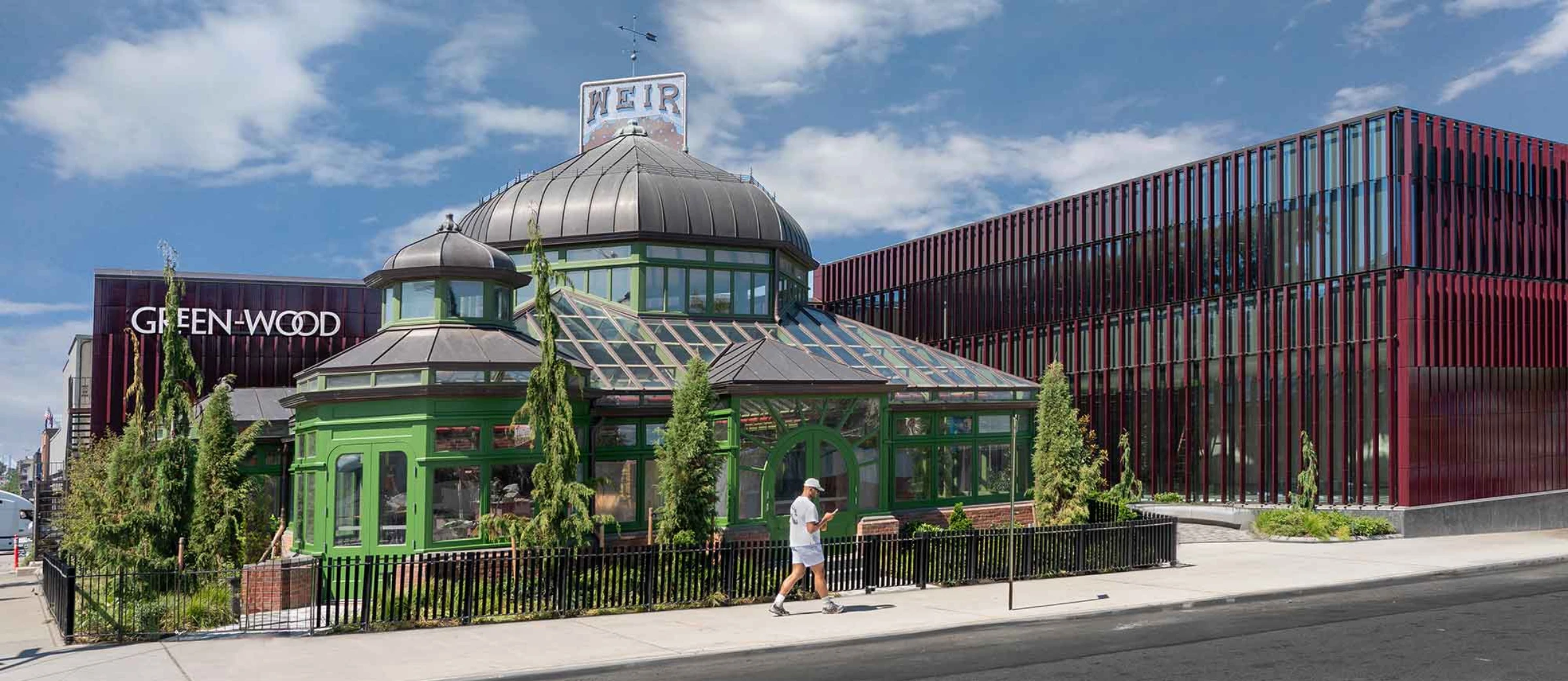
The opening of the Green-House at Green-Wood Cemetery is not just a real-estate upgrade. It is a governance move, one that reframes a major historic cemetery as a year-round cultural institution with broader public obligations. Located across from Green-Wood’s main gate, the project joins a restored 1895 commercial greenhouse with a new educational and archival complex, creating what the cemetery calls a new front door for Brooklyn audiences who may never have crossed into the grounds before.
The strategic context matters. Rural cemeteries in the United States were once essential public landscapes, places for memory, promenade, and civic identity. Many now face difficult economics as burial patterns change and cremation rises. Green-Wood’s answer is to expand its relevance rather than contract its mission. By investing in orientation spaces, school programming rooms, archives, and exhibition galleries, it is building a model that can support visitation, scholarship, and philanthropy beyond funeral traffic.
The built work is significant in its own right. The project restores the city’s last surviving Victorian commercial greenhouse and integrates it with contemporary architecture by Architecture Research Office. The result avoids faux-historic mimicry. It uses material and spatial continuity to connect old and new while preserving legibility, visitors can understand what is original fabric and what is contemporary intervention. That clarity is increasingly rare in heritage-led projects, where design often swings between nostalgia and spectacle.
Operationally, the center solves several long-standing access problems. Green-Wood’s monumental Gothic entry sequence is architecturally powerful but can be intimidating for first-time visitors. The Green-House lowers that threshold. It provides orientation, programming, and casual entry points before people encounter the full scale and emotional weight of the cemetery. For institutions trying to broaden audience demographics, this kind of spatial choreography matters as much as marketing language.
The programming plan is equally important. New gallery space allows more of the cemetery’s holdings and associated histories to enter public view, while the opening exhibition by Jean Shin links contemporary practice to mourning, ecology, and communal care. Shin’s installation and adjacent earthwork avoid decorative placemaking. They engage burial ground material, horticulture, and ritual as living systems, making clear that the project is not a lifestyle add-on to real estate development but a curatorial extension of the cemetery’s core subject, how cities remember and what they choose to maintain.
For New York institutions, the Green-House also sets a useful precedent in audience design. It accepts that many residents are willing to engage difficult histories if institutions provide context, safety, and intellectual seriousness. It does not flatten mortality into wellness branding. Instead, it creates conditions for sustained contact with memory work, archival inquiry, and landscape stewardship.
Financially, the $34 million build sits in a category between museum expansion and civic heritage rehabilitation. That mixed identity could become an advantage. Projects that combine education, preservation, and community infrastructure often attract a wider donor coalition than narrowly defined capital campaigns. If Green-Wood can maintain programming quality and transparent governance, the center may provide a repeatable model for historic cemeteries in other cities facing similar pressure.
In practical terms, Green-Wood now has an institution-scale platform for long-horizon work. The question is no longer whether the cemetery can draw audiences. It can. The question is whether it can convert this momentum into durable public trust, serious scholarship, and intergenerational stewardship. The Green-House gives it the physical and curatorial tools to do exactly that.