Green-Wood Opens a $34 Million Welcome Center That Recasts the Cemetery as a Cultural Campus
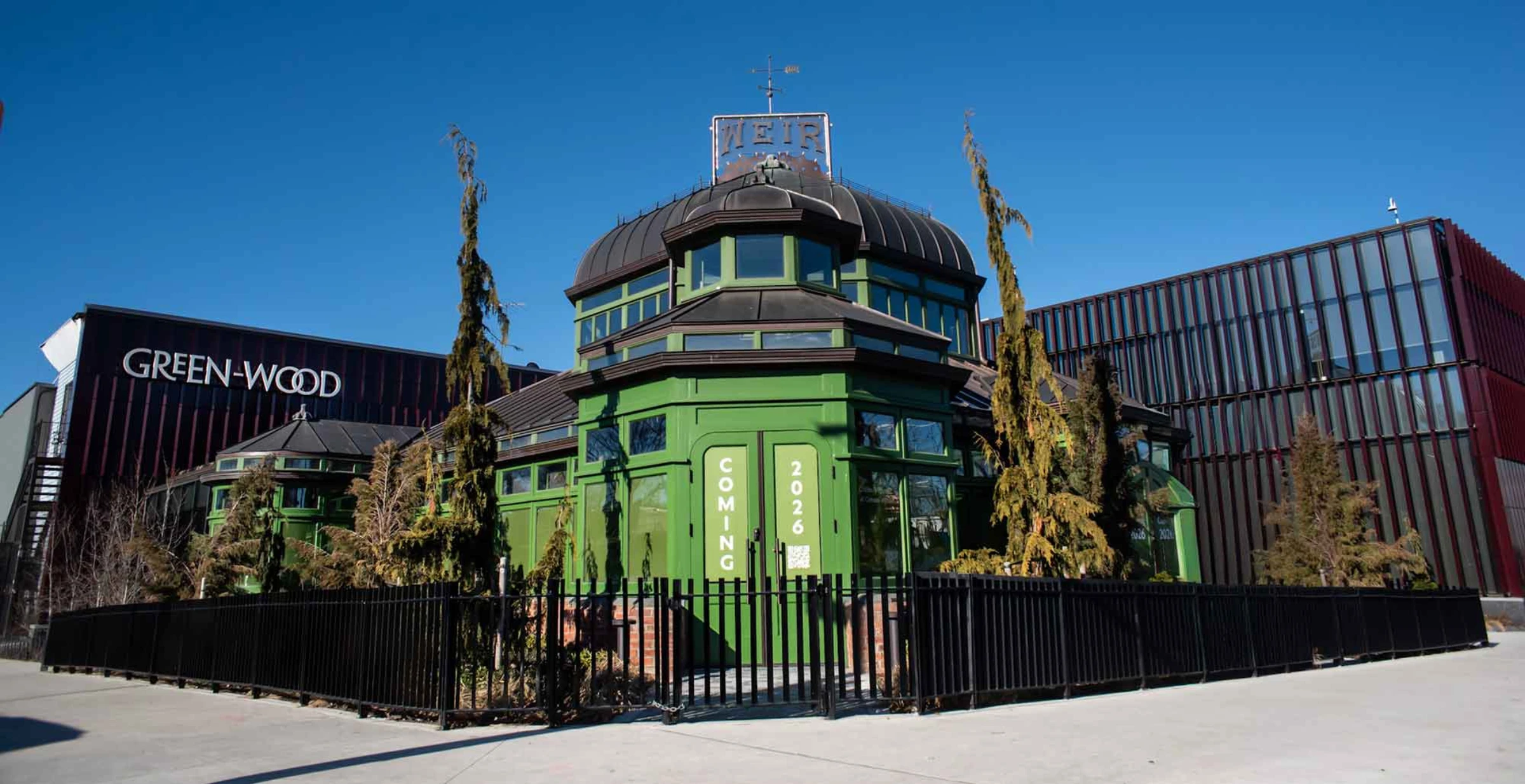
Brooklyn's Green-Wood Cemetery has opened The Green-House, a restored Victorian structure and new education complex designed to connect neighborhood life, heritage stewardship, and contemporary art.
Brooklyn institutions rarely get to rebuild their public interface without flattening their history. Green-Wood Cemetery has managed it. This weekend, the cemetery opens The Green-House, a new welcome and education center anchored by a restored 1895 Victorian commercial greenhouse, wrapped by a contemporary L-shaped addition. The numbers matter. Green-Wood acquired the deteriorating landmark in 2012 for $1.6 million. The full project, designed by Architecture Research Office, lands at about $34 million. This is not cosmetic adaptation. It is a strategic attempt to redefine what a major American cemetery can be in the 2020s.
Green-Wood was founded in 1838, before both Central Park and the Metropolitan Museum of Art. For much of the nineteenth century it functioned as one of New York's most visited landscapes, equal parts burial ground, sculpture park, and public promenade. The city eventually urbanized around it, and contemporary audiences increasingly encounter the site as an urban retreat, a historical archive, and a programming venue for walks, screenings, and performances. The Green-House formalizes that transition in architectural terms. It creates a less intimidating point of entry across the street from the famous neo-Gothic gate and gives first-time visitors orientation before they enter a 478-acre site that can feel daunting without context.
What has been built is also an infrastructure play. Beyond the restored glasshouse, the new complex includes classrooms, archival storage with environmental controls, research space, and rotating exhibition galleries. That matters because Green-Wood's holdings connected to its so-called eternal residents have been under-shown relative to their historical value. A campus with dedicated interpretation spaces changes the institution's publishing and exhibition capacity, not just visitor flow. It positions Green-Wood less as a passive custodian of graves and more as an active cultural producer in Brooklyn's museum ecosystem.
The opening exhibition strategy supports that read. Artist Jean Shin's project links gallery installation, ecological repair, and ritual framing, while her earthwork inside the cemetery gates turns maintenance into long-term public participation. The move is practical as much as symbolic. Cemeteries across the US are confronting a structural shift toward cremation and reduced traditional interment, which means fewer legacy revenue streams and harder decisions about land stewardship. Institutions that can build programming models around archives, education, contemporary commissions, and public history are likely to be more resilient over the next decade.
Green-Wood's timing is also sharp. In cities where public land, memory politics, and climate adaptation are colliding, organizations that hold large green tracts have leverage if they can present clear civic value. The Green-House makes that case in direct terms, translating a preservation success into a neighborhood-facing front door while preserving listed historic fabric recognized by the US National Register of Historic Places. The project does not pretend mortality can be made frictionless. It does something more useful. It builds an institutional threshold where grieving, historical research, contemporary art, and local community use can coexist without diluting one another.
For collectors and museum professionals watching the broader field, the lesson is concrete. Secondary institutions with deep archives, difficult sites, or nontraditional visitor profiles can still command attention when they invest in the public interface and curatorial infrastructure together. Green-Wood has not opened a visitor center in the tourist sense. It has opened a programming engine. If the model holds, The Green-House will be read less as an architectural add-on and more as a template for how heritage organizations with complex missions can remain legible, useful, and culturally ambitious in a city that rarely gives them room to evolve.