Green-Wood’s New Green-House Expands the Cultural Role of Urban Cemeteries
Brooklyn's Green-Wood Cemetery opened a major welcome and education center that reframes cemetery space as public cultural infrastructure.
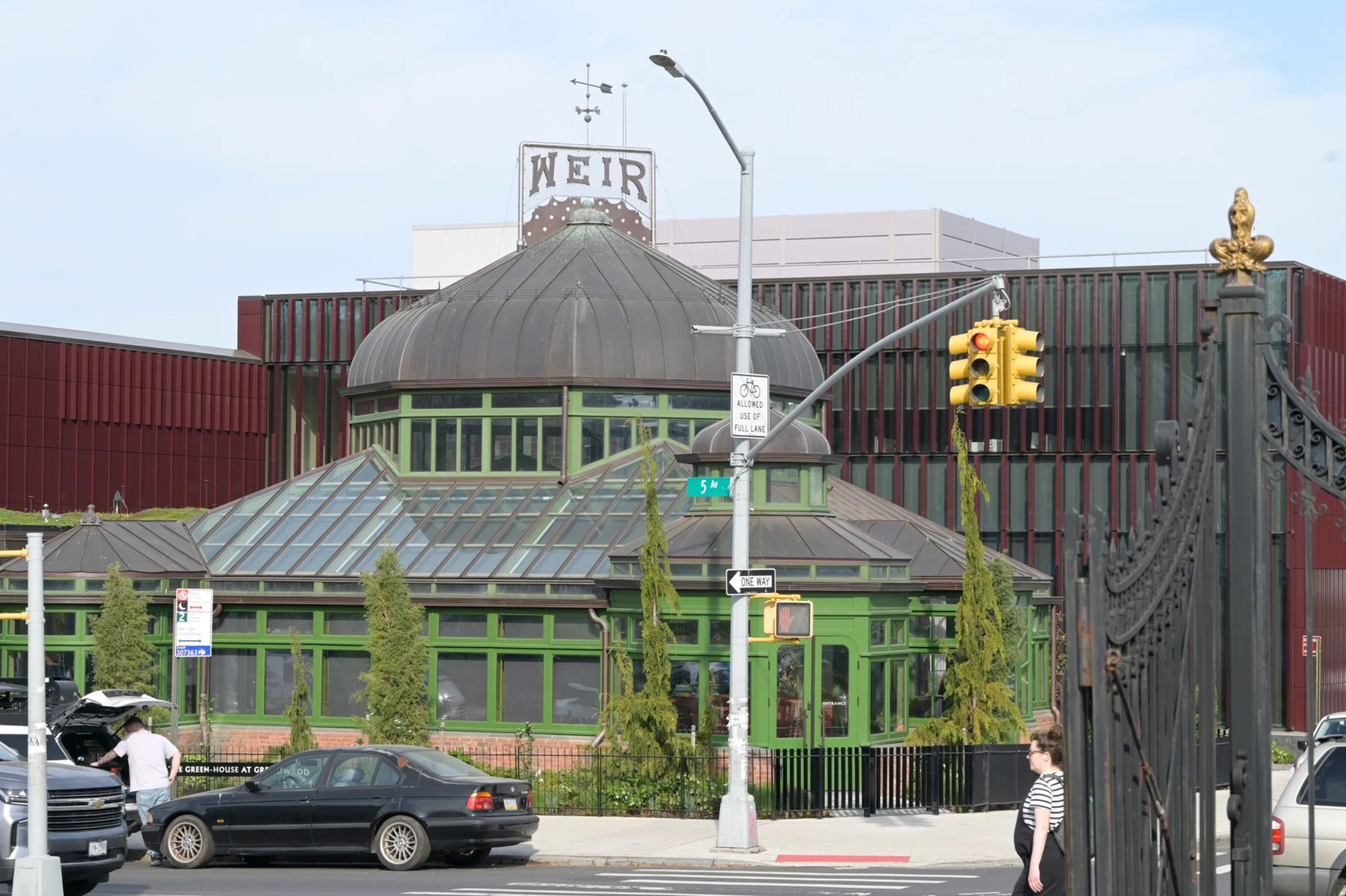
Green-Wood Cemetery in Brooklyn has opened the Green-House, a new welcome and education center anchored by the restoration of an 1895 Victorian greenhouse, and the move is more than a heritage project. It is a structural update to how urban cemeteries position themselves in civic life. Green-Wood has long functioned as both burial ground and public landscape, but this expansion formalizes a third role: year-round cultural institution.The project combines restoration and new construction, with the historic greenhouse integrated into a modern L-shaped complex designed by Architecture Research Office for Green-Wood Cemetery. The program includes classrooms, archive storage, galleries, and public orientation spaces. That mix is telling. The site is being optimized not only for memory and mourning, but for research, education, and contemporary art presentation.For American cemetery policy, this model is significant. Many large historic cemeteries face long-term pressure from declining burial revenues as cremation rises and available interment space narrows. Institutions that depend only on legacy burial economics are exposed. Green-Wood’s strategy, like a handful of peers in major cities, treats public cultural participation as core infrastructure for future sustainability.The center also changes access psychology. Traditional entry to Green-Wood has long been through imposing gates and uphill transitions that can be meaningful but intimidating for casual visitors. A street-facing civic threshold lowers that barrier. In urban design terms, the Green-House works as a social interface between neighborhood life and cemetery space, not a separation line.Programming decisions reinforce that shift. The opening includes contemporary work by Jean Shin, whose installation and earthwork connect ecology, ritual, and material reuse. This is not a decorative add-on. It frames the site as an active platform where historical landscape, ecological stewardship, and contemporary practice can coexist without flattening one another.The broader lesson for institutions is practical. Adaptive reuse projects are strongest when they pair symbolic restoration with operational utility. Green-Wood did not simply preserve a landmarked greenhouse as an object. It made the structure part of a larger workflow for visitors, schools, researchers, and exhibitions. That is a harder path than monument preservation alone, but it generates ongoing public value.There are governance implications too. As cemeteries expand educational and curatorial functions, they increasingly resemble hybrid institutions, part memorial trust, part museum, part park system. That requires new staffing models, new audience metrics, and stronger collaboration with local partners in conservation, public history, and arts programming.Green-Wood’s Green-House is therefore best read as an institutional prototype. In a city where land pressure is constant and civic needs are layered, the project shows how historic sites can evolve without abandoning their core identity. The dead remain central to the site’s meaning, but the living now have a clearer invitation to participate in what that meaning becomes.The project also places Green-Wood in dialogue with peer institutions that blend landscape stewardship and public culture, from Prospect Park Alliance programming models to hybrid archival initiatives across New York. The underlying question is no longer whether cemetery landscapes can host cultural life, but how effectively they can do so without diluting memorial responsibilities.What Green-Wood is building is operationally specific: a front-door system for education, interpretation, and contemporary programming that can be measured over time. Attendance, school partnerships, and curatorial output will determine success, but the institutional intent is clear. This is civic infrastructure designed for long-term use, not a short-term launch moment.For other cities, the transferable lesson is to treat historic sites as living institutions with layered publics. When governance, architecture, and programming align, legacy spaces can become durable cultural anchors rather than nostalgic enclaves.