French Researchers Claim a New Way to Spot Art Forgeries
Researchers in northern France say detailed surface-topography analysis can distinguish forged paintings from authentic works with sharper precision
A New Authentication Tool Enters a Field That Rarely Rewards Certainty
A team of researchers at the Université Polytechnique Hauts-de-France says it has developed a technique that may help distinguish forged paintings from authentic ones by analyzing the topography of painted surfaces at a very fine level. ARTnews flagged the study, which appears in the June 2026 issue of Surface Topography: Metrology and Properties. The paper, titled Preserving Van Gogh’s painterly heritage: topographical and fractal insights in authentication, argues that high-resolution measurement of surface relief can detect patterns of brushwork and material deposition that are difficult for forgers to reproduce consistently.
That claim deserves attention, but not because science has finally solved the forgery problem. The more interesting point is that authentication remains one of the art world’s most fragile zones of authority. Museums, auction houses, scholars, artist estates, and conservation labs all participate in judgments that affect historical reputations and real money. Every time a new technical method is announced, the temptation is to imagine a clean transfer of power from connoisseurship to machine-backed evidence. That fantasy keeps returning because the market loves decisive answers. The field itself is messier. Tools matter, but interpretation still governs how tools are used.
What the French Team Says the Method Actually Adds
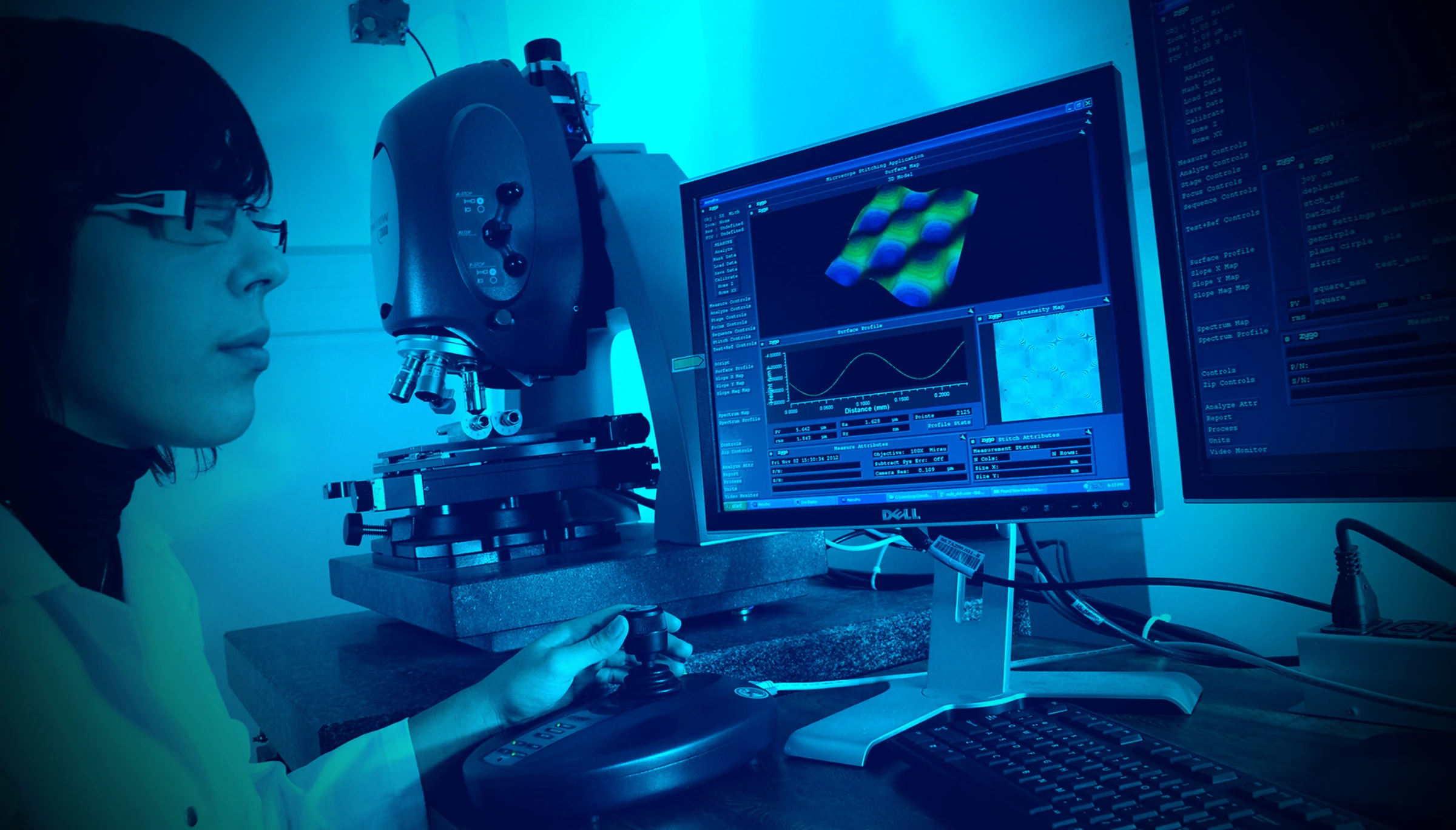
The UPHF researchers are working within a broader ecosystem of scientific imaging and material analysis that already includes pigment testing, X-radiography, infrared reflectography, dendrochronology for works on panel, and increasingly sophisticated digital documentation. Their contribution appears to be a focus on micrometric surface mapping combined with fractal analysis, a mathematical way of describing recurring irregular patterns. The idea is not just to photograph a brushstroke more clearly. It is to quantify the physical behavior of a painted surface so that an authentic work’s micro-relief can be compared against an imitation.
That matters because painters do not only differ in iconography or palette. They differ in pressure, rhythm, layering, drying behavior, and the cumulative logic of touch. Any serious forgery can imitate visible style at the scale of ordinary viewing. What is harder to fake is the total structure of decisions embedded in paint skin. On the UPHF technology platforms page, the university emphasizes instrumentation and cross-disciplinary analysis as a research strength. That framing helps explain why an engineering and materials-science context is useful here. The problem is not merely art historical. It is physical.
The researchers reportedly tested the approach against a known fake Van Gogh and a recently authenticated work. If that comparison holds up under scrutiny, the method could become a valuable supplementary tool for museums and conservation labs, especially in disputes where stylistic debate has stalled. But supplementary is the important word. Even the most promising measurement system does not eliminate the need for provenance research, historical documentation, and expert visual judgment. A forged surface can expose a fake. A convincing surface cannot, on its own, prove everything else the market wants to know.
Why Authentication Technology Keeps Attracting the Art Trade
Authentication stories always travel fast because they touch a nerve the art world rarely admits openly. A great deal of value depends on trusted attribution, yet the mechanisms of trust are unevenly distributed and often opaque. Catalogue raisonnés are incomplete. Artist foundations can close. Estates disagree. Museum records are partial. Auction houses may avoid risky attributions while quietly benefiting from the aura of scientific due diligence. In that environment, new technology looks attractive not just because it may improve accuracy but because it promises a cleaner form of legitimacy.
The market’s appetite for that promise has consequences. Scientific tools are often presented as neutral even when their interpretation depends on institutional context and methodological choices. Which comparison set is used. What margin of variance counts as meaningful. Who controls access to the imaging equipment. Which scholars are willing to sign off. These are not technical footnotes. They determine how evidence circulates and whose judgment becomes authoritative. The art world likes to talk as if attribution were either an act of genius connoisseurship or a laboratory verdict. In reality it is usually a negotiated compound of both.
That is why the French study should be read with interest and caution at once. Interest, because the field genuinely needs better noninvasive tools that can support scholarship and protect buyers, institutions, and public collections. Caution, because the rhetoric of breakthrough tends to outrun what one study can actually establish. Replication matters. Comparative sample size matters. Access matters. A method that works on a specific Van Gogh problem may not translate cleanly to other artists, supports, or restoration histories.
What Museums and Collectors Should Watch Next
Cases like this also reveal how much the authentication economy depends on narrative discipline. A technical result enters the field through press coverage, dealer chatter, conservation discussion, and eventually legal or market disputes. At each stage, the method can be overstated. A promising tool becomes a definitive detector. A helpful dataset becomes a verdict. That inflation is dangerous because it encourages buyers and institutions to outsource judgment to the aura of science rather than to the actual limits of the evidence. We have seen adjacent problems in market stories where uncertainty itself becomes monetized, including our recent report on fake ancient statues tied to Sotheby’s. Once expertise fragments, every actor in the chain has an incentive to present their preferred proof as the cleanest one.
There is, however, a genuinely constructive future here if the field keeps its head. Surface-topography tools could help museums document vulnerable paintings more rigorously, support due-diligence work before major acquisitions, and give conservators another way to track interventions across time. They might even reduce the burden on singular connoisseur figures whose authority has historically been both indispensable and unevenly accountable. But none of that will happen well if laboratories, collectors, and institutions oversell the method before standards for replication and interpretation are settled. The strongest outcome would be a slower one: more shared datasets, more museum-lab collaboration, and a culture willing to admit that better evidence does not eliminate disagreement. In authentication, that is not failure. It is adulthood.
It is also worth noticing what this research says about the continuing traffic between art history and materials science. Some of the most interesting work in museums now happens where conservation, imaging, curatorship, and scholarship overlap rather than sit in separate silos. If the French team’s method travels, it will reinforce that interdisciplinary shift. That could be good for public understanding too, provided institutions explain the results honestly. A museum that can show visitors how surface evidence informs attribution without pretending that a machine has solved taste or history will be doing something more valuable than selling certainty. It will be teaching how evidence actually works.
Collectors should pay attention to that distinction too. The seductive version of this story is that science will protect the market from embarrassment. The more realistic version is that better technical evidence will make the market work harder to justify confidence. That is healthier. A field that treats attribution as a stack of converging probabilities rather than a single magic stamp is less glamorous, but it is also less vulnerable to theatrical certainty and expensive mistakes.
The first question is whether conservation departments and outside labs begin testing the method beyond the original study. If it proves portable, institutions with significant holdings in heavily forged categories could have a new reason to invest in surface metrology. That would not only affect authentication disputes. It could also influence conservation records, collection management, and how museums document condition changes over time. A useful technology often enters the field sideways, becoming routine in conservation before it becomes decisive in headline-grabbing cases.
The second question concerns access. If the method depends on expensive instrumentation and specialized interpretation, it may end up reinforcing inequalities that already define the authentication economy. Wealthy museums and blue-chip market actors will be able to commission deeper analysis. Smaller institutions, regional collections, and heirs without resources may not. That would not make the science invalid, but it would shape who benefits from it. Technical innovation is never socially neutral once it enters a high-value market.
There is also a subtler implication for art history itself. When a new analytical technique gains traction, it can alter what counts as persuasive seeing. Scholars begin to write with new forms of evidence in mind. Institutions adjust their evidentiary threshold. Collectors start asking not only whether a work looks right or comes with decent paperwork, but whether it has been measured in the right way. That shift can be productive, but it can also narrow inquiry if everything becomes a hunt for certainty rather than a study of historical complexity.
So the French researchers may indeed have delivered a meaningful advance. If their method survives wider testing, it could strengthen the evidentiary toolkit available to conservators and attribution experts. But the bigger lesson is that authentication will remain a layered practice no matter how strong the instruments become. Paintings are not passports. Their histories are reconstructed through matter, archive, judgment, and disagreement. Good science can sharpen that process. It cannot replace it. In a market that still craves the fantasy of a single decisive answer, that may be the most useful truth this study forces back into view.