Fake Antiquities Case Exposes Provenance Risk in London
A failed attempt to sell forged ancient statues to Sotheby's shows how much the antiquities trade still depends on provenance, expertise and caution
The fake-statues case is really a story about paperwork, not sculpture
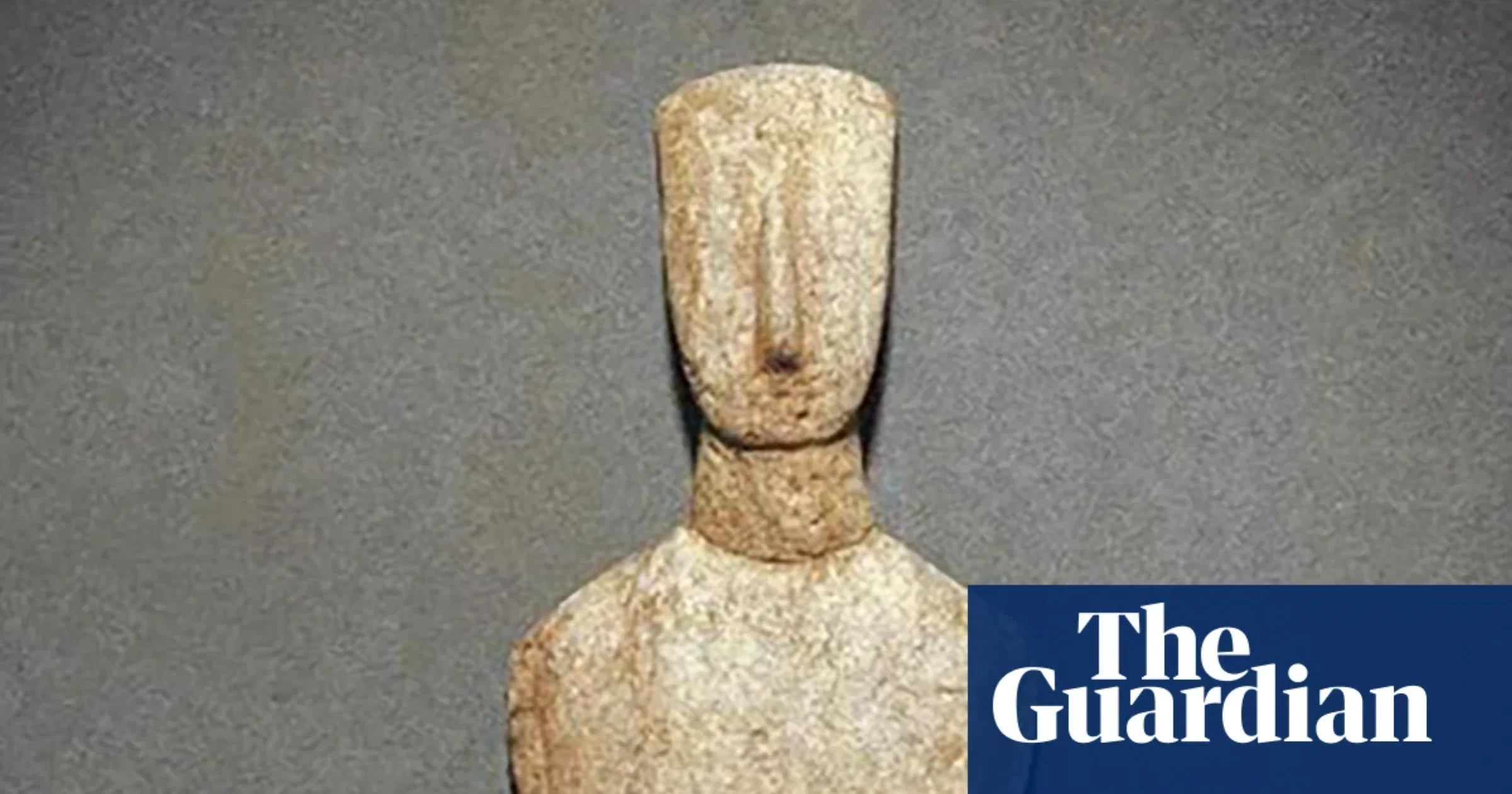
The most revealing detail in the London case involving forged ancient statues is not the objects themselves. It is the paperwork. Andrew Crowley received a suspended sentence after trying to sell three fake Cycladic figures and an Anatolian stargazer statuette through Sotheby's using documents that purported to date from 1976. Forensic analysis showed the printing method used on the invoices did not exist until 2001. That gap did the real damage. The court accepted that Crowley inherited the statues and did not believe the objects themselves were counterfeit. The fraud turned on the attempt to manufacture provenance, because provenance remains the hinge on which legitimacy in the antiquities market still swings.
That is why this case deserves more attention than a routine crime story. It exposes the basic truth that ancient art is not bought and sold on connoisseurship alone. It moves through a mesh of expertise, documentation, chain-of-custody claims and institutional risk management. The objects may be old, but the market around them is radically modern in its dependence on paper trails that can withstand legal and ethical scrutiny. When those documents collapse, value collapses with them.
Sotheby's caught the fraud because the market has become suspicious of provenance theater
According to the court account, Sotheby's specialists noticed spelling mistakes in the invoices while forensic scientists later confirmed that the printing method was too recent. That combination of specialist reading and technical analysis is the point. Auction houses now know that dubious provenance often announces itself through amateur performance rather than perfect forgery. The seller does not only need an object that looks plausible. He needs archival texture, period-correct paperwork and a story that can survive examination by people who spend their lives reading the seams in old claims.
The antiquities trade has been forced into that posture by years of scrutiny around looting, illicit excavation, repatriation and forged histories of ownership. The market can still be opaque, but it is no longer viable for a major house to treat provenance as a decorative add-on. Museums, auction houses and buyers all know that categories such as Cycladic art now come preloaded with legal and ethical questions. The Museum of Cycladic Art and the Metropolitan Museum of Art's overview of Cycladic art both frame these objects through context as much as style. That shift has filtered back into the market. The glamour remains, but compliance sits underneath it.
The figures in this case make that clearer. Prosecutors argued the objects might have been worth around £680,000 if genuine, while the judge reduced the value used in sentencing to £340,000 because that number depended on too many hypotheticals. In other words, value was unstable from the start. In the antiquities market, the leap between decorative object and blue-chip ancient work is produced by credibility. Without credible history, the market cannot pretend certainty. What failed here was not simply an attempted sale. It was an attempt to borrow the authority of archival evidence without doing the hard work of making that evidence believable.
Cycladic art remains a pressure point because scarcity, desire and ethics collide there
Cycladic figures occupy a particularly fraught space in the art market. Their clean, abstracted forms made them catnip for twentieth-century taste, and the category has long been entangled with disputed excavation histories, private collecting and repatriation battles. That means any fresh claim of ownership arrives inside a field already alert to ethical instability. A seller bringing previously unseen Cycladic pieces to a major auction house is not entering neutral territory. He is entering one of the most contested zones in the ancient-art trade.
That context helps explain why crude paperwork was never likely to survive. Institutions know that antiquities from the Aegean and Anatolian worlds can trigger questions about legal export, excavation context and whether an object's market history has been retrofitted after the fact. The seller therefore needs more than possession. He needs a convincing story of custody. When the documentation buckled under forensic dating, the entire proposition became unserious.
This is also why the judge's distinction between fake paperwork and possibly sincere belief about the sculptures matters. In market terms, belief is irrelevant without proof. A person can inherit an object and still have no legitimate claim to its market value if its history cannot be documented. That may sound harsh, but it is one of the few brakes the trade has against laundering dubious material through family legend. The paperwork does not just support the sale. It constitutes the saleable identity of the object.
The legal fiction that often surrounds inherited antiquities is that domestic possession somehow matures into commercial legitimacy on its own. It does not. Once an object enters the market, every missing invoice, export record and publication reference becomes newly consequential. Auction houses have learned this the hard way, not only because of criminal fraud but because repatriation campaigns and scholarly pressure have changed the reputational cost of getting the story wrong. The trade now works inside a landscape shaped by restitution claims, museum due diligence and growing public suspicion of too-convenient collecting histories. That broader climate is part of what made Crowley's paperwork such a weak vessel. It belonged to an older fantasy of how easily the past can be monetised.
The case flatters the market, but it also reveals its fragility
The Metropolitan Police praised Sotheby's cooperation, and the auction house understandably framed the outcome as proof that responsible systems worked. Fair enough. The fraud was caught before the material entered circulation through a major sale room. Yet the case should not be read as a simple vindication of the market. It also reveals how fragile the system remains. A supposedly historical invoice, a dealer's logo and a stamped story were still understood as plausible enough to initiate the process. The gatekeeping worked, but only because specialists stayed skeptical.
That skepticism comes at a cost. It slows transactions, raises due-diligence burdens and forces auction houses to think like quasi-investigators. But there is no serious alternative. The ancient-art trade has spent too long relying on inherited habits of trust, elite reputation and the mystique of expert eyes. Cases like this show why those habits are no longer sufficient. The market now has to prove its cleanliness in procedural terms, not just aesthetic ones.
Collectors should take the hint. The closer a work sits to a category with persistent provenance disputes, the less room there is for nostalgic trust in inherited stories. Houses cannot simply rely on style-based attribution when every sale now lives under the shadow of reputational blowback. That is one reason institutional readers should keep following stories like this. They show how market self-protection, scholarship and law enforcement increasingly overlap. The overlap is imperfect and sometimes performative, but it is still better than the older model in which charm, status and discretion stood in for documentation.
There is a cultural lesson here too. The market still likes to sell antiquities through aura, rarity and the flattering fantasy that possession equals intimacy with the ancient world. Provenance is the mechanism that interrupts that fantasy. It reminds buyers that ancient objects are not free-floating marvels but historical things that moved through excavation, export law, private hands and institutional scrutiny. The more the trade resists that reminder, the more it invites scandal. Cases like this do not damage an otherwise pure market. They expose the weak points that the market will keep producing unless documentation becomes part of value from the start rather than a hurdle added near the sale room.
The larger public should want that. Antiquities are uniquely vulnerable to the fiction that objects can be detached from excavation, border crossing and prior ownership without moral remainder. They cannot. Every missing link in provenance is potentially a legal and historical problem. That is what makes this case connect to broader institutional legitimacy questions, including our recent guide on legitimacy crises. Once an institution or market actor starts treating documentation as a box-ticking exercise, the entire public story around stewardship begins to rot.
What comes next for auction houses and collectors
The practical lesson for collectors is brutal and simple. If your object's history lives only in family memory, your confidence means very little once the work enters a serious market setting. Auction houses will keep demanding stronger paper trails, and forensic scrutiny will keep rising. That does not eliminate fraud, but it does change the threshold for plausible fraud. Forgers and opportunists now need to fake bureaucracy as persuasively as they fake age.
For auction houses, the reputational stakes are even higher. Catching bad material is no longer just about avoiding one embarrassing consignment. It is about proving that expertise still has public value in a market many people assume is driven by money first and ethics later. The fastest way to destroy that claim would be to let weak provenance sail through because the estimate looked tempting.
What this week's case really shows is that the antiquities market is governed by narrative discipline disguised as due diligence. Objects need stories, and those stories must survive forensic, stylistic and legal reading at once. Crowley's paperwork failed because it belonged to the fantasy version of the art market, the one where a typed invoice and a good inheritance tale can still open the vault. That world is not completely gone, but at the top end it is shrinking. London just gave everyone a reminder of why it has to.