Etruscan Bronze Statues Found in Ancient Italian Well
Archaeologists discover remarkably preserved bronze figures and a rare bowl in a ritual well at the ancient Etruscan city of Kainua near Marzabotto
What Happened
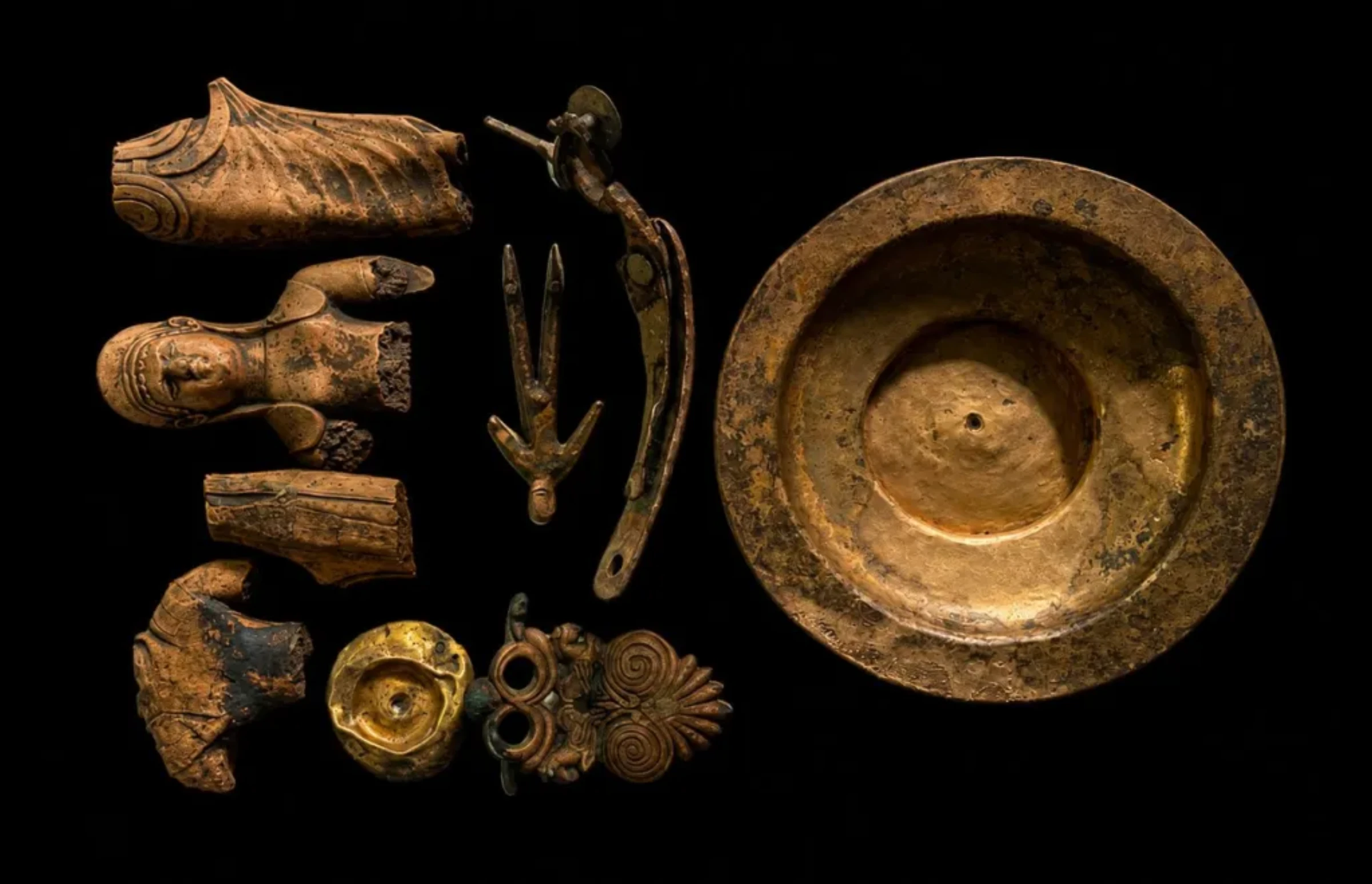
Archaeologists working in northern Italy have excavated remarkably well-preserved bronze artifacts from a well dating back to the ancient Etruscan city of Kainua, near the town of Marzabotto. The excavation, undertaken by the University of Bologna and the Ravenna Archaeological Group, uncovered two bronze statues of female figures and an extremely rare bronze bowl, along with human remains belonging to two adults. The bronzes have maintained their metallic luster after nearly two and a half millennia underground, a testament to both the quality of Etruscan metalworking and the preservative conditions of the well environment.
The discovery was reported by ARTnews and Heritage Daily. The artifacts were found at the bottom of the ancient well, where they had been deliberately placed as votive offerings rather than accidentally discarded. The positioning and condition of the objects suggest a ritual deposit, made in a context that gave the well religious significance beyond its practical function as a water source. The find adds to the growing body of evidence that Etruscan settlements in the Po Valley region were centers of sophisticated ritual practice and metalworking tradition.
The Etruscan City of Kainua
The ancient city of Kainua, located near modern Marzabotto in the Emilia-Romagna region, was one of the most important Etruscan settlements in northern Italy. Founded in the sixth century BC, the city was a planned urban center with a regular grid of streets, a feature that distinguishes it from many contemporary settlements and suggests a high degree of political organization. The city's location in the Po Valley gave it strategic control over trade routes connecting Etruria to the north and east, and archaeological evidence from the site indicates a prosperous community engaged in agriculture, metalworking, and trade.
The well where the bronzes were discovered was not merely a utilitarian water source. According to Heritage Daily, the discovery suggests the well served as a sacred place associated with ceremonies involving water and possibly the foundation of Kainua itself. The practice of depositing valuable objects in wells, springs, and other water sources was common in Etruscan religion, which placed great emphasis on the liminal qualities of water as a boundary between the human and divine worlds. Similar votive deposits have been found at other Etruscan sites, including the famous Brolio sanctuary in Val di Chiana, but the preservation quality of the Kainua bronzes makes this find particularly significant. The University of Bologna team's ongoing work at the site continues to reveal new information about Etruscan ritual practices and urban organization.
The Artifacts and Their Significance
The two bronze female figurines and the rare bronze bowl represent some of the finest surviving examples of Etruscan small-scale bronzework. The female figures, likely representing deities or priestesses, are consistent with the broader corpus of Etruscan votive bronzes that have been found at sanctuary sites across central and northern Italy. These objects were typically produced in workshops and sold to worshippers who would deposit them at sacred sites as offerings to the gods. The rare bronze bowl, meanwhile, may have been used in the ritual ceremonies conducted at the well, possibly for libations or other liquid offerings.
The human remains found at the site belong to two adults and are thought to date from a different era than the bronze works. This temporal discrepancy suggests that the well retained its sacred significance over an extended period, with later communities continuing to use the site for ritual purposes long after the original deposit was made. The practice of depositing human remains in sacred wells is known from other Etruscan and Italic contexts, though it is less common than the deposition of votive objects. The combination of bronze figurines, a ceremonial bowl, and human remains in a single context provides a rich archaeological assemblage that will take years to fully analyze and interpret.
What Comes Next
The artifacts will undergo conservation and analysis at the University of Bologna's archaeological laboratories, where researchers will use spectroscopic and metallurgical techniques to determine the composition of the bronzes and identify any inscriptions or workshop marks that may be present. The results will be published in archaeological journals and may eventually be displayed at the Museo Nazionale Etrusco Pompeo Aria in Marzabotto, which houses the existing collection of artifacts from the Kainua site. The discovery is likely to prompt further excavation of the well and surrounding area, as the University of Bologna team seeks to understand the full extent of the ritual complex.
The find also contributes to a broader reassessment of Etruscan civilization that has been underway for several decades. For centuries, Etruscan culture was understood primarily through the lens of Roman sources, which portrayed the Etruscans as a mysterious and decadent people whose civilization was absorbed by Rome. Modern archaeology has overturned this narrative, revealing a sophisticated society with distinctive artistic traditions, advanced engineering capabilities, and complex religious practices. The Kainua bronzes, with their fine craftsmanship and ritual context, add another chapter to this reassessment, demonstrating that Etruscan communities in the Po Valley were engaged in cultural practices as sophisticated as those of their central Italian counterparts. The ongoing work at Marzabotto, supported by the Italian Ministry of Culture, will continue to shed light on this poorly understood but increasingly appreciated civilization.
The discovery also highlights the role of archaeological field schools and international collaboration in advancing the study of ancient Italy. The University of Bologna's partnership with the Ravenna Archaeological Group, a volunteer organization that has been conducting excavations in the region for decades, demonstrates how professional archaeologists and community researchers can work together to produce significant results. The Ravenna Archaeological Group has been involved in excavations at Marzabotto since the 1990s, and their local knowledge and field experience have been instrumental in identifying promising excavation sites and navigating the complex logistics of working in a protected archaeological zone. The partnership model has been replicated at other Etruscan sites in Emilia-Romagna, and it may serve as a template for future archaeological projects that seek to combine academic research with community engagement.
The bronzes themselves will be studied alongside the existing corpus of Etruscan votive figurines from Marzabotto and other sites, allowing researchers to compare their style, technique, and iconography with related objects. Stylistic analysis may help identify the workshop that produced the figurines, potentially linking them to known Etruscan bronze-working traditions in the region. Metallurgical analysis, which examines the composition of the alloy used to cast the bronzes, can provide information about trade networks and the sourcing of raw materials. Etruscan bronzework typically used copper alloys with varying proportions of tin, lead, and zinc, and the specific composition of an artifact can sometimes be matched to known ore sources, providing evidence of trade routes and material exchange networks. The Kainua bronzes, when analyzed, may reveal connections to ore sources in the Tuscan mining district or to more distant suppliers, shedding light on the economic networks that supported Etruscan metalworking.
For the local community in Marzabotto, the discovery is a source of pride and a potential driver of cultural tourism. The Museo Nazionale Etrusco Pompeo Aria, which already houses one of the most important collections of Etruscan artifacts in northern Italy, may see increased visitor numbers as news of the discovery spreads. The museum's existing displays include artifacts from the Kainua necropolis, domestic quarters, and artisan workshops, providing context for the new finds and allowing visitors to understand the bronzes within the broader picture of Etruscan urban life. The Italian Ministry of Culture has invested in improving visitor facilities at Etruscan sites in recent years, and the Kainua discovery may prompt further investment in the museum and the archaeological park that surrounds it.
The ritual significance of water in Etruscan religion provides an important context for understanding the Kainua well deposits. The Etruscans, like many ancient Mediterranean peoples, believed that wells, springs, and caves were points of contact between the world of the living and the realm of the gods. Excavations at other Etruscan sanctuary sites, including the Fonte del Lupo at Brolio and the sanctuary at Pyrgi, have revealed similar patterns of votive deposition in water contexts, where worshippers deposited bronze figurines, ceramic vessels, and other offerings to solicit divine favor or give thanks for answered prayers. The Kainua well, with its combination of bronze figurines, a ceremonial bowl, and human remains, may represent a particularly elaborate example of this practice, reflecting the importance of the well to the foundation and identity of the community. The presence of human remains from a later period suggests that the site continued to hold ritual significance even after the original votive deposit was made, a pattern that has been documented at other Etruscan sacred sites and that underscores the enduring power of place in ancient religious practice.
The find also comes at a time of renewed interest in the Etruscans among both scholars and the general public. Major exhibitions of Etruscan art have been staged in recent years at institutions including the Villa Giulia in Rome and the Museo Archeologico Nazionale in Florence, drawing record attendance and generating new scholarship. The Etruscans, who were once dismissed as a precursor civilization that was absorbed by Rome, are increasingly recognized as innovators in urban planning, engineering, and art whose influence on Roman and later Italian culture was profound. The Kainua bronzes, with their fine craftsmanship and ritual context, contribute to this reassessment and remind us that there is still much to learn about a civilization that flourished in Italy for centuries before the rise of Rome.