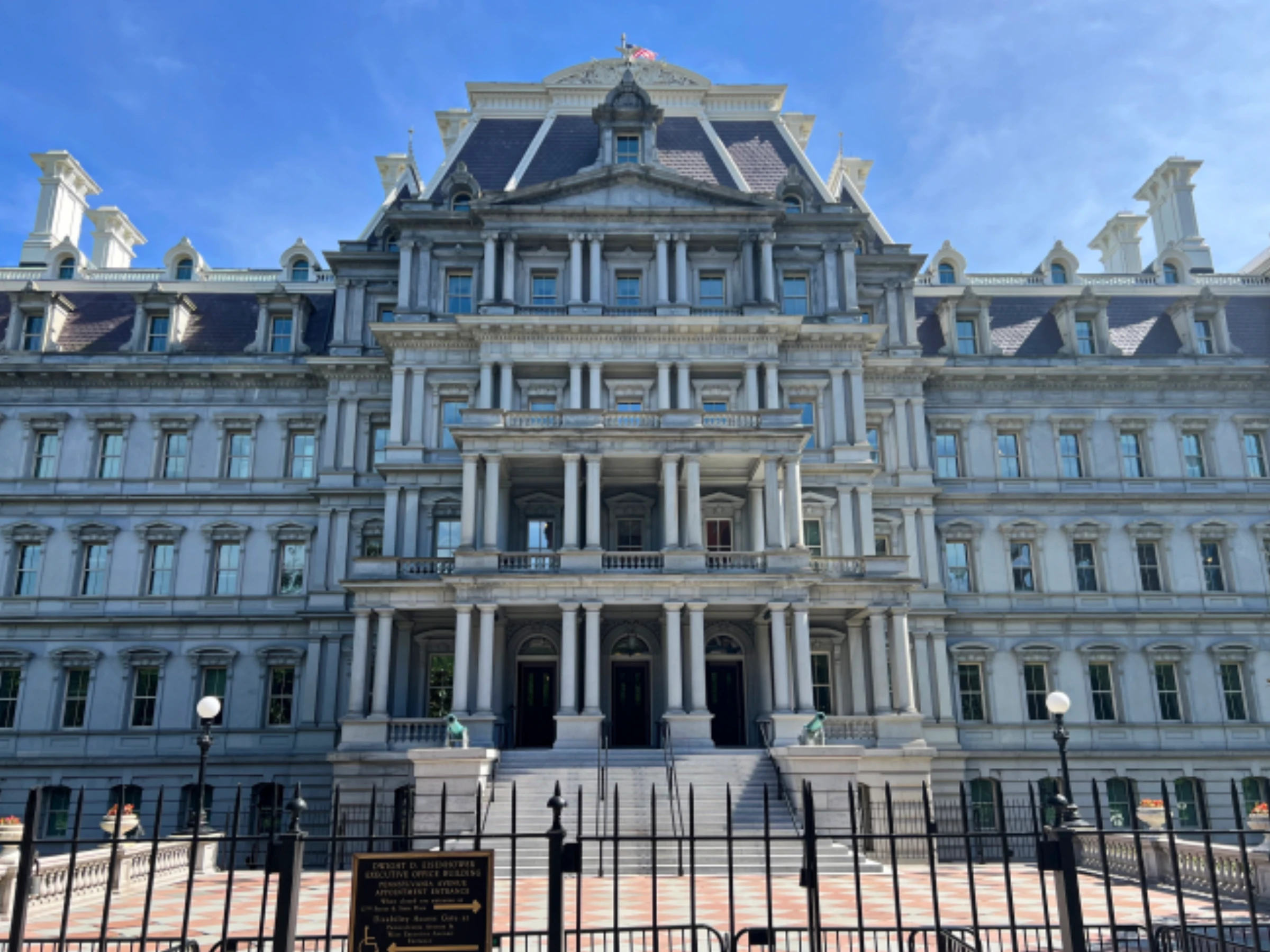
Judge Approves Trump Paint Tests on Eisenhower Building
Federal judge permits Trump administration to conduct limited paint tests on the Eisenhower Executive Office Building, a National Historic Landmark
What Happened
A federal judge has granted the Trump administration permission to proceed with paint tests on the Eisenhower Executive Office Building in Washington, DC. President Trump's desire to coat the granite facade with white paint has been met with significant pushback from historians and preservationists who say that covering the historic building's granite exterior with paint could trap moisture and damage the stone. Judge Dabney L. Friedrich ruled this week that initial tests to determine how the pigment would affect the building's exterior would not cause what preservation groups referred to as irreparable harm. The ruling represents the latest development in an ongoing conflict between the Trump administration and preservation advocates over the treatment of historic federal buildings in the nation's capital.
The paint tests will consist of swatches covering approximately eight square feet of the building's exterior. Judge Friedrich emphasized that she would potentially intervene if officials went beyond the allotted parameters for the testing. She asked both Trump officials and the preservation groups to provide status reports on the ongoing project by next week. The organizers of the painting project have said that a full paint job would cost at least $7.5 million. As Artforum reports, the ruling is a limited one, and the much larger questions about whether the president can paint the Eisenhower Building and whether the White House can exempt this project from federal law remain open in the active case.
The Building and Its Significance
The Eisenhower Executive Office Building is a National Historic Landmark that was built between 1871 and 1888 and designed by Alfred B. Mullett, the supervising architect of the Treasury Department. An example of French Second Empire style architecture, the building's granite walls are almost four feet thick. The building is one of the most significant examples of 19th-century federal architecture in Washington, and its ornate facade, with its mansard roofs, elaborate window surrounds, and carved stonework, has been a defining feature of the White House complex for more than 150 years. The building houses the Office of the Vice President and various executive branch agencies, and it has been the site of numerous historically significant events in American political history.
Preservationists have argued that painting the granite facade would fundamentally alter the character of the building and could cause long-term damage to the stone. Granite is a porous material that can trap moisture beneath a painted surface, leading to cracking, spalling, and other forms of deterioration. The National Historic Landmark designation of the building requires that any alterations to its exterior be subject to review under the National Historic Preservation Act, a process that the Trump administration has sought to bypass. The preservation groups filing the emergency motion, represented by Greg Werkheiser of Cultural Heritage Partners, have argued that the administration's approach to the project has been characterised by a disregard for established legal processes and a willingness to act first and seek permission later.
Trump's Broader Campaign
The Eisenhower Building paint project is part of a broader campaign by Trump to what he has described as beautify the nation's capital, an effort that early estimates have calculated will cost over $1 billion. Preservationists have raised concerns about how many of Trump's projects, including the Freedom 250 Grand Prix, the gilding of DC horse statues, and proposed cuts to the Smithsonian, could damage historic properties and heritage sites in the area. The Kennedy Center board, now dominated by Trump appointees, voted earlier this year to put Trump's name on the building, a decision that was challenged in court by a Democratic lawmaker who asked a judge to block the inscription.
The Trump administration's approach to historic preservation has been characterised by a willingness to challenge established norms and legal frameworks. The administration has argued that the president has the authority to make changes to federal buildings without going through the usual review processes, a position that has been challenged by preservation groups and legal scholars. The Advisory Council on Historic Preservation, the independent federal agency that oversees the implementation of the National Historic Preservation Act, has been sidelined in the process, and its concerns about the paint project have been largely ignored by the administration. The conflict over the Eisenhower Building is likely to continue, with the preservation groups preparing for a broader legal challenge if the administration moves forward with the full paint job.
What Comes Next
The judge's ruling is a limited one, and the preservation groups remain optimistic about their chances of blocking the full paint job. Werkheiser emphasised that the much larger questions about whether the president can paint the Eisenhower Building and whether the White House can exempt this project from federal law remain open. The status reports requested by the judge will provide an opportunity for both sides to present their cases, and the preservation groups are likely to use the reports to argue that the paint tests are a prelude to a larger project that should be subject to full review under the National Historic Preservation Act.
The paint tests have also drawn criticism from architectural historians who note that the Eisenhower Building is one of the finest surviving examples of French Second Empire architecture in the United States. The style, which was popular in France during the reign of Napoleon III, is characterised by mansard roofs, elaborate dormer windows, and ornate stonework, all of which would be obscured or altered by the application of white paint. The building is also significant for its role in American political history, having housed the offices of numerous presidents, vice presidents, and cabinet members over the past century and a half. Painting its facade white would represent a dramatic departure from the building's historic appearance and would set a precedent for the alteration of other historic federal buildings. The National Park Service, which administers the National Historic Landmark program, has expressed concern about the project, noting that changes to landmark buildings should be undertaken only after careful review and with the input of qualified preservation professionals.
The legal battle over the Eisenhower Building is also significant because it tests the willingness of the courts to restrain the president's authority over federal properties. The Trump administration has argued that the president has broad discretion to make changes to federal buildings, a position that has been challenged by legal scholars who note that the National Historic Preservation Act and other federal laws impose specific obligations on federal agencies with respect to historic properties. The administration has also sought to exempt the project from certain environmental and preservation requirements, a move that has been challenged in court by the preservation groups. The outcome of the case will have implications not only for the Eisenhower Building but for the broader range of historic federal properties in Washington and around the country, many of which are protected by preservation laws and regulations that the administration may seek to bypass.
The conflict over the Eisenhower Building is part of a broader pattern of tension between the Trump administration and the cultural heritage community, a pattern that has included proposed cuts to the Smithsonian, the gilding of DC horse statues, and the Kennedy Center naming controversy. These conflicts have drawn attention to the vulnerability of historic properties and cultural institutions to political interference, and have prompted calls for stronger legal protections for historic buildings and cultural sites. The ruling has also prompted a broader discussion about the role of the federal government in preserving historic properties. The General Services Administration, which manages federal buildings, has historically been a steward of some of the nation's most significant architectural landmarks, but the Trump administration's approach has raised concerns about whether the agency will continue to uphold its preservation obligations. The GSA's historic preservation program has been a model for federal agencies, but its authority has been challenged by the administration's willingness to bypass established review processes. The Eisenhower Building case is a test of whether the courts will enforce the legal requirements that govern the treatment of historic federal properties, or whether the president's authority over federal buildings will be allowed to override the preservation laws that have protected them.
The ruling has also raised questions about the role of the courts in adjudicating disputes over historic preservation. Judge Friedrich's decision to allow limited paint testing while retaining the authority to intervene if the tests go beyond the allotted parameters reflects a cautious approach that has been praised by some legal scholars and criticized by others. Some have argued that the judge should have required the administration to complete the full review process under the National Historic Preservation Act before allowing any testing, while others have noted that the limited nature of the tests does not warrant a preliminary injunction. The case is likely to be cited as a precedent in future disputes over the treatment of historic federal properties, and the judge's handling of the matter will be scrutinized by legal scholars and preservation advocates. The outcome of the Eisenhower Building case will be closely watched by preservationists, legal scholars, and cultural institutions around the country, and is likely to set a precedent for how the administration's broader campaign to reshape the capital's architectural landscape will be received by the courts and the public.