Newly Discovered Bernini Painting Unveiled in Vienna
Kunsthistorisches Museum attributes Portrait of an Old Man to Gian Lorenzo Bernini, reshaping understanding of the sculptor as a painter in his later years
What Happened
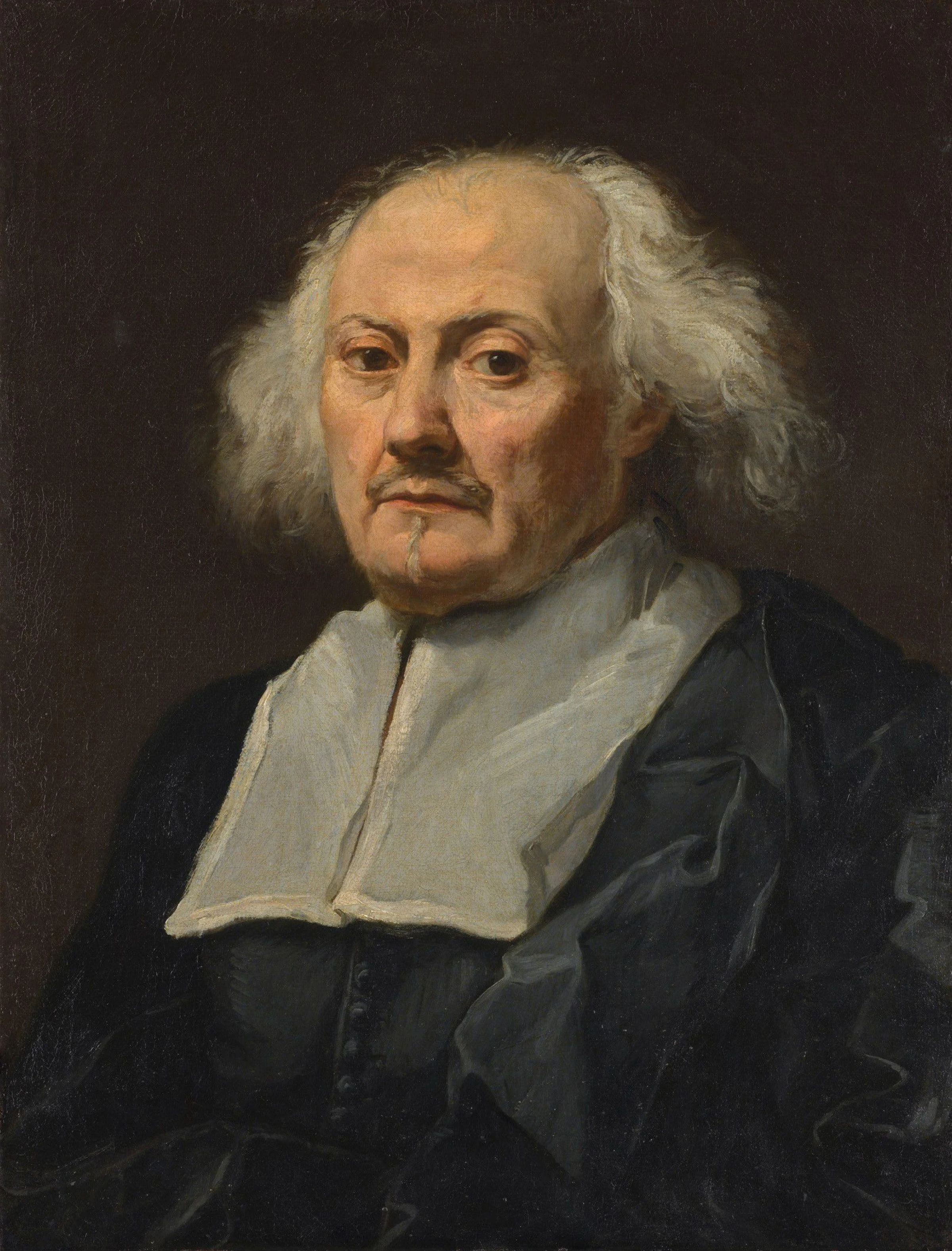
A newly discovered painting by Gian Lorenzo Bernini will be unveiled in December at the Kunsthistorisches Museum in Vienna. Known primarily as a sculptor and architect whose work defined the Baroque period, Bernini is not widely recognized as a painter, with fewer than 20 accepted paintings attributed to him. The Vienna painting, Portrait of an Old Man, depicts the nearly life-size head and shoulders of an elderly man with dishevelled white hair, set against a dark background. His intense gaze is directed at the viewer, giving the work a vitality that has gone unrecognized for more than a century. Until very recently, the museum attributed the portrait to an anonymous 17th-century artist working in Rome.
The painting entered the Kunsthistorisches Museum in 1920 as a work by the Paris-based painter Philippe de Champaigne. It was bequeathed by the Viennese collector Richard Lieben, who had bought it in 1900, and before that it was with Baron Engelshofen. Nothing is known of its early provenance. Since 1920, the portrait has been variously attributed to an anonymous Italian artist, to the French artists De Champaigne or Jean Jouvenet, and to the Flemish artists Jakob Ferdinand Voet or Erasmus Quellinus the Younger. More recently, the Italian painter Baciccio, Bernini's collaborator, was proposed as the possible author. Without a firm attribution, the Vienna portrait was banished to the storeroom in 1989. As The Art Newspaper reports, the painting is not even considered sufficiently important for inclusion among the 2,800 paintings catalogued on the museum's website.
The Attribution
The attribution to Bernini was made by the Kunsthistorisches Museum's curator Gudrun Swoboda, who believes the man's garment and collar, as well as his hair style, reflect Rome fashions of around 1670. Swoboda's strongest arguments in favour of the Bernini attribution are comparisons with accepted paintings, drawings and sculptures. She believes that the artist of the portrait paid special attention to creating a sense of space, with an observant eye for anatomy, especially the skull and facial muscles. The mouth of the old man in the portrait is slightly open and his lips are moulded with precision, which Swoboda sees as the work of an artist with a sense of the sculptural. She also sees parallels with Bernini's masterpiece bust of Louis XIV, now at Versailles, particularly in the corners of the mouth.
Swoboda says the layers of paint in the face were applied in the manner of a sculptor building up and modelling a face in clay, using a multitude of short bristle-brush strokes of paint. With the moustache, the artist is sculpting with the brush, she says. There are stylistic parallels between the painted portrait and a fine self-portrait drawing in the UK's Royal Collection dated to 1675-80. The light that falls from above at a steep angle, as well as the dynamic of the collar and the alert gaze, are similarly handled in the two works. A recent scientific examination of the painting confirms that it was executed by two different hands, with the face likely done by Bernini and the lower part by another artist, possibly one of his sons. The Kunsthistorisches Museum has invited other specialists to comment privately on the attribution, and the upcoming exhibition will provide an opportunity to reach a definitive judgement.
Why It Matters
The attribution of Portrait of an Old Man to Bernini has the potential to radically reshape our conception of Bernini as a painter. It is usually assumed that Bernini ceased to paint around 1650, 20 years before the museum's portrait, which makes the attribution controversial. However, a scattering of documents mention later paintings done in Rome, and if the Vienna painting's new attribution is accepted, along with a date of around 1670, it would extend Bernini's activity as a painter into his later years. By 1670, Bernini was himself an old man, aged 71, but he went on to live to 81, a great age at the time.
Although historical sources document that Bernini completed up to 200 paintings, mostly portrait studies, only around 16 surviving works are widely accepted by specialists, and all date from between 1620 and 1640, other than one from around 1666. The Vienna painting, if accepted, would be the latest-known Bernini painting, pushing his activity as a painter into the final decade of his life. The attribution also raises questions about Bernini's working methods in his later years, including his collaboration with other artists and his use of assistants. The historical record documents that Bernini continued to work as a sculptor and architect well into his 70s, and the Vienna painting suggests that he may have continued to paint as well, albeit with assistance on the less critical portions of the work.
What Comes Next
Portrait of an Old Man will be the centrepiece of a Kunsthistorisches Museum exhibition at Vienna's Palais Lobkowitz, Bernini: Painter and Sculptor, running from 2 December to 4 April 2027. Outside loans will include the Galleria degli Uffizi's Bernini self-portrait painting, dated around 1635, and the Royal Collection's self-portrait drawing. The exhibition will bring together comparable works for the first time, allowing specialists to assess the Vienna portrait alongside accepted Bernini paintings and drawings. Although other specialists have recently been privately invited to comment on the Vienna portrait, the show, with other comparable works, will hopefully provide an opportunity to reach a definitive judgement on the attribution.
The exhibition is also likely to generate renewed scholarly interest in Bernini's paintings, which have been overshadowed by his monumental sculptures and architectural projects. Bernini's work as a painter has long been a peripheral topic in Baroque art history, but the Vienna discovery, combined with the exhibition, may prompt a reassessment of his contribution to the history of painting. The Kunsthistorisches Museum has indicated that the exhibition will be accompanied by a scholarly catalogue, and that the results of the scientific examination of the painting will be published in full. For now, the attribution remains provisional, but the potential significance of the discovery is undeniable, and the art world will be watching closely when the exhibition opens in December. The Kunsthistorisches Museum has a long history of important attributions, and its scholarly reputation lends weight to the Bernini claim. The museum's collection of paintings is one of the finest in Europe, with works by Vermeer, Raphael, Titian, and Caravaggio, and its curators are known for their rigorous approach to attribution. The Bernini attribution, if accepted, would add a significant work to the museum's collection and would enhance its reputation as a center for Baroque scholarship.
The discovery also highlights the importance of storerooms as a source of overlooked masterpieces. Many museums have works in storage that have never been properly studied, either because they were attributed to minor artists or because they lacked the resources to conduct thorough investigations. The Vienna portrait was in storage for more than 30 years before Swoboda began her research, and there are likely many other works in museum storerooms around the world that could be similarly reattributed. The Art Newspaper has reported on several similar discoveries in recent years, including the reattribution of works by Rubens, Velazquez, and Caravaggio that had been in museum collections for decades or centuries without being recognized.
The Bernini attribution also has implications for the market value of the painting, although the Kunsthistorisches Museum has indicated that the work is not for sale. If the attribution is accepted, the painting would be one of only a handful of Bernini paintings in existence, and its value would be incalculable. The painting's provenance, which is incomplete, may also be a subject of further research, as scholars attempt to trace its history back to Bernini's workshop. The identification of the sitter as Mario Chigi, a brother of Pope Alexander VII and Bernini's most important late patron, remains speculative, but if confirmed, it would further strengthen the attribution and would provide valuable context for the painting's creation. The Kunsthistorisches Museum has indicated that further research into the painting's provenance and iconography will be ongoing, and that the results will be published in due course. The museum has also indicated that it plans to conduct further research into the paintings materials and technique, including a detailed analysis of the pigments and the support, which may provide additional evidence for the attribution. The scientific examination of the painting has already revealed that the face and the lower part of the painting were executed by different hands, a finding that is consistent with Berninis known workshop practices, in which assistants often completed the less critical portions of a work. Further analysis may reveal more about the identity of the second artist and the relationship between the two hands. The museum has also indicated that it plans to consult with leading Bernini scholars around the world, and that the exhibition will include a scholarly symposium at which the attribution will be discussed and debated by leading experts from museums and universities around the world. The symposium will provide a forum for scholarly exchange and debate, and its proceedings will be published as part of the exhibition catalogue, contributing to the ongoing scholarly conversation about Berninis work as a painter.