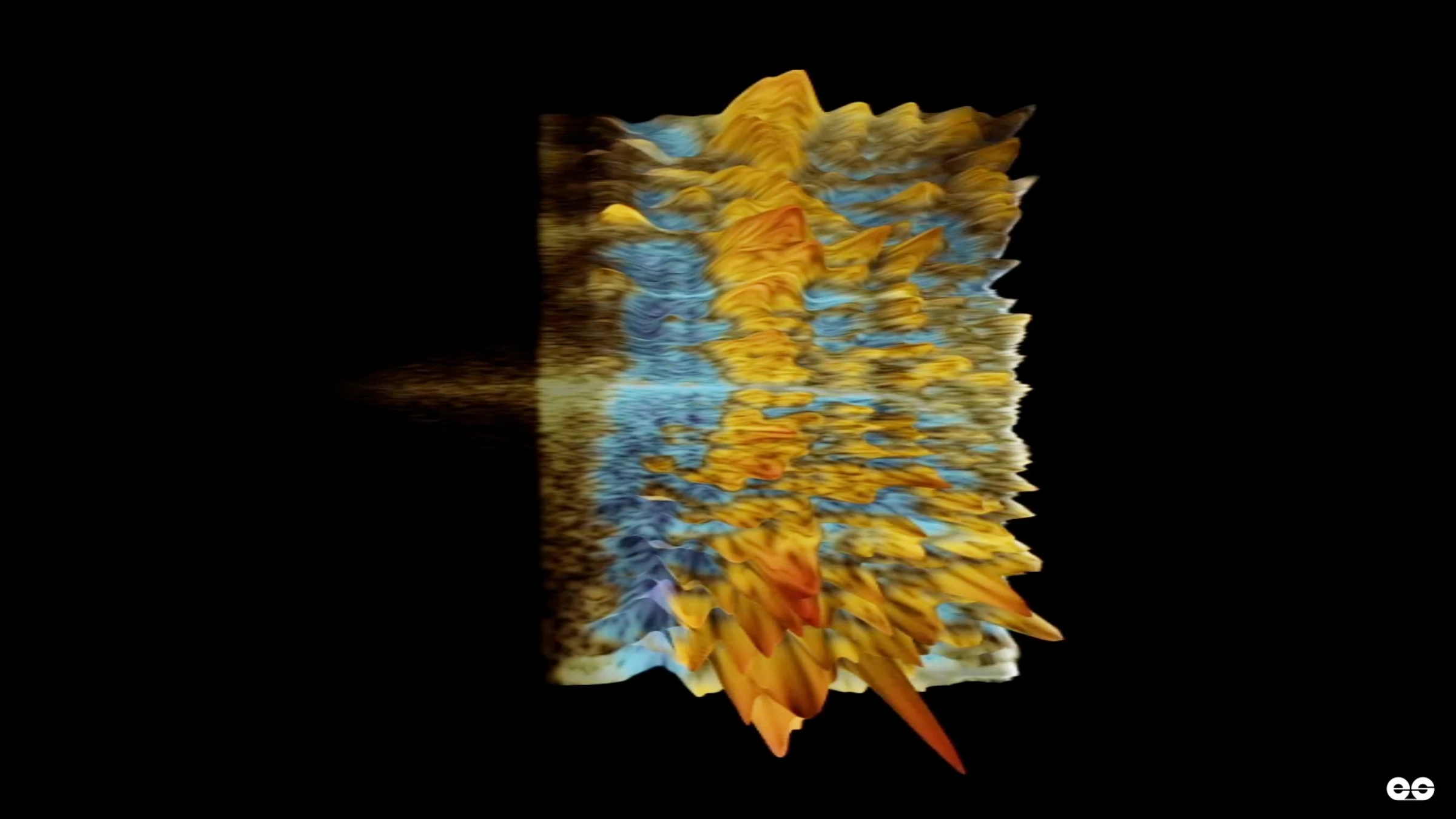
Earshot’s Gasworks Residency Pushes Sound Forensics Further Into the Art Institution
The nonprofit Earshot, founded by Lawrence Abu Hamdan, has received a three-year studio bursary at Gasworks, expanding how investigative audio practice operates inside a contemporary art context.
Gasworks in London has awarded a three-year studio bursary to Earshot, the nonprofit founded by Lawrence Abu Hamdan that treats sound as evidence in human-rights and environmental investigations. On paper, it is a residency announcement. In practice, it marks a deeper institutional shift: organizations working between legal accountability, research methodology, and artistic production are no longer peripheral guests in contemporary art spaces. They are becoming structural participants in how institutions define public value.
Earshot developed after Abu Hamdan’s long collaboration with Forensic Architecture, and its work sits at a difficult intersection. It borrows from acoustics, witness testimony, and media analysis, then moves those findings across legal forums, activist campaigns, and exhibitions. Gasworks, part of a network that links London programming with international residency exchange through Triangle Network, is giving that model stable physical infrastructure instead of project-by-project hosting. This matters because investigative art practices often fail from logistical fragility, not conceptual weakness.
The bursary includes stipend support and dedicated studio access, which sounds routine until one remembers what Earshot is actually trying to build. The group has described ongoing work on an earwitness interview tool designed for people who heard, but did not see, violent events. It is also extending its methods into environmental research, including coral-reef related inquiry. Those projects require secure data handling, repeatable protocols, and long-duration collaboration across specialists. In that context, institutional real estate is methodological infrastructure.
There is also a programming consequence for London’s autumn calendar. Earshot and Abu Hamdan are set to present Repercussions at the Barbican Centre, combining performance, screening, installation, and live score. The risk with hybrid civic-art formats is dilution, where political urgency is translated into cultural mood. Earshot’s challenge will be to preserve evidentiary precision while scaling to broader audiences. If successful, this can model how institutions host investigative practices without neutralizing them.
For curators, the key implication is program design. A residency like this cannot be evaluated only by exhibition outputs. Better metrics include whether the institution can support secure archiving, sustained collaborator access, and ethical review around testimony. Museums and kunsthalles increasingly commission work tied to conflict, displacement, or state violence, but many still run those projects through short exhibition timelines. Earshot’s placement at Gasworks suggests a slower institutional rhythm may be both artistically and civically stronger.
For collectors and funders, this development sharpens the distinction between collectible objects and infrastructural practice. Earshot’s most important contribution may not be a single editioned piece but a research ecology that produces cultural and legal consequences. Philanthropy in this space should therefore back tool development, protocol transparency, and long-horizon maintenance, not only premiere moments. If institutions want investigative art that can withstand scrutiny, they need to fund the conditions that make rigorous inquiry possible.
At stake is the future grammar of politically engaged art. When listening is framed as a civic act, as Earshot proposes, institutions have to decide whether they merely display that proposition or operationalize it. Gasworks has made an operational choice. Over the next three years, the broader field will be watching to see whether that choice produces a durable model for how contemporary art spaces can host evidence, not just representation.