Don McCullin Returns to Vietnam for Final Book
Don McCullin will devote his final book to Vietnam, turning a lifetime of war photography into a last argument about memory, witness, and the limits of images
Don McCullin's final book turns back to the war that defined his public image
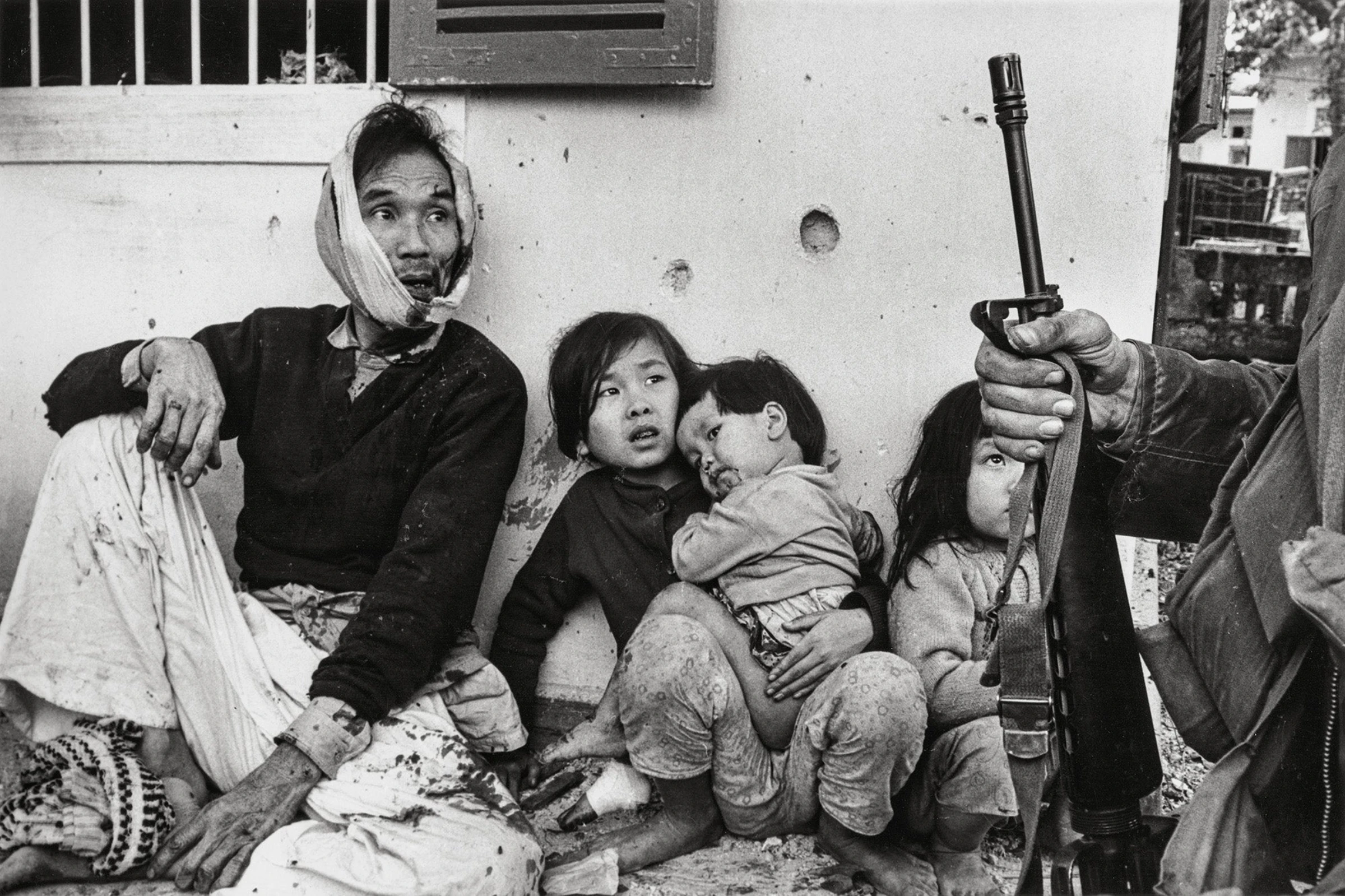
Don McCullin, now 91, will devote his final book to Vietnam, returning once more to the conflict that made his reputation and helped define postwar photojournalism's moral ambitions. The project, reported Monday and confirmed by GOST Books, is scheduled for publication on 1 October 2026 and will gather more than 100 images from McCullin's sixteen trips to Vietnam, along with notes, contact sheets, press ephemera, and objects from his archive. On paper, that sounds like a prestige publishing event. In practice, it reads as something more severe: a last editorial act by one of the great war photographers, made in full knowledge that images can wound history, shape memory, and still fail to stop the next catastrophe.
McCullin's career has always carried that contradiction. The work is inseparable from the belief that photography can force publics to see what power would prefer to abstract away. Yet McCullin has also spent years insisting that his pictures did not end war, did not redeem violence, and did not spare anyone from future repetition. That tension gives this final Vietnam volume its charge. It is not merely a greatest-hits package for admirers of famous images. It is a return to the place where the moral promise of the medium was most visibly tested, and perhaps most cruelly exposed.
Vietnam remains the hardest case for any argument about witness
According to the new Don McCullin site materials, his retrospective publications have long tried to place war, reportage, landscape, and autobiography into relation. The Vietnam book is different because it isolates one conflict and treats it as sufficient world. GOST says the volume will be the first book devoted solely to McCullin's Vietnam photographs, arranged through three campaigns and supplemented by personal notes, spreads from the Sunday Times, identification cards, and other remnants of field work. That archive-heavy structure matters. It shifts the book away from the clean monumentality of the coffee-table retrospective and toward the messier reality of reportage as labor, movement, and risk.
Vietnam also remains the conflict through which much of the public still imagines the power of war photography. McCullin's pictures from Hue and elsewhere entered the visual canon because they condensed exhaustion, fear, and bewilderment into forms that could circulate globally. But canonization can be anesthetizing. Once an image becomes famous, viewers start consuming its authority rather than its trouble. A new book has the chance to disrupt that habit by restoring sequence, context, and editorial texture. Contact sheets matter here because they remind readers that decisive images were not delivered by fate. They were wrestled from confusion, proximity, and chance.
There is a museum question embedded in this publication too. Photography institutions and collectors increasingly prize the framed print, the signed edition, and the retrospective box set. Those formats can elevate photographic history, but they can also smooth conflict into collectible gravity. McCullin's own supervision of the book, and GOST's emphasis on notes and working materials, suggests an effort to resist that smoothing. The project wants the finished image and the battered conditions that produced it to remain visible together.
The book arrives as photography institutions rethink authority and legacy
McCullin's late-career publishing turn has already been monumental. The boxed retrospective Irreconcilable Truths framed his life's work as a definitive archive, while museums and publishers have steadily reinforced his place in the history of British photography. The Vietnam volume narrows that frame at exactly the moment when legacy management could have broadened into general reverence. That narrowing is important. It refuses the soft-focus mode in which aging masters are often celebrated as universal witnesses detached from politics, editors, and institutions. McCullin is returning to a specific war, a specific archive, and a specific unresolved question: what did those pictures do, and what could they never do?
The afterlife of Vietnam photography has become even more unstable in a digital image economy. The original publication contexts were newspapers and magazines that, however imperfectly, staged pictures inside public argument. Now iconic war photographs circulate in feeds, listicles, classroom decks, and decontextualized memorial posts. Books can counter that flattening by restoring pace and order. They can also fail, turning suffering into premium object design. Much depends on editorial discipline. GOST's announcement points to a serious attempt to keep documentary residue in the frame, which is encouraging. Still, the test will be whether the publication preserves discomfort rather than simply packaging solemnity.
McCullin's archive also forces a distinction that contemporary viewers often blur: the difference between an image that documents war and an image that has already been absorbed into cultural memory as art. The same frame can do both jobs, but not in the same way. Once photographs enter book culture, museum retrospectives, and collector markets, their rhythm changes. They become available for contemplation, comparison, and historical reverence. That shift is not illegitimate, but it carries risk. Suffering can start to look inevitable, even beautiful, once enough editorial distance has accumulated around it. A strong Vietnam volume should fight that drift by keeping sequence, proximity, and editorial roughness in view.
There is a useful parallel with our recent guide on photography market signals. Late photographic reputations are often stabilized through deluxe books, estate planning, and museum-sanctioned scarcity. Those mechanisms can protect a legacy, but they also shape how future readers interpret urgency. A war photograph inside a retrospective archive does not behave the same way as a war photograph inside a news cycle. McCullin's final Vietnam book knows that problem. The open question is whether readers will.
What McCullin's return says about the limits and necessity of images
One striking detail in the reporting is McCullin's refusal to mythologize his own influence. He acknowledges that the pictures shocked audiences, yet he doubts they changed the underlying pattern of war. That skepticism should not be read as modesty alone. It is a rigorous correction to the fantasy that powerful images automatically produce moral progress. The world has accumulated evidence faster than wisdom for decades. McCullin's work remains necessary not because it solved that problem, but because it never let viewers hide from it.
That is why the Vietnam return matters now. We are living through another era in which atrocity images circulate incessantly, often severed from political traction. The temptation is either to romanticize witness or to dismiss it as futile. McCullin's career rejects both simplifications. His photographs insist that witness matters, even when it fails to rescue. The coming book, if handled with the seriousness it promises, could become less a valedictory object than a field manual for reading war images against nostalgia, convenience, and easy catharsis.
It may also remind younger readers that the ethics of documentary photography were never solved in an earlier, nobler media age. Editors cropped, sequenced, captioned, and instrumentalized pictures then just as platforms algorithmically distribute them now. McCullin's work remains instructive because it carries the marks of that struggle instead of pretending to transcend it. The best reading of this final book is not as proof that one photographer finally mastered history, but as evidence that the argument between witness, publication, and public conscience remains unfinished. That unfinished quality is exactly what keeps the pictures alive.
There is another reason the project could resonate beyond photography circles. Vietnam remains one of the central cases through which universities, museums, and publishers teach the relationship between image culture and state violence. A carefully edited late McCullin volume could therefore become not only a collector's object but also a pedagogical one, used to ask how pictures move from the battlefield to print, from print to archive, and from archive to moral memory. That route is never neutral. By foregrounding notes, IDs, and contact sheets rather than isolated masterpieces alone, the book has a chance to teach process as well as reverence.
It also recasts the idea of a final work. Many last projects in the art and photography world aim for summation, serenity, or balanced legacy. McCullin appears to be choosing concentration instead. Rather than smoothing a seventy-year career into a tidy monument, he is heading back into the hardest chamber of his archive. That choice is consistent with the best of his work. It prefers friction to tribute. It suggests that the right ending for a photographer of war is not closure, but a final confrontation with the images that still refuse to settle.
When the book arrives this autumn, readers should resist treating it as a relic from a nobler age of photojournalism. It is more useful than that, and harsher. It asks what it means to keep looking after history has already shown that looking is not enough. McCullin has spent a lifetime making that problem visible. His final Vietnam book looks set to make it visible one last time, with as little consolation as possible.
The sharpest outcome would be a book that leaves readers less certain about the innocence of documentary authority than when they began. McCullin's greatness has never rested on purity. It rests on endurance, craft, proximity, and the refusal to prettify what war does to bodies and memory. A final return to Vietnam can still deepen that legacy if it keeps alive the unease built into the pictures themselves. That unease is not a flaw in the archive. It is the reason the archive still matters.