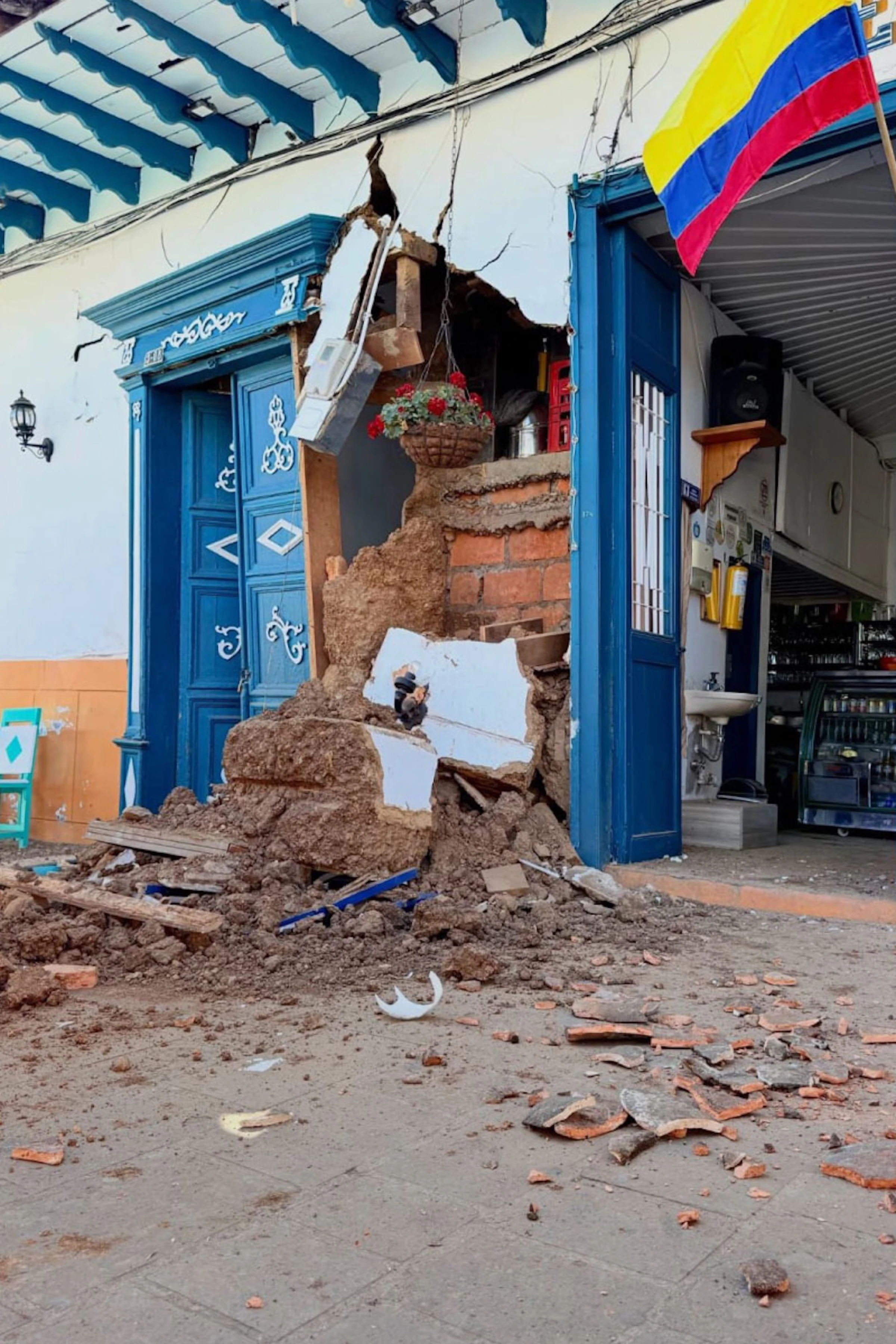
Colombia Earthquake Damages 40 Cultural Heritage Sites
Colombia reports 40 nationally protected heritage sites damaged by the 7.4-magnitude earthquake, including colonial churches and a UNESCO site
What Happened
Colombia's ministry of culture released its first official report on damage to dozens of cultural heritage sites from the 7.4-magnitude earthquake that struck the west of the country on 10 August. The report, published on 14 August, identifies 40 nationally protected cultural properties in the seven departments hardest hit by the disaster that suffered some degree of damage, 22 of which were severely impacted. Of the remaining properties, 13 suffered moderate damage and five were only lightly affected. The broader assessment also identifies 84 movable and immovable cultural assets without national designation, including 39 religious sites. The earthquake has killed 304 people and injured 4,548, according to the latest official figures. The disaster is the first major test for the government of the country's new president, Abelardo de la Espriella, who took office just three days before it struck.
The epicentre of the earthquake was in San Jose del Palmar, in the department of Choco. The department of Valle del Cauca is home to 23 of the 40 nationally protected cultural properties identified in the report. In the departmental capital of Cali alone, 11 sites are listed, eight with severe damage and three with minor damage. They include the Palacio Nacional administrative building, the La Merced church and convent, the Catedral de San Pedro, the city's modernist train station, the municipal theatre and the Hospital Universitario Evaristo Garcia. As The Art Newspaper reports, the scale of the destruction became clear almost immediately in the city of Manizales, where one of the side towers of the Cathedral Basilica of Our Lady of the Rosary collapsed as passersby watched.
Colonial Architecture and the Coffee Cultural Landscape
In Popayan, the capital of Cauca and one of Colombia's best-known cities for colonial-era architecture, the historic centre was badly hit. Known for its white facades and narrow streets that preserve its original layout, the city includes several properties listed in the report, among them the Museo Nacional Guillermo Valencia, and the churches Templo del Carmen and Templo de Santo Domingo. The latter suffered severe damage. The historic Casa de Hacienda Japio, in Santander de Quilichao, is also listed among the properties with serious damage. Six properties in the department of Antioquia are included in the report, among them the main square complex in Jardin, which suffered significant damage, the train station in the city of Cisneros, a church in Sabaletas, and three buildings in Medellin, including the former palace of the departmental government.
The report also focuses on Colombia's Coffee Cultural Landscape, a UNESCO World Heritage Site spanning 51 municipalities, where architecture, coffee farming and agricultural traditions have shaped the region for generations. According to the official assessment, the 10 August earthquake caused severe damage to more than 60 percent of urban areas across the Coffee Cultural Landscape region, with communities reporting collapsed homes, blocked roads and disruptions to basic services. In the communities nearest the epicentre, including Sevilla, El Cairo and El Aguila, the destruction reached as high as 80 percent of all urban areas. The earthquake damaged 12 of the 15 designated historic districts located within the affected area, representing a significant loss of Colombia's architectural and cultural heritage.
The Cultural Sector Responds
The culture ministry said it is now working to build a network of specialists and develop a plan for the repair and reconstruction of damaged sites. It also issued an emergency resolution allowing preventive work on cultural properties and historic districts for six months. The measure permits the removal of elements at risk of collapse, the reinforcement of cracked walls and structures, temporary protection for roofs, openings and decorative features, and the safeguarding of movable cultural objects at risk of being lost or further harmed. The emergency resolution is a crucial step in preventing further damage to cultural heritage sites that are already compromised, and it allows specialists to take immediate action without waiting for the lengthy approval processes that normally govern interventions in historic buildings.
The cultural sector has also begun organising a response of its own. The Museo de Arte Moderno de Medellin announced that it will donate part of the proceeds from the recent Mamm Fest 2026 to Museo La Tertulia in Cali, which remains closed to the public while its staff responds to the emergency and supports local communities. More than 25 galleries and 130 artists have joined forces for Arte por Colombia, an ongoing online sale that has raised more than 575 million Colombian pesos (around $187,000) to date, with all proceeds going to organisations assisting people affected by the disaster. The Museo de Arte de Pereira, located in the city of Pereira which is immediately adjacent to the Coffee Cultural Landscape, has closed after sustaining severe damage including many of its walls cracking or outright collapsing. The Colombian Ministry of Culture has emphasized that the reconstruction of cultural heritage will be a long and difficult process, requiring the collaboration of national and international experts.
What Comes Next
The earthquake's impact on Colombia's cultural heritage raises questions about the preparedness of cultural institutions in earthquake-prone regions and the adequacy of existing measures to protect historic buildings from seismic damage. Colombia is located in a seismically active zone, and while the country has building codes designed to mitigate earthquake damage, many historic buildings predate modern seismic standards and are particularly vulnerable to structural failure. The emergency resolution issued by the culture ministry is a necessary first step, but the longer-term reconstruction effort will require significant investment and expertise, particularly for the colonial-era churches and public buildings that are among the most damaged sites.
The international cultural heritage community has begun to respond to the crisis, with UNESCO and other international organizations offering technical assistance and support for the reconstruction effort. The experience of other countries that have faced similar disasters, including Italy, which has dealt with numerous earthquake-related cultural heritage crises, and Nepal, which suffered extensive damage to historic sites in the 2015 earthquake, may offer lessons for Colombia's reconstruction effort. The earthquake has also prompted a broader conversation about the need for cultural heritage disaster preparedness in Latin America, a region that is highly vulnerable to earthquakes, volcanic eruptions, floods, and other natural disasters. Many countries in the region lack comprehensive inventories of their cultural heritage assets, making it difficult to assess damage and prioritize reconstruction in the aftermath of a disaster. The Colombian government has emphasized that the reconstruction of cultural heritage is not only a matter of preserving buildings but of maintaining the cultural identity and social cohesion of the affected communities, many of which have deep historical and emotional connections to the damaged sites.
The earthquake's impact on the Coffee Cultural Landscape is particularly significant because of the site's unique status as a living cultural landscape, where architecture, agriculture and community life are deeply intertwined. The Coffee Cultural Landscape was inscribed on the UNESCO World Heritage List in 2011 in recognition of the way that coffee farming has shaped the region's architecture, urban planning, and social structures over more than a century. The 51 municipalities that make up the site include historic town centers, coffee fincas, and agricultural landscapes that represent a unique blend of natural and cultural heritage. The earthquake's damage to more than 60 percent of urban areas across the Coffee Cultural Landscape region represents a major threat to the integrity of the World Heritage Site, and UNESCO has indicated that it will conduct its own assessment of the damage in coordination with the Colombian government. The reconstruction of the Coffee Cultural Landscape will require not only the repair of individual buildings but the restoration of the broader cultural and agricultural systems that make the site significant.
The Arte por Colombia initiative, which has brought together more than 25 galleries and 130 artists for an online sale raising over $187,000 for earthquake relief, demonstrates the capacity of the art community to mobilize in response to cultural disasters. The initiative is modeled on similar efforts in other countries, including the Artists for Haiti campaign that followed the 2010 earthquake and the Italian art community's response to the 2016 earthquakes in central Italy. These initiatives demonstrate that the art world can play a significant role in disaster relief, not only through fundraising but through the documentation and advocacy that helps to maintain public attention on the cultural dimensions of natural disasters. The ARTnews report on the Museo de Arte de Pereira's closure after sustaining severe damage underscores the vulnerability of cultural institutions in earthquake-prone regions and the need for greater investment in seismic retrofitting and disaster preparedness. The Colombian government's emergency resolution, which allows preventive work on cultural properties for six months, is a crucial first step, but the longer-term reconstruction effort will require sustained investment and international cooperation. The earthquake has also highlighted the vulnerability of cultural institutions in earthquake-prone regions around the world, and the need for governments and cultural organizations to invest in disaster preparedness before disasters strike rather than after. The International Centre for the Study of the Preservation and Restoration of Cultural Property has identified Latin America as a region of particular concern for cultural heritage disaster preparedness, given the combination of seismic activity, climate vulnerability, and limited resources for cultural preservation.