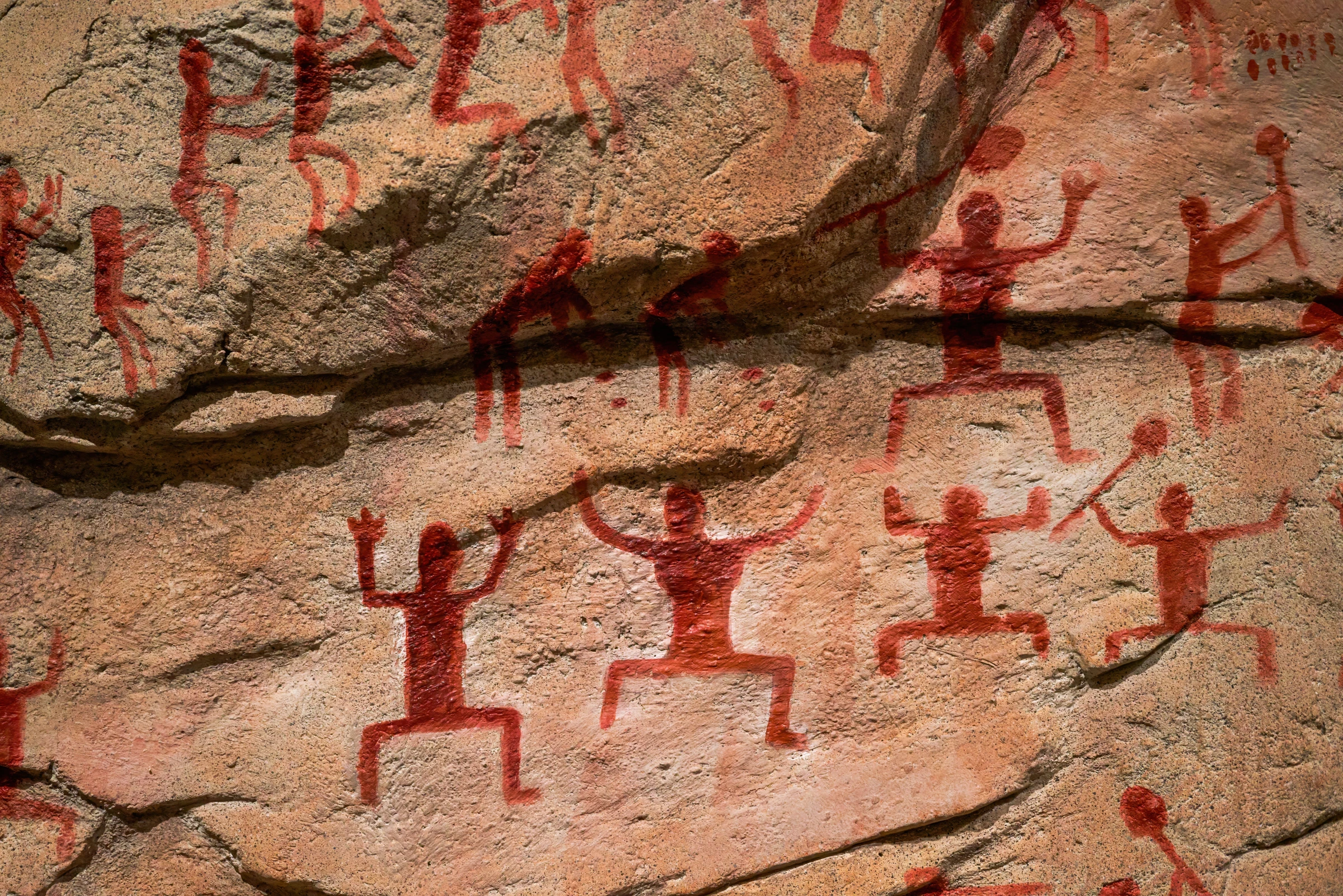
Ancient Chinese Rock Paintings Preserved by Blood Pigment
Research reveals Zuojiang Huashan murals survived subtropical weathering thanks to a pigment binder made from animal blood and possibly human childbirth blood
What Happened
New research has revealed that the vivid red murals of China's Zuojiang River Valley, which have survived for over two millennia on karst limestone cliffs in a subtropical monsoon zone, owe their remarkable preservation to an unusual ingredient in the pigment: blood. A team at the International Research Laboratory of Environmental and Social Archaeology at Shandong University, led by Meng Wu, determined that the paint used to create the ancient Huashan rock art contained a composite binder made from lime and blood, including animal blood and possibly blood from human childbirth. The research is due to be published in next month's issue of the Journal of Archaeological Science.
The Huashan rock art, located in Guangxi in southern China, dates from the fifth century BC to the second century AD and was inscribed on the UNESCO World Heritage List as the Zuojiang Huashan Rock Art Cultural Landscape in 2016. The murals depict figures, some naked, wearing feather headpieces and playing drums and bells in what may be an ancient fertility rite. Painted onto sheer limestone cliffs in an extremely hot and humid environment, the survival of these images has long been a mystery to archaeologists and conservation scientists. The Shandong University team's findings provide the first compelling scientific explanation for the extraordinary durability of the pigment.
The Science of the Pigment
The research team analyzed rock art fragments from three of the more than 80 sites in the Huashan rock art belt, using infrared and x-ray technologies and proteomics, the analysis of sets of proteins produced or modified by an organism, tissue, or cell. The analysis revealed that the pigment was made from red clay rich in nano-hematite, bound with a composite mortar of lime and blood. The blood proteins induced the formation of biomineralised calcium carbonate that tightly encapsulates the nano-hematite particles and strongly bonds to the limestone substrate. This stable organic-inorganic composite bonding system, the researchers write, explains why the Huashan rock art has survived so well in such challenging environmental conditions.
The use of blood as a binding agent in rock art is not unique to China. Meng Wu notes that many ethnographic studies around the world have mentioned that blood was used in prehistoric rock art painting, which may be related to the fact that most rock art painters were hunter-gatherers. What makes the Huashan discovery distinctive is the level of technological sophistication it reveals. The researchers conclude that pre-historic rock art was a technically intensive project rather than a labor-intensive one, suggesting that the creators possessed a practical understanding of chemistry that exceeds what is typically attributed to ancient hunter-gatherer societies. The combination of nano-hematite pigment with a blood-based binder represents an early form of nanotechnology, whether or not its creators understood the physics involved.
The Childbirth Blood Question
The most provocative finding of the research is the suggestion that some of the blood used in the pigment may have come from human childbirth. The researchers identified proteins associated with pregnancy and lactation in the samples, leading them to suggest that the use of childbirth blood could be linked to the worship of female fertility in what they describe as a matriarchal fisher-hunter-gatherer society. This interpretation, if confirmed, would provide a rare window into the social and religious practices of the community that created the murals, connecting the technical properties of the pigment to the cultural meanings of the images themselves.
Not all experts are convinced. The archaeologist Jose-Miguel Perez Gomez, an expert in ancient rock art from the same period in South America, told The Art Newspaper that the childbirth blood suggestion is the weakest but potentially most interesting part of the research. He notes that the proteins identified are not exclusive to childbirth and that no ancient DNA was recovered from the samples. Only three sites in a rock-art complex of more than 80 were sampled, raising questions about how representative the findings are. Perez Gomez calls for a stronger archaeological bridge between chemistry and meaning, arguing that if childbirth blood was intentionally selected, researchers should ask whether images associated with reproduction cluster where human blood is detected, whether pigment recipes vary according to motif, and whether the spatial setting itself formed part of the ritual.
What Comes Next
The Shandong University team's findings will be published in the Journal of Archaeological Science, where they will undergo peer review and contribute to the broader field of rock art conservation research. The methodology developed by the team, combining proteomics with infrared and x-ray analysis, may be applied to other rock art sites around the world where the composition of ancient pigments remains poorly understood. The research also raises questions about the conservation of the Huashan site, which faces ongoing threats from weathering, tourism, and climate change. Understanding the chemical composition of the pigment is essential for developing conservation strategies that do not inadvertently damage the very properties that have preserved the murals for two thousand years.
The findings also contribute to a growing recognition that ancient societies possessed more sophisticated technical knowledge than has traditionally been assumed. The use of nano-hematite pigment with a blood-based binder represents a form of materials science that predates the formal discipline by millennia. Whether the Huashan artists understood the chemistry behind their pigment or developed it through trial and error, the result is a body of work that has outlasted most of the artifacts and architecture of the ancient world. The murals, with their vivid red figures dancing on limestone cliffs, are a reminder that technological sophistication and artistic expression have always been intertwined, and that the most enduring works of human creativity are often those that combine aesthetic vision with practical ingenuity. As research continues at the UNESCO World Heritage Site, the Huashan rock art may yet reveal more about the people who created it and the remarkable techniques they employed to ensure their work would survive the centuries.
The research also has implications for the study of other rock art traditions in Asia and beyond. The techniques developed by the Shandong University team, combining proteomics with infrared and x-ray analysis, could be applied to rock art sites across Southeast Asia, where similar pigment traditions have been documented but never subjected to this level of scientific analysis. The rock art of Sulawesi in Indonesia, which has been dated to at least 44,000 years ago and is among the oldest known figurative art in the world, has been the subject of growing international research interest, and the methods pioneered at Huashan could help resolve questions about the pigments and binders used at Sulawesi and other sites. The cross-pollination of techniques between research groups working on different rock art traditions is one of the most promising developments in the field, as methods developed for one site can often be adapted to others with different environmental conditions and pigment compositions.
The identification of blood as a binding agent also raises cultural questions that go beyond chemistry. If the use of blood in the Huashan pigment is confirmed to be a deliberate technological choice rather than a coincidental presence, it suggests that the relationship between material and meaning in ancient art was more complex than is often assumed. Blood, in many ancient cultures, carried profound symbolic significance as a life force, a sacrificial offering, and a mediator between the human and divine realms. The possibility that blood from childbirth was specifically selected, linked to the worship of female fertility, adds another layer of meaning to the already rich iconography of the murals. Whether the technical properties of blood as a binder were the primary motivation for its use, or whether its symbolic properties were equally important, is a question that chemistry alone cannot answer. The dialogue between scientific analysis and cultural interpretation, exemplified by the exchange between the Shandong University team and Jose-Miguel Perez Gomez, represents the future of rock art research, a field that is increasingly bringing together scientists, archaeologists, and cultural historians in a shared project of understanding.
For the Luo people of Guangxi, the modern descendants of the communities who created the Huashan rock art, the research adds a new dimension to a cultural heritage that has been continuously celebrated since the paintings were inscribed on the UNESCO World Heritage List. The site has become a focus of cultural identity and tourism in the region, and the new findings may prompt increased visitor interest and additional investment in conservation infrastructure. The challenge for local authorities will be balancing the economic benefits of increased tourism with the need to protect the fragile limestone cliffs and their ancient paintings from the physical impact of visitor traffic. UNESCO monitoring reports have noted ongoing concerns about weathering and water damage at the site, and the new research may help conservation teams develop more targeted interventions to address these threats. The story of the Huashan rock art, from its creation by a matriarchal fisher-hunter-gatherer society to its rediscovery by modern science, is a reminder that the most enduring works of human creativity are often those that combine technical innovation with cultural meaning, and that understanding them requires both scientific rigor and cultural sensitivity.