Cathy de Monchaux Gets Her Due at Palais de Tokyo
British sculptor Cathy de Monchaux returns with a major Palais de Tokyo survey, her first significant exhibition in over 25 years
What Happened
Cathy de Monchaux, the British sculptor whose erotic and intricately wrought work made her one of the most distinctive artists of the 1990s, is having her first significant exhibition in more than a quarter of a century. Studio Wounds and Battles: Desire is the Reiteration of Hope, a major survey at the Palais de Tokyo in Paris, brings together works spanning decades of a career that was once among the most celebrated in British art and then, abruptly, went quiet. The exhibition, which runs through September 13, fills the museum's cavernous industrial spaces with a profusion of sculptures, wall pieces, drawings and installations that testify to an intense and obsessive creative practice that never stopped, even when the art world stopped paying attention.
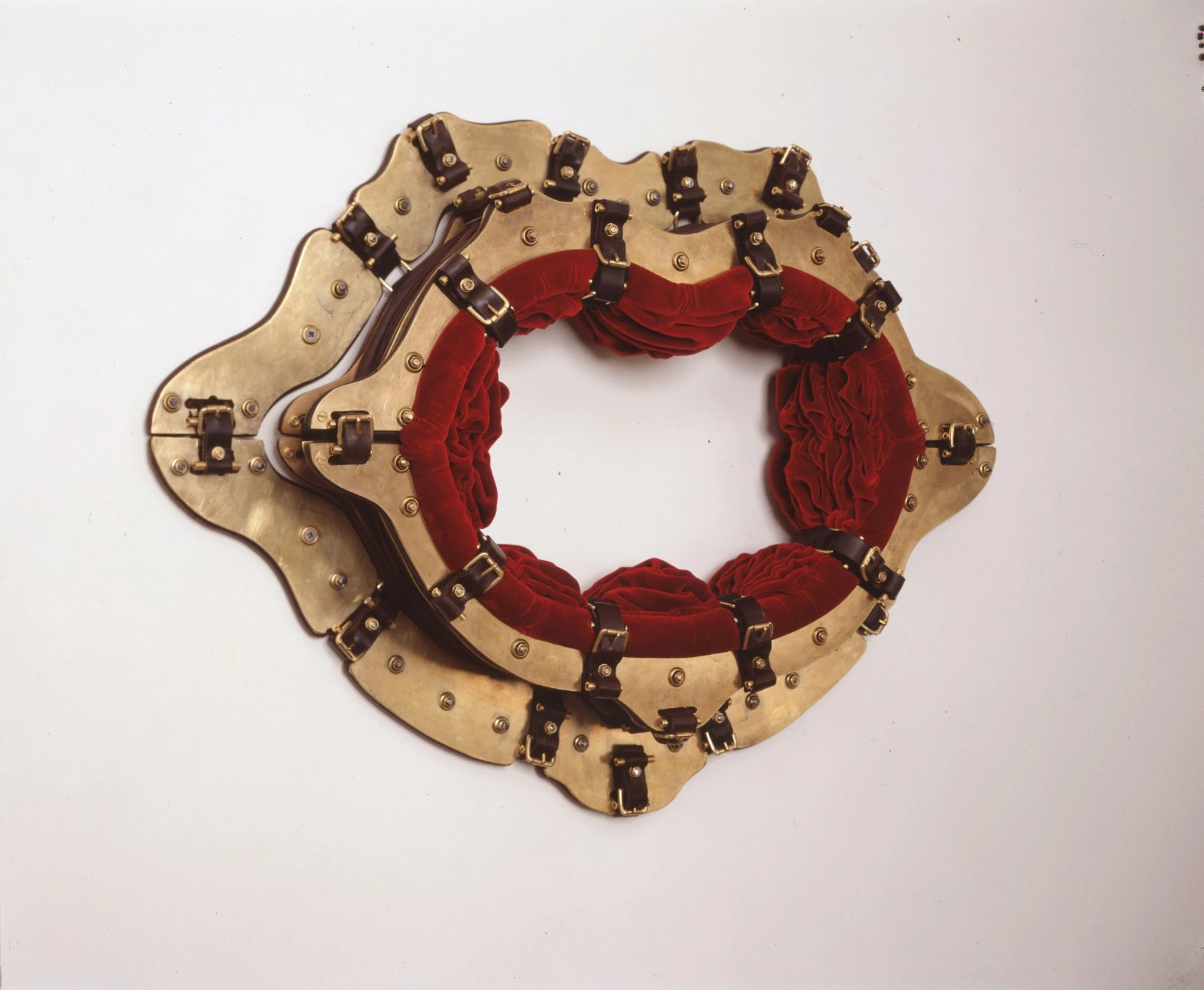
De Monchaux graduated from Goldsmiths in the late 1980s and emerged in the early 1990s with a body of work that was radically different from that of her Young British Artist contemporaries. Where Damien Hirst was putting sharks in formaldehyde and Tracey Emin was scrawling confessions on neon, de Monchaux was making elaborate wall pieces bristling with baroque spikes and curlicues, threaded with ribbons and seeping slivers of red velvet and folds of leather from between bolted metal plates. Her 1993 show at the Chisenhale Gallery confirmed her as one of the most original and distinctive artists of her generation, and she was nominated for the Turner Prize in 1998. Her Turner exhibition featured two large works that had already been bought by the Tate, and more institutional acquisitions followed, along with critically acclaimed shows in the United States in 2000. As The Art Newspaper reports, it is therefore astonishing that de Monchaux is only now regaining recognition.
A Career in Suspended Animation
The reasons for de Monchaux's disappearance from the art world are not entirely clear, but they appear to be a combination of personal circumstances and a deliberate withdrawal from the promotional machinery of the contemporary art market. She raised her son as a single mother, supported by a handful of loyal collectors, and never stopped making work. She tells of the phone simply stopping ringing, and of putting herself out not being one of her skill sets. The art world's loss was her practice's gain, in a sense, as the absence of external pressure allowed her to investigate new things at her own pace, without the demands of a commercial gallery or the expectations of a market that rewards novelty and productivity above all else.
The Palais de Tokyo show is testament to this intense experimentation. Avoiding a chronological approach, it mixes works spanning decades: a life-sized unicorn made from cane and tissue paper when de Monchaux was a student presides over recent works, some completed in situ in an improvised studio upstairs at the Palais de Tokyo. These comprise dramatic wall-mounted chalky white tableaux of faceless pregnant women emerging from papery fissures, perched on tumbling staircases or becoming part of forests, their wiry hair whipped aloft like branches, feet growing webs of arterial roots. All are testament to an enduring fantasy world fuelled by childhood memories of roaming throughout the Victoria and Albert and British Museums in London, where she absorbed everything from Elizabethan ruffs to musical instruments and Egyptian funeral figures. The Palais de Tokyo, with its vast raw spaces, provides an ideal setting for the work, which occupies the architecture like ornate gargoyles or votive reliquaries in a profane, pan-cultural cathedral.
The Work Itself
De Monchaux's work has always been characterized by a meticulous and obsessive approach to fabrication. She has always wanted to hand-make her work, she says, laughing at the insanity of her creative process, which frequently results in her working through the night and up to the last minute, including for this show. This inventive devotion to facture has resulted in a near-alchemical mastery of materials: such are de Monchaux's transformative skills that it is often hard to know what her work is actually made from, as surfaces are rubbed, distressed and covered with dust, plaster or encrusted with paint. Materials are evocative of her mood, she remarks, and the range of materials on display in the Palais de Tokyo show is extraordinary, from cast silver frogs with prominent genitalia to framed monochrome forest scenes featuring unicorns, miniature battles raging in glades fashioned from wire, paint and sticking plaster, and massed ranks of pregnant female figures that have become a motif in recent years.
The earlier works in the show, from the 1990s, remain startling in their intensity. Once Upon a Fuck, a palm-sized, heart-shaped piece baring velvety innards and a shiny brass spine like a sprung trap, spits on stereotypes and defies any easy readings. The language of her work may have changed over the decades, but de Monchaux's preoccupation with meticulous fabrication remains constant, and the exhibition demonstrates a remarkable continuity of vision across a body of work that spans more than three decades. The Tate, which acquired two of her works for its Turner exhibition in 1998, holds important examples of her early work, but the Palais de Tokyo survey provides the first comprehensive opportunity to see the full range of her practice in a single installation.
What Comes Next
The Palais de Tokyo exhibition is likely to prompt a reassessment of de Monchaux's place in the history of British sculpture. Her work has always sat uneasily within the narrative of the Young British Artists, which has tended to emphasize the provocative, media-friendly aspects of the movement at the expense of its more formally rigorous and materially inventive practitioners. De Monchaux's sculptures, with their combination of baroque ornamentation, erotic imagery and meticulous craftsmanship, occupy a different register from the shark-in-formaldehyde school of British art, and the Palais de Tokyo show provides an opportunity to see them on their own terms rather than as a footnote to a movement they never fully belonged to.
The exhibition also raises broader questions about the art world's treatment of artists who do not conform to its expectations of productivity and visibility. De Monchaux's career stalled not because her work declined in quality but because the promotional machinery of the art world moved on to other artists who were better at playing the game. The fact that she continued to make work throughout this period, and that the work is as intense and inventive as anything she made in the 1990s, is a reminder that the art world's mechanisms of recognition are far from perfect and that significant bodies of work can exist outside its field of vision for decades. The Palais de Tokyo show is a corrective, but it is also a reminder of how many other artists may be working in similar obscurity, waiting for the phone to ring.
One of the most striking features of the Palais de Tokyo show is the laborious recreation of de Monchaux's London studio space within the museum. The studio, which she describes as her tool shelves of ideas and spells, is a magical treasure trove of ephemera, offcuts and found objects, from a mummified bat to strangely-shaped stones, scraps of fur and twists of metal, wire and paper. Along with these massed talismans, walls lined with open sketchbooks and papered with layered intricate drawings offer a total and sometimes disconcerting immersion into a unique imagination. The decision to include the studio space in the exhibition is significant, as it transforms the show from a conventional retrospective into an immersive environment that conveys not just the finished work but the conditions of its making. The studio recreation also serves as a meditation on the relationship between artistic practice and domestic space, a theme that runs through de Monchaux's work from her early pieces, which incorporated leather and velvet from the domestic world of fashion and upholstery, to her recent works, which draw on the imagery of pregnancy and motherhood.
The exhibition's title, Studio Wounds and Battles, reflects the dual role of the studio as both a site of creative struggle and a refuge from the world. De Monchaux's London studio lies at the center of all her endeavours, functioning as a creative crucible of strife and struggle as well as solace. The title also suggests the broader tensions that animate her work, between the personal and the political, the erotic and the domestic, the abstract and the figurative. The pregnant female figures that have become a motif in her recent work are clearly mothers, she says, and in her work it is always about the back and forth between the personal and the political. This tension is evident throughout the exhibition, from the early works with their aggressive sexuality and baroque ornamentation to the recent works with their dreamlike imagery of transformation and growth. The Goldsmiths tradition of politically engaged art practice, which de Monchaux absorbed during her training, is evident throughout, but transformed through a deeply personal vision that resists easy categorization. The exhibition at the Palais de Tokyo, by presenting the full range of her work for the first time, offers an opportunity to reassess a career that has been overlooked for too long and to recognize de Monchaux as one of the most distinctive and formally inventive sculptors of her generation.