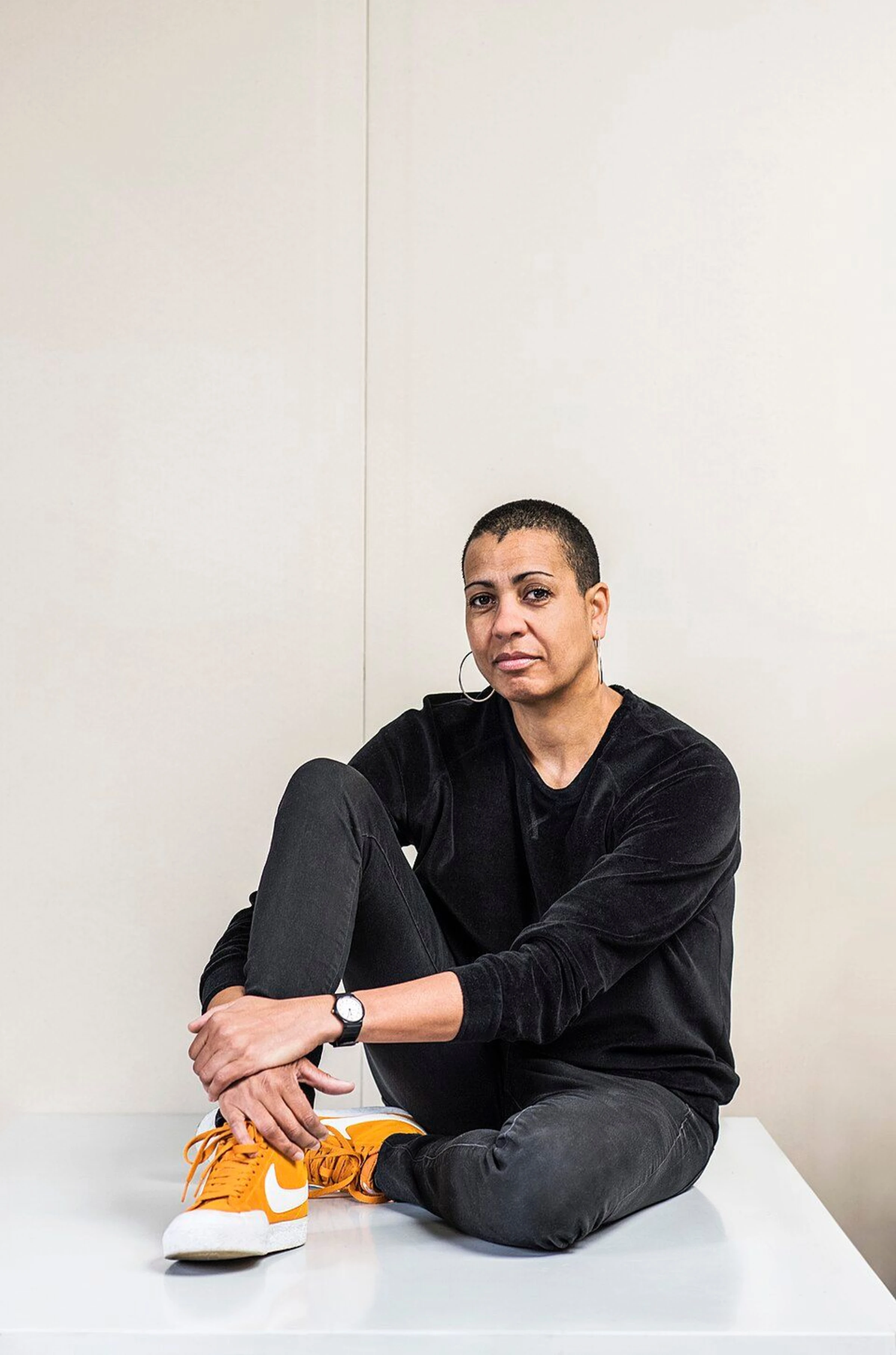
Artist Helen Cammock Withdraws Churchill Work from NPG
Turner Prize winner Helen Cammock removes a controversial video installation from the NPG following pressure regarding its critique of Winston Churchill
The Collision of Art and History
The National Portrait Gallery (NPG) in London has become the site of a sharp confrontation between artistic freedom and national mythology following the withdrawal of a video work by Turner Prize winner Helen Cammock. The piece, titled 'Persistence,' was part of the 'Artists First: Contemporary Perspectives on Portraiture' exhibition, intended to offer creative responses to the museum's collection. However, the installation's critique of wartime Prime Minister Winston Churchill sparked a fierce backlash, leading Cammock to remove the work from public display. The controversy centers on a specific claim in the film that Churchill was responsible for the "wilful starvation of the Indian population" during the 1943 Bengal famine, a statement that has reignited a volatile debate about the limits of historical interpretation in public art spaces and the vulnerability of institutions to external political pressure
The backlash was not merely grassroots but orchestrated from the highest levels of the British establishment. More than 50 members of the House of Lords, including Churchill's grandson Nicholas Soames and biographer Andrew Roberts, signed a letter to the NPG's interim chair, Shearer West. The letter described the accusation as "foul and vile," arguing that the Bengal Famine was a disaster of circumstances rather than a deliberate act of genocide. This coordinated effort by the peerage highlights the enduring power of the Churchill myth in the UK and the perceived threat that challenging this narrative poses to national identity.
The speed with which the establishment mobilized against a single artist's work reveals the fragility of the 'progressive' museum. The NPG, which positions itself as a space for diverse perspectives, found its resolve crumbling when those perspectives targeted a national icon. This incident underscores the reality that in the UK, certain historical narratives are not just academic preferences but are treated as sacred tenets of the state, and any attempt to interrogate them is viewed as an act of aggression rather than an artistic inquiry.
The Bengal Famine Debate
The historical reality of the 1943 Bengal famine, which claimed an estimated three million lives, remains one of the most contested chapters of the British Empire. On one side, defenders of Churchill argue that the famine was caused by the Japanese occupation of Burma, crop failures, and local administrative incompetence. They maintain that Churchill was fighting a global war and that food supplies were diverted to keep Allied soldiers alive in the Mediterranean. This is the narrative championed by the International Churchill Society and many traditional historians.
Conversely, a growing body of research—including work by journalist Madhushree Mukerjee—suggests that the famine was exacerbated by the British cabinet's decisions. Evidence indicates that the government was warned repeatedly that resources were insufficient for the Indian population, yet they continued to export rice from India to other parts of the empire. Cammock's work draws on this perspective, framing the disaster not as an accident of war but as a result of colonial negligence and racial indifference. By placing this critique within a portrait gallery, Cammock was forcing a confrontation between the idealized image of the "Greatest Briton" and the lived reality of those his policies impacted mirroring wider global movements to decolonize museum narratives
The core of the dispute is not just whether the famine was a 'tragedy' or a 'crime,' but whether the state should allow that question to be asked in its most prestigious galleries. By removing the work, the NPG has effectively decided that historical accuracy—or at least the debate over it—is secondary to the preservation of institutional peace. This decision silences the millions of victims of the famine in favor of the comfort of the living elite, transforming the museum from a site of memory into a site of erasure.
Artistic Freedom vs. Institutional Safety
The NPG's response to the crisis was characterized by a careful, if somewhat cowardly, neutrality. A museum spokesperson stated that the work was presented as an "artistic piece, not a documentary," and that the views expressed did not reflect those of the NPG. This distinction—between art and truth—is often used by institutions to shield themselves from controversy while still profiting from the "edge" of contemporary art. However, this neutrality fails when the pressure becomes too great. While the board did not officially vote to remove the work, the intense pressure from the House of Lords created an environment where Cammock felt the necessity of withdrawal.
Cammock's decision to pull the work is not a concession of error but a strategic retreat to protect the work's integrity. In her statement, she noted that "Persistence will have its own life after this: it won't hide and it won't be afraid to speak." Her refusal to accept the pressure to be "benign at best and silent at worst" underscores the precarious position of the contemporary artist in a public institution. When an artist's work is funded by taxpayers, there is an implicit expectation that it should not offend the very class of people who manage those funds. This creates a chilling effect, where the only "safe" art is that which confirms existing power structures.
The term 'artistic freedom' becomes a hollow phrase when it is only permitted to operate within a narrow band of acceptable critique. Cammock's work did not just 'offend'; it challenged the fundamental moral standing of a national hero. This is exactly what art is supposed to do in a healthy democracy. When an institution allows its curators and artists to be bullied by the House of Lords, it admits that it is not an autonomous cultural entity, but a subsidiary of the state's propaganda machine.
The Implications for the NPG
The removal of 'Persistence' exposes the fragility of the NPG's mission to reach and inspire audiences through "shared history." If the shared history is only allowed to include the flattering versions, the museum ceases to be a place of inquiry and becomes a temple of state hagiography. The incident suggests that the NPG is not yet equipped to handle the friction of contemporary historiography, preferring the comfort of a sanitized past over the complexity of a contested present.
Moving forward, this incident will likely serve as a cautionary tale for artists commissioning work for major national galleries. The tension between "artistic freedom" and "institutional reputation" is currently being resolved in favor of the latter. As museums move toward a more critical examination of colonial legacies, they must decide whether they are truly committed to the process of institutional critique or if they are merely performing a curated version of progress. The withdrawal of Cammock's work is a stark reminder that the walls of the National Portrait Gallery are still heavily guarded by the ghosts of the empire and the living power of those who inherit their legacy
The long-term cost of this decision for the NPG will be a loss of trust from the creative community. Artists will be less likely to trust the gallery with works that genuinely challenge power, knowing that the institution will fold the moment a peer of the realm expresses displeasure. In trying to avoid a short-term scandal, the NPG has ensured its own long-term intellectual stagnation, signaling that it is a place for portraits of the powerful, but not for portraits of the truth.
This incident also raises the question of the 'artist's right to be wrong' or the 'right to be provocative.' If art is merely a mirror of consensus, it ceases to be art and becomes decoration. By removing Cammock's work, the NPG has signaled that it prefers the comfort of the established view over the risk of the new. This is a dangerous precedent, as it suggests that the validity of an artwork is determined not by its internal logic or its emotional truth, but by its ability to avoid offending the most powerful people in the room. In a world where history is increasingly contested, a museum that cannot handle the friction of debate is a museum that is failing its public.
Ultimately, the Cammock case is a symptom of a wider institutional malaise where the appearance of inclusivity is valued more than the reality of critical engagement. The NPG's 'Artists First' exhibition was meant to be a platform for a new generation of thinkers, but it ended up being a trap for anyone whose work dared to interrogate the state's foundational myths. The only way for the NPG to recover its credibility is to commit to a policy of non-interference, ensuring that the gallery remains a site of active contestation rather than a showroom for the uncontested. Until then, the removal of 'Persistence' stands as a monument to the limits of tolerance in the heart of London.