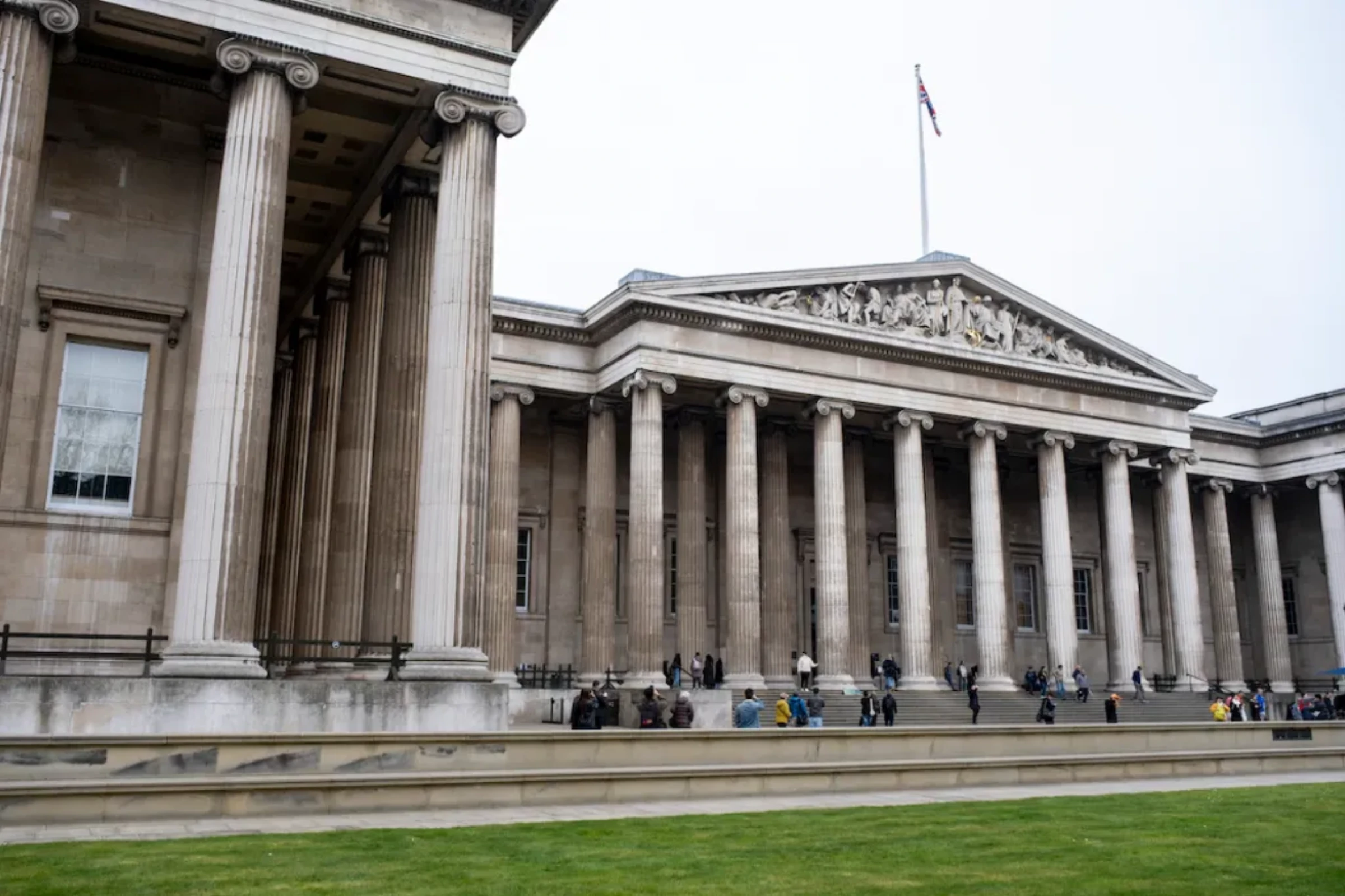
Why the British Museum Security Alert Matters Even if No Device Exploded
The British Museum's evacuation after a suspicious device and malicious communications exposes a harder truth about museum security in 2026: operational trust is now part of the institution's public meaning.
The immediate danger passed, but the institutional signal remains
The British Museum's evacuation on Sunday after a suspicious device was found in a restroom would be easy to file under incident management and move on from, especially because police ultimately found no threat. That would be a mistake. According to ARTnews, the museum said it had also received what it described as malicious communications before the evacuation. That phrase matters. It tells us the episode was not merely about an unattended object. It was about an institution being forced, however briefly, to suspend its public contract under conditions of uncertainty. In 2026, that alone is news.
Museums depend on a fiction of controlled openness. They are meant to be welcoming, navigable, and stable while also housing vulnerable objects, large crowds, and politically charged histories. A security alert ruptures that fiction in real time. Visitors are reminded that access can vanish instantly. Staff become emergency managers. The building's symbolic identity as a place of continuity gives way to the more prosaic reality of cordons, instructions, and waiting for police assessments. Even when the all clear comes quickly, the event changes how the institution is perceived because the promise of seamless public trust has already been interrupted.
This matters especially at the British Museum because its public role is already overloaded
The British Museum is not just another large visitor attraction. It presents itself as a global encyclopedic museum, a national landmark, a tourist magnet, a research center, and a frequent protagonist in debates about restitution, empire, and governance. The museum's own public-facing materials advertise general admission, family visits, galleries spanning two million years of history, and a national and international research mission. That breadth is part of its power. It is also part of its vulnerability. The more functions an institution claims, the more kinds of disruption it must be able to survive without looking structurally fragile.
Recent years have already made the British Museum a test case in how reputational stress accumulates. Questions around governance, collection care, theft, international relations, and the politics of contested objects have all sharpened scrutiny of the institution's internal competence. A security alert therefore lands inside an already tense interpretive environment. Observers do not encounter the evacuation in isolation. They place it within a longer chain of incidents and criticisms, whether or not those issues are directly connected. That is unfair in one sense, but museums do not get to choose the atmosphere in which they are read.
The mention of malicious communications is particularly unsettling because it situates the event between physical and informational security. Institutions once planned these as adjacent but separable concerns. Now they increasingly overlap. Threats arrive through messages, rumors, coordinated harassment, disinformation, and symbolic targeting as much as through material attack. The building remains the obvious focus, but the stress system has expanded far beyond the building. A museum can be operationally pressured before anyone even reaches the door.
Security has become an interpretive issue, not just an operational one
There is a temptation to treat security protocol as value neutral. In practice it is deeply tied to how a museum imagines its public. How open can entrances remain? How much screening can visitors tolerate? How much disruption is acceptable before a cultural institution starts to feel like a fortress, an airport, or a site under siege? These are not small design questions. They shape mood, access, and institutional legitimacy. Readers who have worked through our museum crisis planning guide will recognize the bind. A museum has to be visibly prepared without becoming theatrically defensive.
That bind is sharper for encyclopedic institutions with contested histories. Security measures can easily be read through political lenses: as protection, as exclusion, as state power, or as evidence that an institution has become a symbolic battlefield. None of those readings fully capture the practical work of keeping people and objects safe, but all of them circulate once an incident occurs. The result is that security planning now has communicative consequences. The museum is judged not only on whether it handled the alert effectively but on whether its response fits the public identity it wants to project.
This is why the absence of a blast or confirmed device cannot be equated with insignificance. False alarms still have costs. They consume staff attention, interrupt visitation, unsettle workers, and produce images of instability that travel quickly. They also encourage future benchmarking by bad actors, who learn how rapidly a museum reacts, how visitors are moved, and how public messaging is framed. In security terms, an event that ends safely can still reveal useful information to anyone watching closely.
The real stress test is whether museums can preserve trust without promising invulnerability
No museum can guarantee perfect safety, and institutions do themselves no favors when they imply otherwise. The better standard is competence under uncertainty: can the museum act quickly, coordinate with authorities, inform the public clearly, and resume operations without obvious chaos? On that measure, the British Museum may ultimately have done what it needed to do. Yet the broader sector should still read the episode as a warning that cultural institutions are now expected to operate inside threat environments that are political, digital, and theatrical all at once.
That practical pressure extends to audiences as well. Families, tourists, school groups, researchers, and casual visitors all experience an evacuation differently, yet each group leaves with a revised sense of the institution's atmosphere. One disruption can subtly reshape how safe, porous, or overexposed a museum feels to the public. Those impressions are hard to quantify, but they matter because museums depend on repeat trust. People do not simply decide whether to return based on exhibitions. They also decide based on whether the place still feels governable, lucid, and worth the emotional uncertainty of another visit.
One consequence is that emergency response can no longer be left to facilities teams alone. Communications staff, visitor services, trustees, and senior leadership are all implicated because the story does not stay contained within the incident. It becomes a reputational narrative almost immediately. A statement about closure hours, police assessment, or reopening becomes part of the institution's self-portrait. The museum must sound calm without sounding evasive, serious without sounding panicked, and transparent without handing over unnecessary operational detail.
That communicative balance is getting harder. Social media compresses time, rumor outruns verification, and audiences now expect institutions to respond with the speed of newsrooms even when facts are still being established. A museum that hesitates can look secretive. A museum that speaks too early can misstate what happened. The evacuation at the British Museum is therefore one more example of museums being pushed into information environments for which many were never structurally designed.
It is worth stressing, too, that security incidents now produce secondary audiences the museum cannot control. People who were never onsite still form judgments from fragments: a push alert, a photograph of police tape, a delayed ticket, a social post from a frustrated visitor. Those fragments often circulate faster than any official clarification. In practical terms, that means museums are now managing layered publics during a crisis: the people inside the building, the people on their way, and the much larger public watching the institution's competence from a distance.
What comes next is less about this one alert than about the operating model it exposes
The most useful question is not whether Sunday will be remembered a month from now. It is whether the event prompts a serious sector-wide reassessment of how museums prepare for blended threats. That means reviewing physical circulation, internal escalation chains, staff training, restroom and bag monitoring, public messaging, and the relationship between digital threats and on-site response. It also means accepting that some institutions, especially symbolic national ones, are no longer read simply as containers for culture. They are public stages onto which social tension can be projected.
The British Museum in particular should resist the urge to treat a safe outcome as full closure. A rapid reopening is good. It is not the same thing as no lesson learned. The museum's challenge is to demonstrate that security review can coexist with public confidence and intellectual openness. That is a difficult balance for any institution, but it is especially urgent for one that already carries such a dense burden of political and historical significance.
For everyone else in the field, the episode offers a blunt reminder. Museum normalcy is built, not given. It depends on dozens of systems that only become visible when they fail or when they are suddenly asked to prove themselves. On Sunday, the British Museum's greatest object was not a marbles dispute, a pharaoh, or a manuscript. It was trust. The police found no active threat. The harder task, for this institution and many others, is making sure the public still feels the building deserves theirs.
That is why this story should not be reduced to a near miss. Near misses are often the cleanest available view of institutional pressure. They show what a museum has to manage before catastrophe, and sometimes instead of it. In an era when cultural venues are judged on resilience as much as scholarship, that is a serious measure of the work.