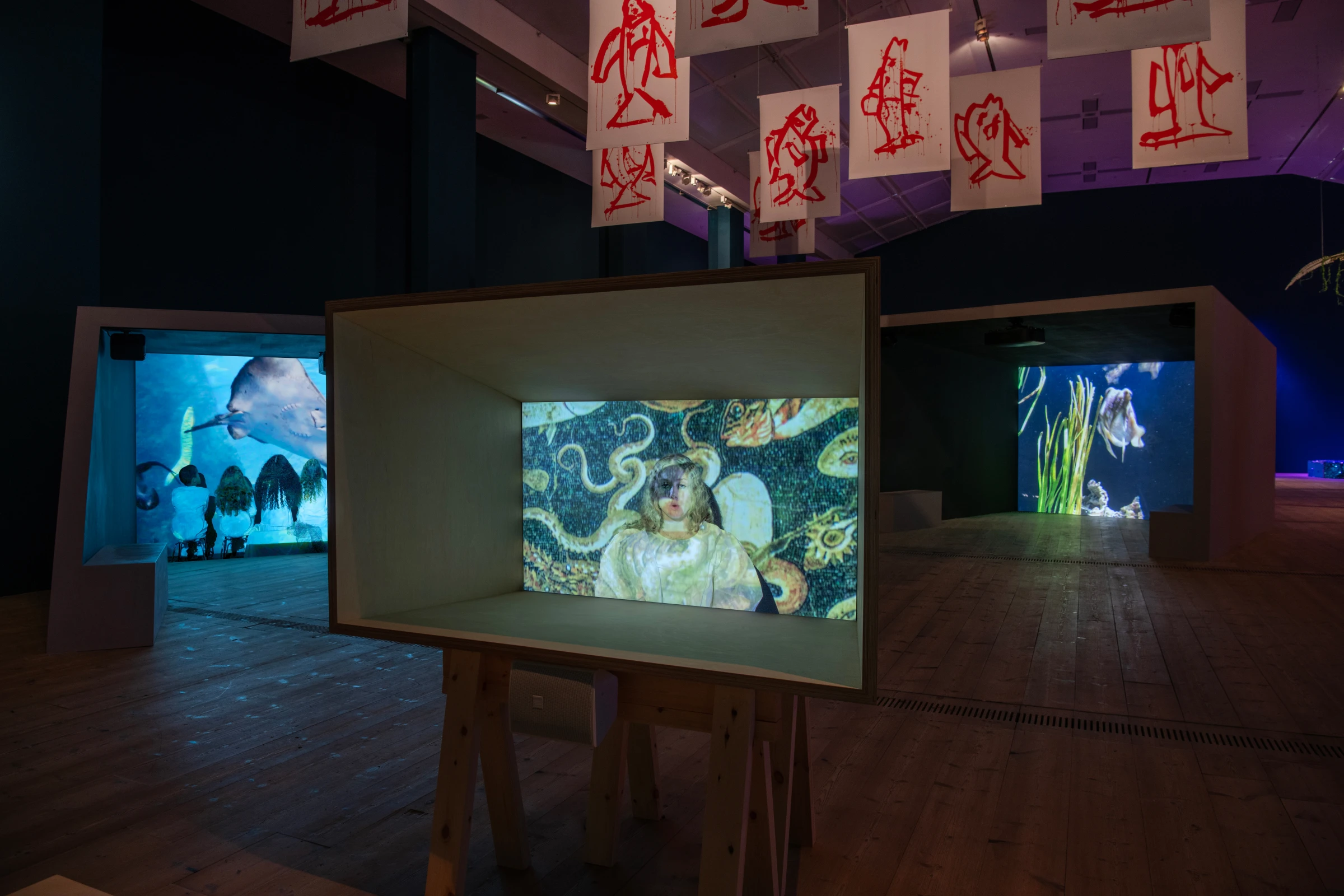
British Art Show 10 Names 30 Artists and a Five-City UK Tour Through 2028
Ekow Eshun's British Art Show 10, titled A Chorus of Strangers, opens in Coventry this autumn and travels to Swansea, Bristol, Sheffield, and Newcastle-Gateshead.
The tenth edition of British Art Show, the UK's recurring five-year survey of contemporary practice, has announced its full artist list and touring map. Curated by Ekow Eshun and titled A Chorus of Strangers, the exhibition opens in Coventry in October, then moves to Swansea, Bristol, Sheffield, and Newcastle-Gateshead through June 2028. In practical terms, this is one of the few large institutional frameworks that can still put artists before multiple regional publics at scale, rather than concentrating visibility in London.
The project is produced by Southbank Centre via Hayward Gallery Touring and is built across local venue ecosystems in each city. The opening chapter in Coventry includes The Herbert Art Gallery & Museum and university partners, while the closing chapter in the north east anchors at BALTIC Centre for Contemporary Art with collaborating institutions in Newcastle and Gateshead. That structure matters because British Art Show has always been as much about distribution as selection, who gets seen, where, and under what curatorial argument.
Eshun's stated conceptual frame runs through three clusters, moments of being, ways of living, and states of nature. The first addresses interiority, memory, and psychic life; the second turns to identity, governance, and social history; the third focuses on ecological relation and environmental pressure. For collectors, this triad gives a clear read on what museum curators are currently rewarding in UK practice, especially artists who move between material experimentation and political legibility without collapsing into slogan work.
The artist roster includes Alex Margo Arden, Liz Johnson Artur, Alvaro Barrington, Lubna Chowdhary, Shawanda Corbett, Jesse Darling, Lindsey Mendick, and Osman Yousefzada, among others. The reaction online has already split along familiar lines, praise for the selection's breadth and immediate questions about notable omissions. That friction is not incidental. British Art Show has long functioned as a proxy battle over gatekeeping in British institutions, which artists are canonized, which scenes are legible to curators, and which practices are still treated as peripheral.
The timing is also strategic. UK institutions are navigating post-pandemic attendance pressure, tighter municipal budgets, and more explicit demands for regional accountability. A touring survey with this footprint can either look like a genuinely federated public project or a top-down export model wearing local branding. The difference will be visible in commissioning budgets, interpretation standards, and how much each host venue can shape the encounter for its own audiences.
For artists and dealers, BAS10 is a calendar marker with direct market effects. Inclusion can influence institutional acquisition conversations, biennial invitations, and fair positioning over a two-year cycle. For curators, the real test is whether the exhibition's argument survives translation city to city, especially as local publics read the work through different political and economic conditions. If the show holds its line while remaining porous to those contexts, A Chorus of Strangers could be remembered as more than a snapshot, it could become a durable map of where UK contemporary art is actually heading.
There is also a governance question embedded in the tour. British Art Show has historically mattered most when host institutions treat it as a co-produced platform rather than a sealed package. Venues such as Glynn Vivian Art Gallery and Spike Island will shape how audiences encounter this edition. If those local framings are rigorous, the exhibition can register as a national conversation instead of a touring brand exercise.