Brancusi Record Resets Christie's Market
Christie's $107.6 million Brancusi sale rewrote the sculptor's auction history and sharpened the question of how trophy lots now anchor a fragile top end
Christie's Turned a Single Brancusi Into the Night's Defining Fact
Christie's did not merely sell a celebrated modern sculpture on Monday night. It used Danaïde, Constantin Brancusi's circa 1913 bronze from the collection of S.I. Newhouse, to reset the public conversation around what still counts as irreplaceable at the top of the art market. According to ARTnews, the work reached a $93 million hammer price and $107.6 million with fees, enough to establish a new auction record for the sculptor. The number matters on its own, but the timing matters more. May sales in New York have been defined by anxious talk about thinner bidding, political volatility, and collectors who want guarantees before they raise a paddle. Christie's answered that mood with a lot that felt almost absurdly difficult to replace.
The house had prepared the ground well in advance. In its own specialist preview for the May evening sales, Christie's framed Danaïde as one of the season's decisive objects, stressing both its radical simplification and its chain of ownership from Eugene and Agnes Meyer to Katharine Graham and then Newhouse. That pitch was not empty marketing. Works that break records now tend to do so not simply because they are rare, but because they combine formal importance, documented provenance, and the kind of social pedigree that reassures buyers who are spending nine figures in public. In that sense the sale was less a surprise than a demonstration of what auction houses have learned to prioritize when the broader market feels selective.
Why Brancusi Still Commands a Different Kind of Attention
Brancusi occupies a peculiar position in the secondary market. He is foundational enough to attract institutional scrutiny, scarce enough to make most serious examples effectively unavailable, and visually legible enough that even non specialists understand when a work carries canonical weight. Christie's emphasized that Danaïde had been shown in Brancusi's 1914 exhibition at Alfred Stieglitz's gallery and described the sculpture as belonging to the artist's inner circle of gilded patinas. That combination of art historical placement and market rarity is exactly what allows one lot to carry an entire evening's prestige. Buyers were not just bidding on a polished bronze head. They were bidding on entry into a narrow category of objects that can still make an auction season look culturally consequential rather than merely transactional.
The record also clarifies something about how modern sculpture is valued against painting. Sculpture often trails painting in headline prices because fewer works circulate and because display, conservation, and transport are more complex. Yet when a sculpture by the right artist does arrive, it can condense an argument about twentieth century art in a single object. Brancusi's move away from descriptive surface toward distilled form remains one of the hinge moments of modernism. A buyer paying this level is paying for material presence, yes, but also for a compressed history of the century's formal revolution. That is why the sale reads differently from a speculative flip. It looks more like a contest over a museum grade object that happened to take place in a commercial room.
There is, however, a harder edge to the story. The same Newhouse auction that made the Brancusi record possible is also a reminder that the upper market increasingly depends on estates and legacy collections with unimpeachable branding. Auction houses need stories almost as much as they need objects. The Newhouse name, like the Graham name before it, brings an aura of editorial and social power that helps convert a lot into an event. That dynamic is efficient, but it narrows attention toward already consecrated collections and away from riskier forms of market discovery. Record prices flatter the health of the market while concealing how much of that health is concentrated in a tiny band of exceptional property.
What the Result Says About the 2026 Trophy Market
At one level the sale is a straightforward validation of Christie's strategy for May: secure works that can dominate headlines, then use them to stabilize confidence across the evening. At another level it exposes the fragility underneath. Trophy lots are performing two jobs now. They deliver revenue, and they also function as public proof that elite collectors are still willing to act decisively. When one masterpiece sails past $100 million with fees, it allows the house to project calm even if bidding elsewhere is more hesitant. The danger is that these headline results can distort the real texture of the market, where middle tier sellers often face very different conditions.
That distortion matters because record setting sales are often reported as if they describe a general upswing. They do not. They describe the willingness of a very small set of buyers to compete for very few objects. The Brancusi result tells us that museum grade modernism remains liquid when provenance, freshness, and symbolism align. It does not tell us that collectors are broadly adventurous, nor does it tell us that all blue chip sculpture has suddenly entered a new price band. Auction houses will understandably market the evening as a triumph. Analysts should read it more narrowly: this was a victory for scarcity, brand management, and the psychology of public competition.
It is also worth asking what happens when record chasing becomes the dominant frame. Works get discussed first as numbers, then as cultural artifacts. Christie's own catalogue language tried to resist that reduction by placing Danaïde inside Brancusi's formal development, and that was the right move. But once the $107.6 million figure circulates, the sculpture risks becoming shorthand for wealth rather than for a specific sculptural intelligence. The best auction reporting keeps both ideas in view: the work mattered before the sale, and the price matters because it reveals what kinds of art the market can still mobilize almost religiously.
What Collectors and Institutions Should Watch Next
The immediate question after a sale like this is whether rivals will attempt to capitalize on the momentum with other major sculpture consignments. The answer is probably yes, but with caution. A record can encourage sellers, yet it can also make them unrealistic about what constitutes comparable property. Very few sculptures can offer Brancusi's combination of historical centrality, compact scale, glamour, and ownership history. Houses that try to treat the result as a universal benchmark will overpromise. More interesting will be whether institutions, advisors, and private foundations use this moment to sharpen their arguments for why certain canonical works should remain publicly accessible before they drift deeper into private vaults.
For collectors, the lesson is not simply that masterpiece buying still works. It is that the market increasingly rewards clarity. Objects that are instantly legible in both scholarly and social terms command a premium over works that require slower contextualization. That may sound obvious, but it shapes the entire ecology of auctions, from guarantees to press campaigns to bidding theater. For the public, the Brancusi sale offers a cleaner truth. The high end is not dead. It is just narrower, more performative, and more dependent on singular works than the euphoric market talk of a few years ago would admit. Christie's found the exact object that could still cut through that reality, and the room paid accordingly.
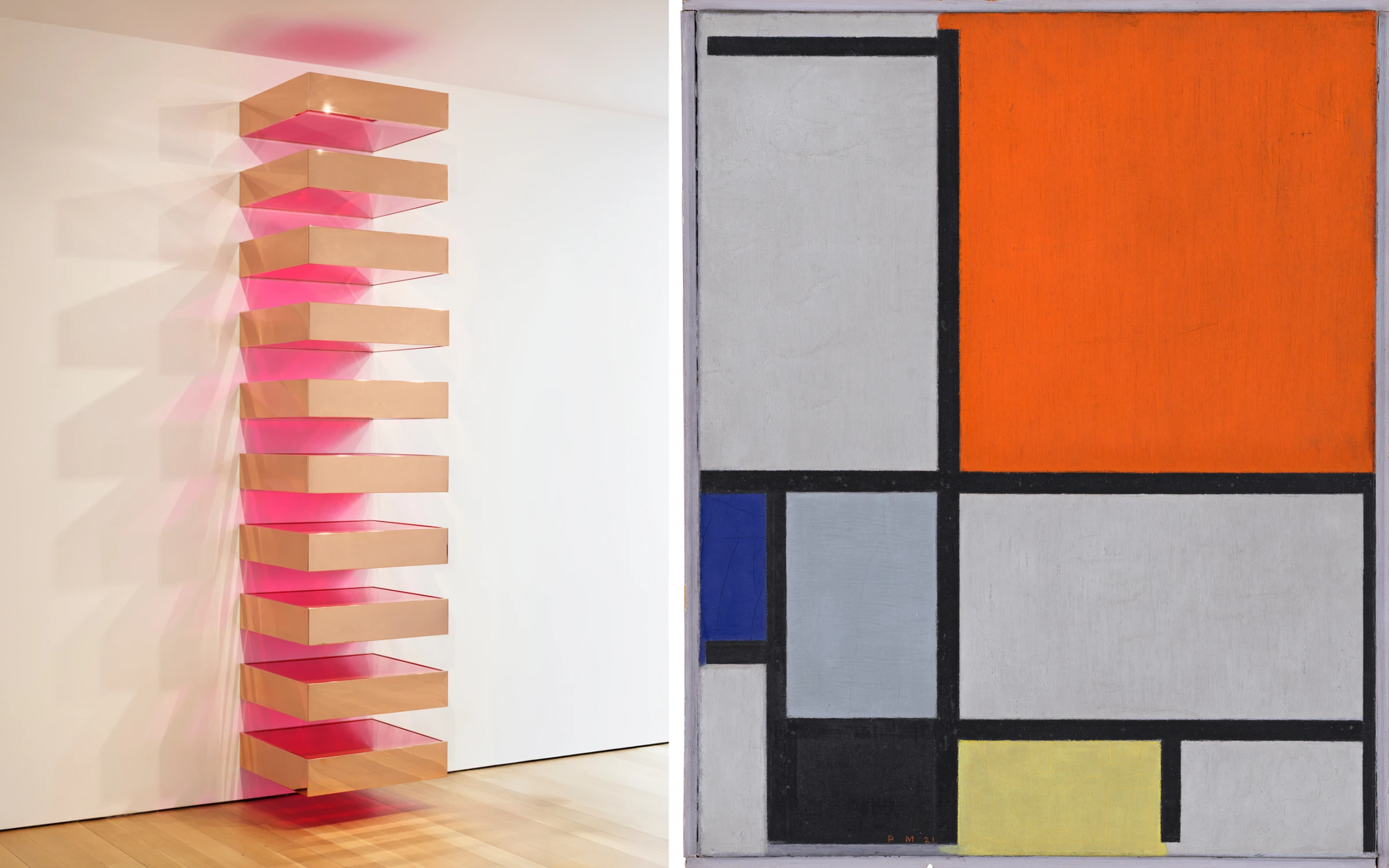
One way to judge the durability of the result is to compare it with the rest of the Newhouse material rather than with abstract chatter about market confidence. Christie's built the sale around a curated cluster of blue chip works, including a dedicated Newhouse evening sale and highly visible catalogue lots such as the headline Mondrian in the same auction. A record price rarely emerges from a vacuum. It emerges from a sale environment designed to reassure bidders that they are participating in a historically ratified event. In practical terms, that means specialists, cataloguers, and marketers spend weeks turning provenance into atmosphere. Buyers at this level are not simply shopping for objects. They are buying into a setting that promises cultural finality, the sense that if this work appears now and here, hesitation itself starts to look irrational.
That atmosphere has consequences beyond one evening. When record prices cluster around highly managed estate material, private collectors may delay consigning strong but less mythologized works because they fear comparison with the unattainable. Advisors may also push clients toward the safest names and the cleanest ownership histories, deepening the split between a trophy market that still attracts competition and a broader market that demands heavier incentives. The Brancusi result is therefore both a sign of strength and a warning about concentration. The very factors that made the sculpture irresistible - rarity, provenance, historical clarity, and theatrical sale staging - are not widely available. Houses that mistake this record for a general weather report will misread the season.
That is why this sale should be read as a benchmark of confidence in exceptional property, not as a blanket endorsement of every corner of the secondary market. The room proved that the very top remains competitive when the object is indisputable. It did not prove that hesitation has vanished elsewhere.