Sotheby's and Phillips Signal a Selective Market Rebound
Sotheby's and Phillips posted strong New York totals, but the real signal is a choosy market rewarding quality, scarcity, and disciplined estimates.
Headline totals looked bullish, but the more interesting story sits beneath the confidence theater
New York’s May evening sales are built to produce exactly one feeling in public: that the market still knows how to stage certainty. This week, that machinery worked. As Artforum reported, Sotheby’s and Phillips together brought in $419.1 million, with Sotheby’s posting roughly $303.9 million and Phillips $115.2 million. On the surface, the numbers argue for a rebound. Sotheby’s was up dramatically on last year, Phillips more than doubled its equivalent 2025 result, and the sell-through rates were close enough to perfect to make every specialist sound vindicated. If you trade in public narratives, that is the whole story. If you actually watch markets, it is only the first paragraph.
What happened in New York was not a generalized flood of confidence washing across all categories. It was a demonstration that carefully managed supply, high-recognition names, and a few aggressive bidding theaters can still produce strong optics in a cautious environment. That is not nothing. It matters that buyers are willing to fight for the right material. But it is a much narrower signal than the word rebound usually implies. A healthy market broadens. This week’s market concentrated.
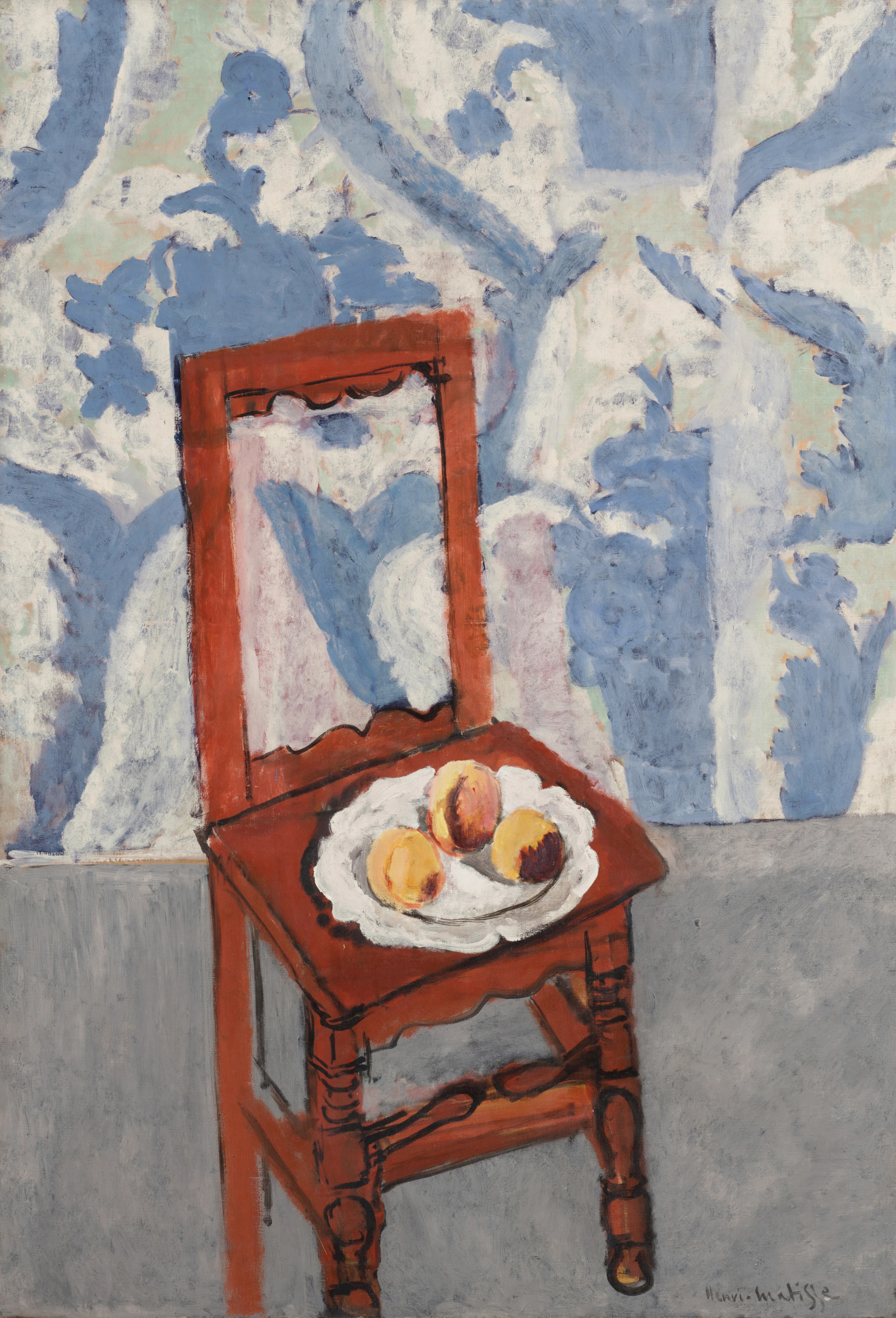
The emblem of the evening was Henri Matisse’s La Chaise lorraine at Sotheby’s, which far exceeded its estimate and became the night’s dramatic proof point. Strong results for Van Gogh, Picasso, Rothko, and Varvara Stepanova reinforced the impression that conviction still exists when rarity and pedigree align. Phillips, meanwhile, found energy in a different register, with notable performances by Lee Bontecou, Joan Mitchell, Helen Frankenthaler, and younger contemporary names such as Salman Toor and Joseph Yaeger. Those are real outcomes. They also reveal a market that remains highly selective about where it is willing to be enthusiastic.
Sotheby's strength came from concentration at the top, not from universal looseness in the room
Sotheby’s knew what it was doing. The house built a narrative around material that could attract both blue-chip trust and enough competition to animate the room. Matisse offered the ideal anchor: canonical, historically legible, visually seductive, and scarce enough to turn estimate into an invitation rather than a ceiling. The lesson is not simply that Matisse is strong. Everybody already knows that. The lesson is that when a house presents a work whose quality is easy to explain across generations of wealth, bidders will still perform decisiveness. In a market where hesitation has become habitual, that kind of object can function almost like an antidote.
But concentration cuts both ways. It can make a sale look healthier than the broader terrain really is. A room can be electrified by two or three uncontestable lots while still remaining guarded on secondary material, stylistically awkward works, or estimates that feel more aspirational than defensible. Near-perfect sell-through is impressive, yet it can also reflect strong pre-sale engineering, estimate discipline, and guarantee structures that lower visible risk. Houses are not neutral narrators of their own evenings. They stage manage supply to produce confidence, because confidence is itself one of the most valuable products being sold.
That does not make the result fake. It makes it strategic. Strong houses in 2026 are succeeding less by pretending uncertainty is gone than by isolating the parts of the market where uncertainty can be managed. Buyers responded because they recognized quality, but they also responded because the house gave them conditions under which boldness could feel rational rather than reckless. Those conditions are the story. Without them, headline totals would have looked much thinner.
Phillips found real energy in female artists and younger names, but that is not the same as a broad thaw
Phillips’ result deserves attention because it showed where appetite is still lively outside the most predictable trophy lane. Artforum highlighted records and strong prices for Bontecou, de Amaral, Frankenthaler, Mitchell, O’Keeffe, Passlof, and Weyant, along with assertive bidding for Toor and Yaeger. That cluster matters. It suggests that buyers remain willing to chase work when the artist’s market has momentum, the estimates leave room for upside, and the house can tell a persuasive story about immediacy and relevance.
Yet here again, the optimistic reading needs trimming. Phillips has spent years positioning itself as the place where certain forms of contemporary heat, rediscovery, and generational taste recalibration can intensify quickly. The danger is assuming that an energetic evening there translates into broad category strength across the market. It does not necessarily. Sometimes it means Phillips has correctly identified where competition is most likely to flare in a thinner overall landscape. That is skill, but it is not the same as a universal market turn.
The better reading is that collectors are still prepared to spend when they can make a sharp argument to themselves about why the object matters now. That argument may be historical, as with Bontecou or Frankenthaler. It may be generational, as with Toor and Yaeger. But it has to be clearer than it did during the last period of easy exuberance. Buyers are still reaching. They are just doing more homework before they do.
The market signal is one of disciplined demand, not simple recovery
If there is a common thread between the Sotheby’s and Phillips evenings, it is not abundance. It is filtration. Buyers, advisors, and guarantors are filtering harder. They are distinguishing between rarity and branding, between material that can survive institutional and private scrutiny and material that merely photographs well in a sale catalogue. We have tracked that logic before in our guide to trophy consignment risk. What this week added is evidence that filtration can still produce buoyant public outcomes when enough parties agree on what deserves competition.
That is why broad claims about the market “being back” remain sloppy. A truly broad recovery would show up in deeper bidding benches across more categories, fewer weak patches in the middle of sales, and less dependence on a handful of heavily signaled lots to carry the emotional weight of the evening. We are not fully there. What we have instead is a market learning to perform discipline without losing appetite altogether. Frankly, that may be healthier than a reckless boom.
It also helps explain why auction houses are leaning so hard on quality storytelling. In a selective market, the specialist’s ability to position a work inside art history, collector psychology, and scarcity logic becomes more valuable. This is not merely salesmanship. It is interpretation deployed as liquidity support. Some houses do it better than others. The winners this cycle are the ones that can align scholarship, expectation, and theater tightly enough that bidding looks like conviction rather than obligation.
What collectors and institutions should take from the week
For collectors, the main lesson is that strength is still available, but only if the object is strong enough and the pricing architecture leaves oxygen in the room. Bidding because the market appears to be recovering is a lazy thesis. Bidding because a specific object has cross-cycle resilience, strong provenance, real institutional legibility, and manageable total-cost risk is a better one. The houses did not prove that everything good will sell. They proved that the best-prepared opportunities can still trigger competition even in a market that has not completely relaxed.
For institutions, the week offered a subtler warning. If top houses are once again extracting eye-catching prices from canonical names and well-positioned rediscoveries, museum acquisition teams and trustees need to move quickly on categories they still believe are undervalued. Auction houses are experts at turning delayed recognition into immediate pricing events. Once a rediscovery hardens into a sale-room narrative, the cost of waiting rises fast. That is especially true for artists whose institutional standing is already advancing before their commercial values fully catch up.
One more detail deserves emphasis. These evenings also function as intelligence-gathering exercises for the houses themselves. Every pause, stretch bid, and pass tells specialists where resistance begins. That information will shape private-sale pitches, future estimate setting, and how consignors are advised for the next cycle. So when an evening appears strong, it is not merely closing business. It is also writing the script for what the houses will try to persuade the market to believe next. Buyers who understand that feedback loop can read the sale not as a celebration but as a negotiation over future expectations.
There is a historical point here as well. Markets rarely recover in a neat, democratic way. They usually recover by reasserting hierarchy first. The best names get liquidity back earliest, the cleanest provenances draw the deepest benches, and works with museum-grade narratives recover pricing power before everything around them does. That pattern is visible now. It should make observers wary of treating a glamorous week in New York as a referendum on every collecting category at once. Recovery, if that is the right word, is arriving unevenly and with very little mercy for material that cannot justify itself quickly.
And for the market itself, the implication is straightforward. Headline totals have improved. Confidence has improved. Neither should be mistaken for an indiscriminate return to risk. The spring New York sales succeeded because they focused buyer attention on material that could bear scrutiny. That is a narrower, smarter, and less forgiving form of strength than the houses will advertise, but it is the one that actually matters. The market is not healed. It is choosier. That is a very different condition.