Art Dubai Will Run a Reduced 2026 Edition After Regional Conflict
After postponement linked to the Iran war, Art Dubai will return in May with roughly 50 exhibitors, down from the 120 initially planned for its twentieth anniversary edition.
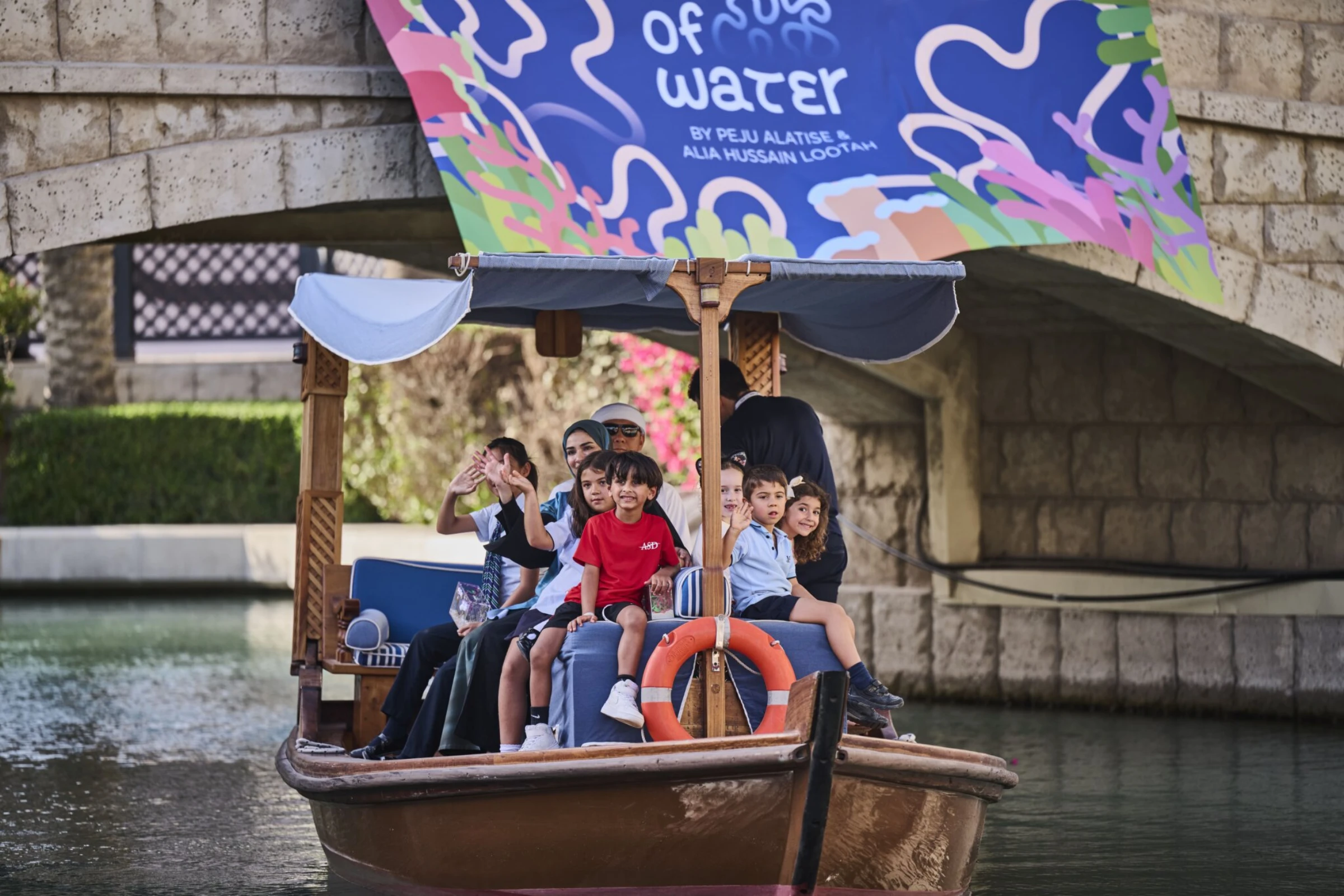
Art Dubai has confirmed that its 2026 edition will proceed in a reduced format after the fair's earlier postponement during the Iran war. The event, originally planned as a twentieth-anniversary edition with around 120 exhibitors from 35 countries, will now host about 50 galleries in May at Madinat Jumeirah. That reduction is not a minor programming adjustment. It is a structural reset forced by security risk, travel uncertainty, and shifting operational thresholds for galleries working across the Gulf.
Fair organizers framed the move as a special edition and emphasized continuity through partnerships with regional institutions including Art Jameel, Sharjah Art Foundation, and the Dubai Collection. On paper, that collaboration strategy can preserve cultural weight despite reduced commercial volume. In practice, it reveals how fairs are evolving from pure market floors into hybrid convening platforms, part sales engine, part institutional diplomacy, part public-program spectacle.
The exhibitor mix underscores that transition. Roughly two-thirds of participating galleries are based in the region or maintain regional branches. International dealers that remain in the lineup include a small but visible set from Europe, Asia, and the Americas. This implies a two-speed market response. Regional actors are absorbing risk in place, while some global participants are narrowing exposure without fully exiting. For collectors, that pattern changes where and how discovery happens. The fair floor may offer fewer booths, but the institutional side programs could become the more meaningful signal of long-term ecosystem health.
The regional context is impossible to ignore. Disruption to transport routes, insurance costs, and planning certainty has already affected cultural logistics beyond fairs, from shipping and installation timelines to lender confidence and insurer terms. Art events can continue under these conditions, but usually with tighter inventories, fewer speculative presentations, and less appetite for fragile time-based works that require complex movement. Reduced scale often becomes a risk-management tool before it becomes an editorial choice.
Even so, the decision to proceed matters. In volatile periods, cancellation can trigger a confidence spiral that reaches far beyond one event cycle. By moving forward with a compact edition, Art Dubai protects an annual point of coordination for galleries, patrons, institutions, and regional governments that have spent a decade positioning the Gulf as a serious node in the global art economy. The reputational logic is clear, smaller can still be credible if execution is tight and programming remains legible.
For collectors, the immediate takeaway is to recalibrate expectations. A reduced fair can still produce strong opportunities, but the selection may skew toward works and presentations that can travel, install, and insure with lower friction. For galleries, especially mid-sized programs without multiple regional outposts, the week will likely reward precision over volume: focused booths, clear artist narratives, and stronger pre-fair outreach to known buyers.
The longer-term question is whether the 2026 format is a temporary compression or the beginning of a new baseline for large fairs operating in geopolitically exposed regions. If regional institutions keep deepening partnerships and if collector attendance remains stable, a compact model could prove durable. If conflict volatility intensifies, planners may need to rebuild fair economics around modular formats, distributed programming, and shorter commitment windows.
For now, Art Dubai's strategy is pragmatic rather than symbolic. Keep the date, reduce the footprint, retain the network, and demonstrate that cultural infrastructure can function under pressure. In a market that often confuses scale with strength, this edition will test whether resilience can be measured by continuity, not just by booth count.