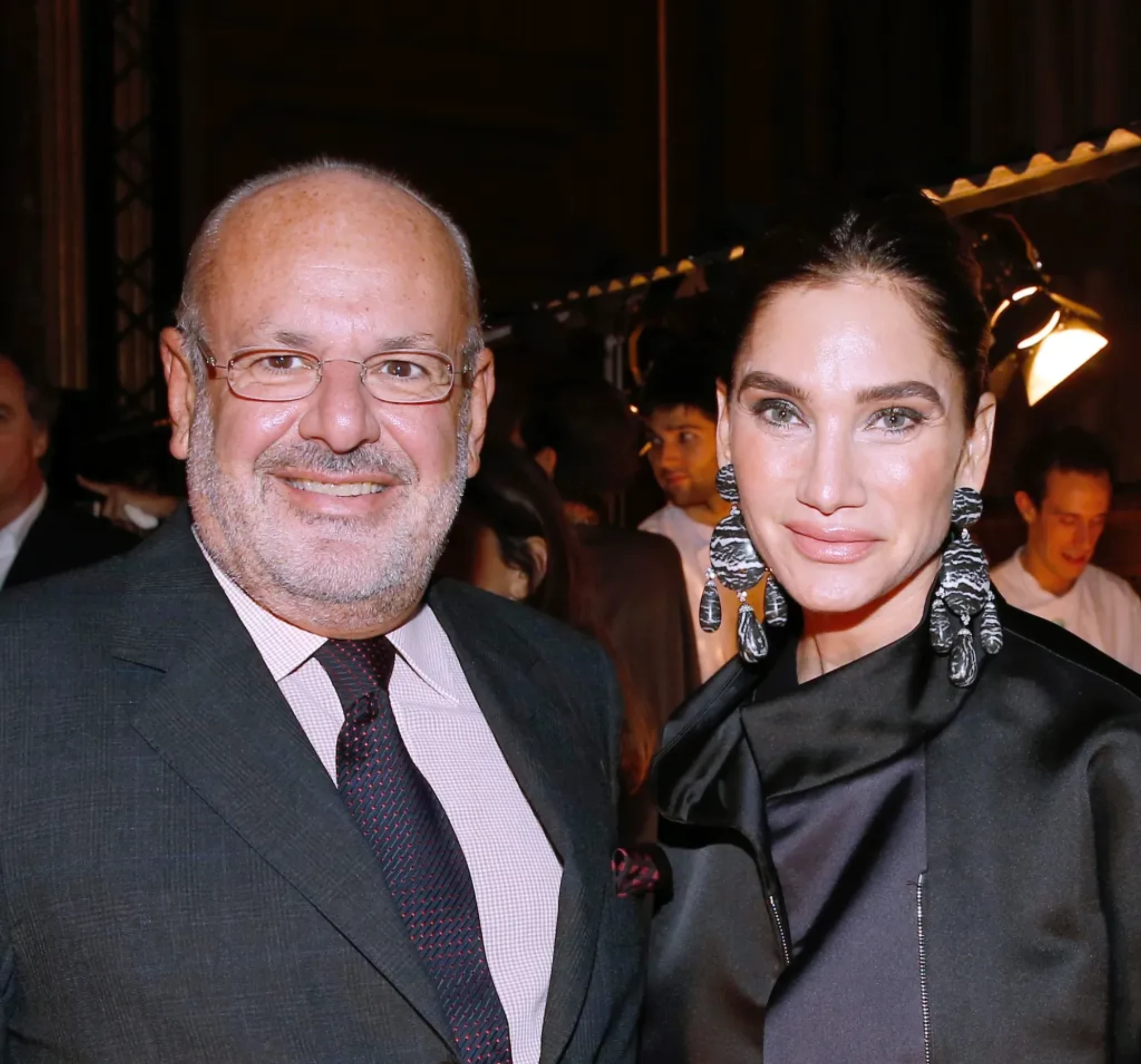
Tracey Amon Targets Art Advisor Sandy Heller in Estate Fight
Tracey Amon files a US court subpoena against art advisor Sandy Heller for documents tied to her late husband's $600 million estate and art collection
A Subpoena at the Heart of an Art World Power Struggle
Tracey Amon, a New York socialite and former wife of the late Swiss industrialist Maurice Alain Amon, filed a request on July 25 in the US District Court for the Southern District of New York to subpoena art advisor Sanford "Sandy" Heller. The filing seeks to compel Heller to turn over documents connected to Amon's late husband and his substantial art collection, which forms part of an estate valued at approximately $600 million. The documents are intended for use in ongoing legal proceedings in Switzerland, where Tracey Amon is pursuing lawsuits over the disposition of Maurice Amon's assets.
The case brings into sharp focus the often opaque world of ultra-high-net-worth art advisory, where billion-dollar collections are managed through private agreements, offshore structures, and cross-border legal arrangements. Heller, who was retained by Maurice Amon as an art advisor beginning in 2013, occupies a central position in the dispute. His role would have involved not only acquiring and managing artworks but also maintaining records of transactions, valuations, and communications that could prove decisive in resolving the Swiss litigation. The subpoena request represents an attempt to pierce the confidentiality that typically shrouds the relationship between art advisor and client, particularly when that client is deceased and the surviving family members are locked in a multi-jurisdictional inheritance battle.
Sandy Heller and the Art Advisory Elite
Sanford "Sandy" Heller has been described as "possibly the biggest art advisor in the world" and is reputed to work with high-profile clients including Roman Abramovich, the Russian oligarch and former owner of Chelsea Football Club, and Steve Cohen, the billionaire hedge fund manager and owner of the New York Mets. Heller's client list reads as a who's who of the global ultra-wealthy, and his advisory practice spans contemporary art acquisition, collection management, museum loans, and estate planning. The subpoena request targeting Heller is notable not only for the specific case at hand but for what it reveals about the concentration of power in the art advisory world, where a single individual may simultaneously manage collections worth billions of dollars for clients whose interests are not always aligned.
Art advisors like Heller occupy a uniquely influential position in the contemporary art market. They serve as gatekeepers to galleries, auction houses, and private sales, and their recommendations can move markets. Unlike financial advisors, art advisors operate in a largely unregulated field with no formal licensing requirements or fiduciary standards. The absence of regulatory oversight means that disputes over art advisory services are typically resolved through civil litigation rather than regulatory action, as is the case here. The ARTnews report on the subpoena request highlights the degree to which art advisory relationships can become entangled in broader estate and inheritance disputes, particularly when significant artworks are involved. The Art Dealers Association of America has proposed voluntary codes of conduct for advisors, but compliance remains uneven and enforcement mechanisms are effectively nonexistent.
The Maurice Amon Estate and Swiss Litigation
Maurice Alain Amon was a Swiss industrialist whose fortune was estimated at approximately $600 million at the time of his death. His estate included a substantial art collection, the exact contents and valuation of which remain subject to dispute. The Swiss legal proceedings initiated by Tracey Amon seek to clarify the disposition of assets that she claims are rightfully hers, and the documents held by Heller are believed to contain critical information about the acquisition, valuation, and potential transfer of artworks within the collection.
The decision to file a subpoena request in a US federal court, rather than pursuing documents through Swiss legal channels alone, reflects the complexity of cross-border estate litigation. Art collections assembled by ultra-wealthy individuals often span multiple jurisdictions, with artworks stored in freeports, pledged as collateral, or held through corporate entities in tax-friendly jurisdictions. The Swiss proceedings may lack the authority to compel testimony or document production from a US-based art advisor, making the Southern District of New York filing a necessary parallel legal strategy. This approach mirrors similar cases where surviving spouses have used US courts to gather evidence for foreign proceedings, particularly when key witnesses or documents are located in New York, the global center of the art trade. The art world trade press has tracked a growing number of such cross-border disputes as global wealth becomes increasingly mobile.
Art Estate Disputes and the Advisory Gap
The Amon-Heller dispute is the latest in a series of high-profile cases that highlight the risks inherent in art advisory relationships when clients die. Unlike financial assets, which are typically held in regulated institutions with clear ownership records, artworks can be moved, sold, or transferred with minimal documentation. Art advisors often maintain the only comprehensive records of a collection's composition and transaction history, and when disputes arise between heirs, those records become contested territory. The absence of standardized record-keeping requirements in the art advisory field means that the scope and quality of documentation varies enormously from one advisor to another.
Legal experts have noted an increase in art estate litigation over the past decade, driven by the generational transfer of wealth assembled during the contemporary art boom of the 1980s and 1990s. Cases involving art advisors as key witnesses or defendants have become more common, particularly when the advisor's role extended beyond acquisition advice to include collection management, storage, and disposition planning. The art world's largest advisory firms have responded by implementing more rigorous documentation practices, but the industry remains largely self-regulated. The outcome of the Amon subpoena request could establish a precedent for the discoverability of art advisory records in US courts, potentially opening new avenues for heirs seeking to recover artworks or challenge estate dispositions. This case also resonates with broader concerns about art collection security, as seen in the recent Italian art heist in L'Aquila where the vulnerability of privately held collections was similarly exposed.
For Tracey Amon, the stakes extend beyond the financial value of the artworks in question. The Swiss litigation represents a broader effort to assert control over the legacy of her late husband's collection, and the documents held by Heller may reveal not only what artworks were acquired but also what decisions were made about their storage, insurance, and potential transfer in the years leading up to Maurice Amon's death. The case serves as a cautionary tale for collectors and their families about the importance of clear documentation, transparent advisory relationships, and proactive estate planning for valuable art collections. As the proceedings unfold in both US and Swiss courts, the art world will be watching closely to see whether one of its most powerful advisors can be compelled to surrender the records that may determine the fate of a $600 million estate.
The Amon case also highlights the particular vulnerabilities of cross-border art collections. When artworks are stored in Swiss freeports, managed by New York advisors, and subject to the inheritance laws of multiple jurisdictions, the web of legal obligations becomes difficult to untangle even without the added complication of a disputed estate. Collectors who rely on art advisors should ensure that their estate planning includes provisions for accessing advisory records, and that these provisions are enforceable in the jurisdictions where the advisor operates. Without such provisions, heirs may find themselves in the same position as Tracey Amon: pursuing legal action in multiple countries to obtain documents that should have been part of the estate from the start. The intersection of unregulated advisory practices, cross-border storage, and inheritance disputes creates a perfect storm that only comprehensive documentation and proactive planning can prevent.
Beyond the immediate legal questions, the Amon dispute raises broader questions about the role of art advisors in the ecosystem of ultra-wealthy collecting. Advisors like Heller function not only as acquisition agents but as confidants, strategists, and gatekeepers who control access to a world that most people never see. They are trusted with sensitive financial information, personal preferences, and strategic decisions about what to buy, when to sell, and where to store. This level of trust is rarely formalized through the kind of contractual agreements that govern comparable relationships in the financial industry, where fiduciary duties are clearly defined and regulatory bodies enforce standards of conduct. The art advisory world operates instead on a foundation of personal relationships and handshake agreements, which works well until it doesn't. When a client dies, the informality that once facilitated trust and efficiency becomes a source of confusion and conflict. Heirs who had no relationship with the advisor are expected to trust that the advisor acted in the deceased's best interest, without the documentation that would allow them to verify that claim independently. This trust deficit is compounded when the advisor continues to manage artworks or advise other family members after the collector's death, creating potential conflicts of interest that are rarely addressed in the advisory agreements that govern these relationships. The Amon case may prompt other collectors to formalize their advisory relationships before it is too late, and may encourage advisors to adopt more rigorous documentation practices as a form of professional self-protection. Either outcome would represent a positive development for a field that has long operated in the shadows of the art market.