How to Read TEFAF New York Opening Day in 2026
TEFAF New York's crowded VIP opening reveals who is buying, which categories are holding, and how dealers stage confidence at the top end
Why TEFAF New York's busy opening still matters in a market that distrusts easy optimism
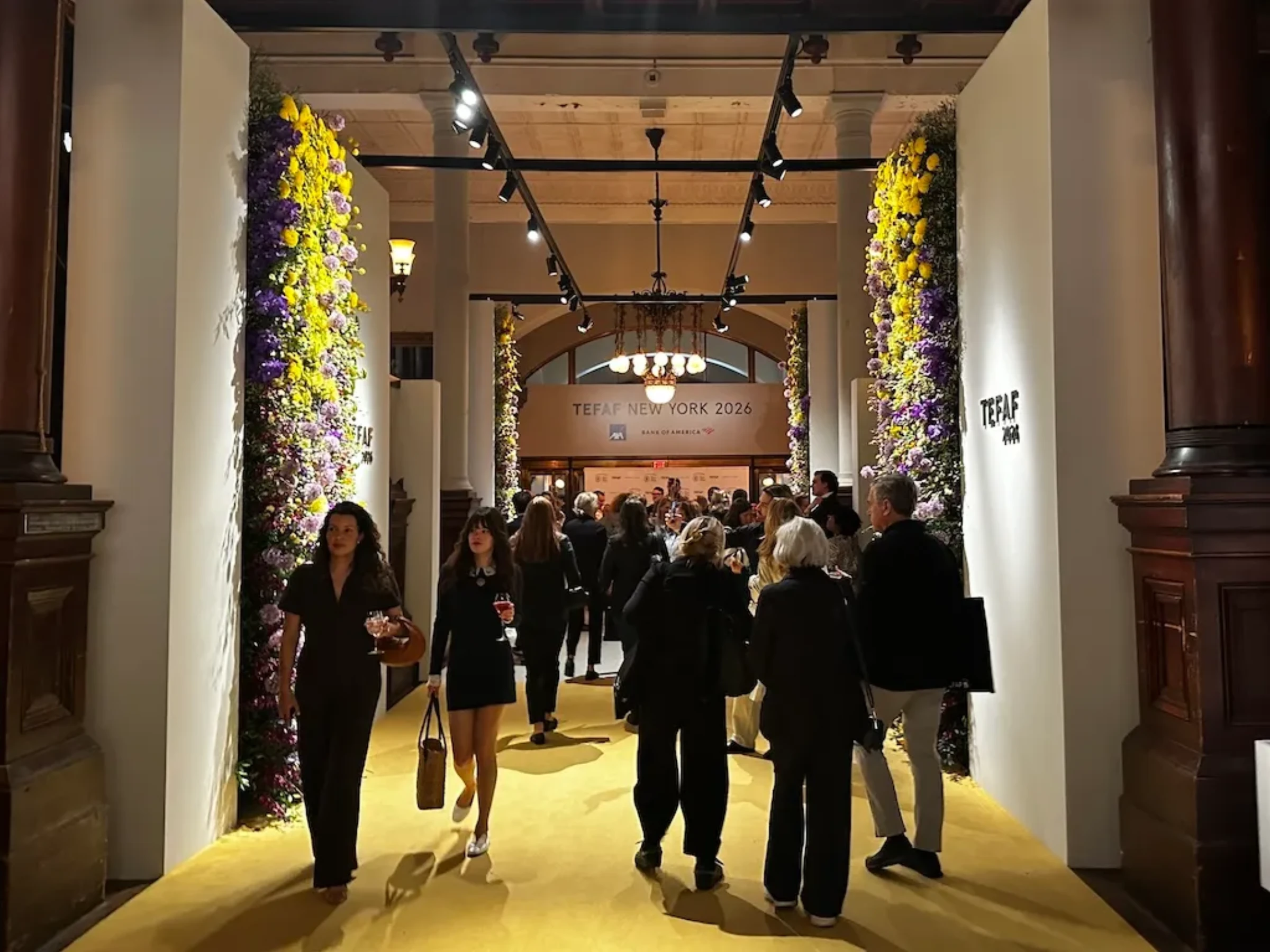
TEFAF New York opening day is one of those art-market rituals that tempts people into overreading the room. A crowded aisle can mean serious buying, but it can also mean strategic lingering, social theater or dealers making sure no one mistakes caution for weakness. This year, though, the opening did send a meaningful signal. ARTnews reported that even by late afternoon on VIP day, the aisles had not thinned, collectors were still pressing into booths and conversations remained unusually dense. In 2026, that is not nothing. It suggests that at the top end of the market, selective confidence still exists when material quality, presentation discipline and social concentration align.
Still, anyone trying to understand TEFAF needs to resist the fair's own glamour. TEFAF New York sells itself as a meeting point for modern and contemporary art, design, jewelry and antiquities inside the Park Avenue Armory, with period rooms and Creative Spaces offering more than a standard booth grid. That framing is accurate and slightly deceptive. The fair is not just a place to shop across categories. It is a place where dealers stage stability through connoisseurship. If Frieze New York often dramatizes ambition and trend, TEFAF dramatizes authority. The point of reading opening day correctly is to understand how authority gets performed when wealth is nervous.
Start with the fair's structure, not the gossip in the aisles
The first signal is structural. TEFAF says this year's edition brings together 88 exhibitors spanning 7,000 years of art and design, alongside 15 special presentations in the Armory's historic period rooms and additional large-scale works through the Creative Spaces and exhibitor program. That matters because TEFAF is designed to flatten the distinction between fair booth and curated environment. When a dealer installs work in one of the period rooms, the message is not merely that the inventory is expensive. It is that the inventory deserves scenography, historical echo and architectural confidence.
At most fairs, the average visitor can read momentum by asking which booths are visibly selling and which stay empty. At TEFAF, that method is incomplete. The fair's value proposition is less about velocity than about density of conviction. Many transactions are slow, private and partly prearranged. Collectors may spend an hour with one object, not because they are undecided, but because the act of looking itself is part of the validation ritual. A booth crowded with talk can therefore indicate genuine buying interest, but it can also indicate that dealers are successfully turning expertise into atmosphere. When the market is uncertain, atmosphere is not fluff. It is sales infrastructure.
The venue amplifies that effect. The Park Avenue Armory gives TEFAF something most fairs cannot manufacture: a setting where luxury, history and institutional gravitas feel continuous. A collector does not walk from booth to booth so much as through a sequence of arguments about taste. That architectural advantage is why TEFAF can still make crowded aisles look persuasive rather than frantic. Even when buying is cautious, the fair makes caution appear cultivated.
Watch category confidence, because TEFAF is a barometer for cross-generational money
The second signal is category behavior. TEFAF is useful precisely because it brings design, antiquities, Old Masters, jewelry and modern and contemporary art into the same social weather system. That lets you see whether confidence is broad or narrowly concentrated. In a jittery market, collectors often retreat toward objects with stronger provenance, longer price histories or obvious scarcity narratives. TEFAF specializes in exactly that inventory. So if the fair opens well, it does not necessarily mean speculative appetite has returned. It may mean money is still moving toward the categories that feel hardest to embarrass oneself with later.
This is why a robust TEFAF opening can coexist with caution elsewhere. Buyers who hesitate around young painters with weak secondary-market records may still compete for a museum-grade design object, a major antiquity or a blue-chip modern work whose scholarship is secure. TEFAF functions as a hedge against market mood because its strongest dealers sell things that can be justified through rarity, condition, provenance and scholarship even when trend language has gone stale. If you want to know whether capital has vanished, TEFAF is not the place. If you want to know what forms of capital still feel entitled to confidence, it is almost ideal.
Read the fair, then, not as a referendum on exuberance but as a map of defensible spending. Which categories look freshly contested? Which feel merely ceremonially admired? Are collectors clustering around modern design because it still offers connoisseurial upside? Are antiquities drawing international attention because they provide historical depth at a moment of contemporary oversupply? Are the period-room presentations functioning as serious selling environments or as prestige dressing? Those are better questions than asking whether the vibe is good. Vibes are cheap. Cross-category conviction is not.
Listen for how dealers talk about clients, not just about artworks
The third signal is linguistic. On opening day, dealers reveal a great deal in the way they describe traffic. If they emphasize institutional visitors, trusted existing clients and collectors "placing" works, that usually indicates a market running on relationships and carefully managed trust. If they emphasize surprise, competition and new faces, the room may be looser and risk appetite broader. TEFAF's culture tends to favor the first mode. Dealers do not want to sound breathless. They want to sound selective, as though the real challenge is not demand but finding the right home for exceptional objects.
That rhetoric is not empty spin. It reflects how the top end now protects itself. Many of the most meaningful transactions at fairs like TEFAF are inseparable from advisory ecosystems, financing arrangements and long-standing client education. A crowded booth can therefore mean that a dealer is managing several layers of social and commercial due diligence at once. The collector is not merely deciding whether to buy. The collector is deciding whether this is the moment to buy, whether the object is sufficiently singular, whether the asking price will still look intelligent in two years and whether the dealer's framing can be defended to peers and institutions. TEFAF is built for precisely that slower form of conviction.
When ARTnews describes dealers being pinned into conversation late in the day, that is what you should hear underneath the scene-setting. The important fact is not simply that people stayed. It is that they stayed inside a fair whose social code rewards extended deliberation. In a weaker year those conversations would still happen, but they would often feel more private, more hesitant and less crowded. Density here matters because it suggests that enough buyers were willing to perform interest publicly. Public confidence, even measured and elite, is contagious.
Pay attention to presentation strategy, because dealers now sell certainty through installation
The fourth signal is visual. TEFAF rewards booths that look not overstuffed but exact. Installation at this fair is a commercial argument about self-command. Dealers who can make a period room or a standard stand feel inevitable are telling collectors that the works have already passed a certain test of seriousness. The fair's own emphasis on large-scale presentations and room activations encourages this. A booth at TEFAF should not feel like inventory management. It should feel like a world in miniature, with enough internal logic that the collector can imagine the object entering a coherent collection rather than plugging a hole in one.
This matters more in 2026 because buyers are weary of the market's recent habit of substituting branding for judgment. At TEFAF, branding still exists, but it usually hides behind scholarship, design intelligence and a performance of measured expertise. A collector seeing a restrained booth with a few forceful objects may infer seriousness more readily than from a crowded wall of expensive names. Dealers know this. They sell confidence by showing that they are not desperate to sell confidence.
The fair's official programming and fair format reinforce that reading. Talks, expert-led context and the use of historic rooms are not side attractions. They are mechanisms for attaching knowledge to price. The strongest fair presentations make you feel that the object's value was discovered, not merely assigned. That is one of TEFAF's oldest tricks and one of the reasons it still works.
Use TEFAF to judge the season's upper-end risk appetite, not the whole art market
The final and most useful signal is comparative. TEFAF does not tell you what is happening everywhere. It tells you what is happening where high-net-worth buyers want the maximum amount of cultural insulation around a purchase. If opening day feels strong there, the conclusion is not that the entire market is back. It is that the upper band remains functional when the selling environment minimizes embarrassment and maximizes justification. That distinction is essential as New York's May sales, surrounding fairs and private-dealer circuit continue to compete for the same money.
In practical terms, TEFAF opening strength should be read alongside auction guarantees, fair-week private sales and the performance of adjacent events. If collectors are circulating comfortably between TEFAF, the evening auctions and other fairs, then the city is still acting as a coordinated stage for top-end spending. If TEFAF is lively while other segments lag, that points to a narrower conclusion: connoisseurial capital remains active, while more speculative capital is still hiding. Either way, TEFAF's role is diagnostic. It shows what the rich still trust when they no longer trust the market's own slogans.
So the right way to read this year's opening is soberly. The crowd matters. The sustained conversations matter. The fair's architecture of authority matters. But none of it announces a carefree boom. What it announces is something more plausible and maybe more important: in 2026, serious-looking objects in serious-looking settings can still unlock serious money, provided the seller knows how to make caution feel like discernment. TEFAF New York remains one of the best places to watch that transformation happen in real time. If you know what to look for, the aisles tell you much more than whether people showed up.