A Guide to Site-Specific Art and Outdoor Sculpture
How site-specific commissions work, from luxury resorts to public parks, and what makes them succeed or fail in dialogue with their surroundings
What Is Site-Specific Art?
Site-specific art is work created to exist in a particular place, responding to the physical, historical, or cultural conditions of that location. Unlike a painting that can be moved from gallery to gallery without losing its meaning, site-specific work is inseparable from where it sits. The location is not a backdrop. It is part of the piece.
The term gained currency in the 1960s and 1970s through artists like Robert Smithson, whose Spiral Jetty (1970) was built into the shoreline of the Great Salt Lake in Utah. The work is submerged and revealed by fluctuating water levels, its appearance determined by environmental conditions the artist cannot control. Richard Serra followed with pieces like Tilted Arc (1981), which was designed for a specific plaza in lower Manhattan and, when removed, effectively destroyed. Serra argued that to remove the work from its site was to destroy the work, and the controversy that followed established site-specific art as a category with real consequences.
How Commissions Work
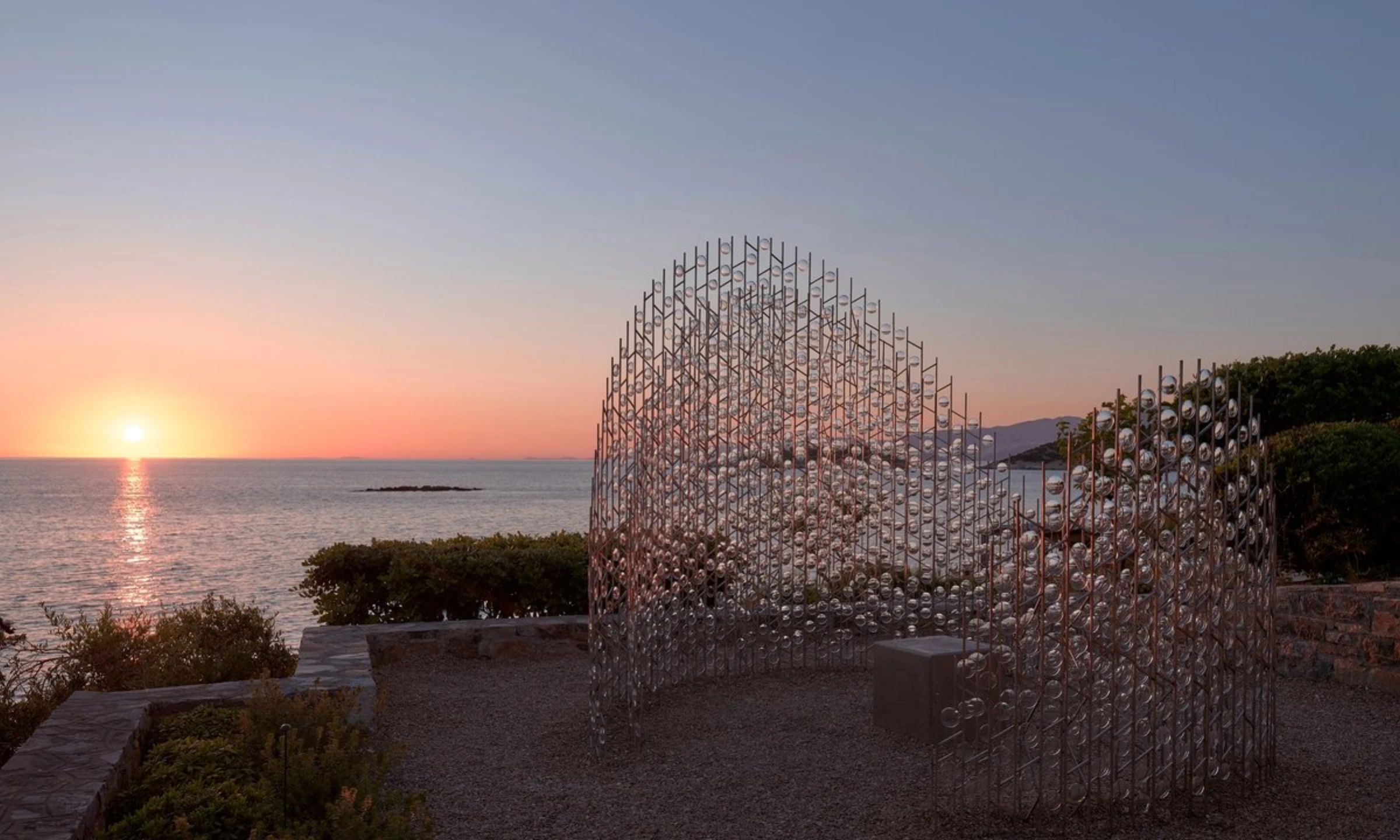
Site-specific commissions vary enormously in how they come about. Some are initiated by institutions, some by private collectors, and some by developers or hospitality brands. The G. & A. Mamidakis Foundation Art Prize, running since 2019 at the Minos Palace Resort in Crete, offers a useful case study. The competition received more than 450 proposals from 65 countries in 2026, with winners creating site-specific work for the hotel sculpture garden. The 2026 winners, Canadian artists Caitlind R.C. Brown and Wayne Garrett, created Chronotopia from hundreds of unused eyeglass lenses. The lenses catch light in different ways throughout the day, and the artists even swam out into the bay to see how the work looked from the seaward side.
What distinguishes a genuine site-specific commission from a decorative installation is the relationship between the work and its location. Brown and Garrett drew inspiration from the Mediterranean landscape surrounding their piece. They noted that working with found materials, like the eyeglass lenses, carries a power that new materials lack, because recognisable objects bring their own histories. The Mamidakis Foundation collection now comprises more than 80 pieces, the vast majority created specifically for the sculpture gardens, with artists including Anish Kapoor, Lynda Benglis and Joseph Kosuth participating in the foundation early symposia in the 1980s.
When Art Meets Nature
The relationship between site-specific art and the natural environment is often the most productive and the most challenging aspect of the commission. Brown and Garrett noted that their work in Crete benefited from the specific quality of Mediterranean light, which interacts with the eyeglass lenses in ways that would not occur in a different climate. The salt air, the intensity of the sun, the presence of the sea, all contribute to what the work becomes. But they also present conservation challenges that require ongoing attention and resources.
The Mamidakis Foundation approach to commissioning offers a model for how site-specific work can be integrated into a hospitality context without becoming mere decoration. The foundation was set up by hotel owner Gina Mamidaki to continue the legacy of the symposia she hosted at the nearby Minos Beach Art Hotel in the 1980s. The first symposium took place in 1988, inviting five speakers and 32 artists, including Anish Kapoor, Lynda Benglis and Joseph Kosuth. Artists would come and stay for a few weeks over the summer, creating artworks for outdoors with simple materials found on site. That ethos of embedded, responsive creation continues to shape the collection.
The Conservation Challenge
Outdoor and site-specific works face conservation challenges that gallery pieces do not. Salt, sun, wind, rain and biological growth all take their toll. Brown and Garrett carefully weather-tested their concept by putting a model out into the harsh Canadian climate, but within days of installation in Crete they were already finding things they had not anticipated. Salt interacted with the lenses in unexpected ways, requiring mitigation strategies and regular rinsing.
The Magdalena Abakanowicz piece The Painful Pyramids (1993), part of the Mamidakis Foundation collection, illustrates how outdoor works age. Three wooden structures look innocuous from a distance, but up close reveal rusting barbed wire that gives them their title, an unsettling contrast to the sun-loungers around them on the beach. None of the works are protected by barriers. Some pieces are stored inside during winter, others are taken to Athens for occasional touch-ups.
Conservation of site-specific work requires a different mindset from traditional museum conservation. The goal is not to preserve the work in its original state but to manage its relationship with the environment over time. Some artists embrace change, accepting that their work will weather, erode or be overtaken by vegetation. Others provide detailed maintenance instructions. The key is establishing a conservation protocol before installation, not after problems arise.
What Makes a Good Site-Specific Work
The best site-specific work does three things: it responds to the specific conditions of its location, it transforms the viewer experience of that location, and it could not exist anywhere else. The worst site-specific work is decorative, generic and portable in all but name. The difference is not always obvious from the commissioning brief.
Brown and Garrett observation that you cannot out-beauty nature is a useful starting point for evaluating site-specific commissions. A work that competes with its surroundings will lose. A work that responds to its surroundings, that channels light or frames a view or engages with local materials and history, can transform both the site and the viewer experience of it. The Mamidakis Foundation approach, where artists are invited to respond to the island of Crete rather than simply install existing work, produces better outcomes than the common model of purchasing sculpture for a hotel lawn.
The relationship between the work and its audience also matters. Site-specific work in a public park, a hotel garden, or a city plaza encounters viewers who may not have chosen to engage with art. This is both the opportunity and the risk. The work has to earn attention from people who are there for other reasons. Brown and Garrett note the complexity of working within a functional space where you have sunbathers and jet skiers and gardeners. But there is the possibility of communion with the sky, the land and the sea.
How to Experience Site-Specific Art
If you are visiting site-specific works, here are some practical considerations. First, spend time. A work that responds to light, weather or tides will look different at different times of day. Brown and Garrett piece changes as the sun moves and as the viewer moves around it. Second, consider the approach. Many site-specific works are designed to be encountered from particular angles or paths. The approach is part of the experience. Third, read the wall text or label, but do not stop there. The work is doing something specific to its location that text alone cannot fully convey.
For those interested in exploring site-specific art more broadly, the Center for Land Use Interpretation documents land art and environmental works across the United States. The Storm King Art Center in New York is one of the premier sculpture parks in North America. For European examples, the Fondation Beyeler in Basel integrates outdoor sculpture into its grounds. The Yorkshire Sculpture Park in England offers 500 acres of outdoor installations. And for a deeper dive into the Mamidakis Foundation collection discussed in this guide, the Mamidakis Foundation website documents their full collection and the history of their symposia.
Site-specific art asks something more of the viewer than gallery art. It asks you to pay attention to where you are standing, what is around you, and how the work changes your understanding of both. The best of it rewards that attention. The worst of it makes you wish you had stayed home. Knowing the difference is a matter of looking closely, thinking about what the work is doing rather than what it is supposed to represent, and being honest about whether the location and the piece actually need each other.
For those interested in exploring site-specific art more broadly, the Center for Land Use Interpretation documents land art and environmental works across the United States. The Storm King Art Center in New York is one of the premier sculpture parks in North America. For European examples, the Fondation Beyeler in Basel integrates outdoor sculpture into its grounds. The Yorkshire Sculpture Park in England offers 500 acres of outdoor installations. And for a deeper dive into the Mamidakis Foundation collection discussed in this guide, the Mamidakis Foundation website documents their full collection and the history of their symposia. For a different perspective on how art interacts with its environment, see our guide to technology in archaeology.
Site-specific art asks something more of the viewer than gallery art. It asks you to pay attention to where you are standing, what is around you, and how the work changes your understanding of both. The best of it rewards that attention. The worst of it makes you wish you had stayed home. Knowing the difference is a matter of looking closely, thinking about what the work is doing rather than what it is supposed to represent, and being honest about whether the location and the piece actually need each other. A work that could be installed anywhere is not site-specific. A work that only makes sense where it is, that would lose its meaning if moved, is doing what this art form is supposed to do.