How to Read Rome’s Biennale-Season Gallery Scene in 2026
Rome’s current gallery season turns Biennale overflow into a local test of ambition, history, and display. Here is how to read the city’s strongest moves without mistaking atmosphere for seriousness.
Start with the contradiction: Rome wants international relevance without surrendering its historical gravity
Anyone trying to understand Rome’s current gallery season should begin with the tension Caroline Elbaor identifies in her Artforum field report: the city wants to benefit from Venice Biennale traffic while refusing to look merely derivative of the Biennale machine. That contradiction is not a flaw in the reading. It is the reading. Rome is close enough to Venice, symbolically and geographically, to catch the pulse of the international crowd, yet old enough, proud enough, and self-conscious enough to resist becoming a satellite fairground. The result is a season in which galleries make unusually ambitious moves while often pretending the timing is incidental.
This matters because Rome’s contemporary scene has long lived under the weight of its own image. The city is surrounded by proofs of civilizational endurance, and that can produce a deadening effect on contemporary programming. New work is too easily framed as a minor episode in a city whose artistic authority was secured centuries ago. But the right way to read Rome in 2026 is not as a place struggling to imitate younger art capitals. It is as a place testing how contemporary art behaves when historical scale is not an exhibition theme but an atmospheric condition. That makes the city harder to program, and more rewarding to read, than destinations built primarily on contemporary churn.
For visitors, critics, and collectors, the first rule is simple: do not ask whether Rome feels as efficient or hyper-networked as Venice, Basel, or even Milan. Ask instead what kinds of exhibitions become more charged here because they are being staged in a city that never lets the past shut up. That is the difference between tourism and interpretation.
Read the calendar politically: Biennale overflow is real, but Rome’s best galleries use it selectively
The city’s most ambitious early summer programming is timed to catch the expanded attention economy of Biennale season. Pretending otherwise misses the point. But the strongest Roman galleries are not simply creating ancillary entertainment for visitors passing through on the way back from Venice. They are using the window to restage their own positions. That is why the season matters. Timing is doing institutional work. It tells us which galleries believe they can convert temporary international traffic into durable local prestige.
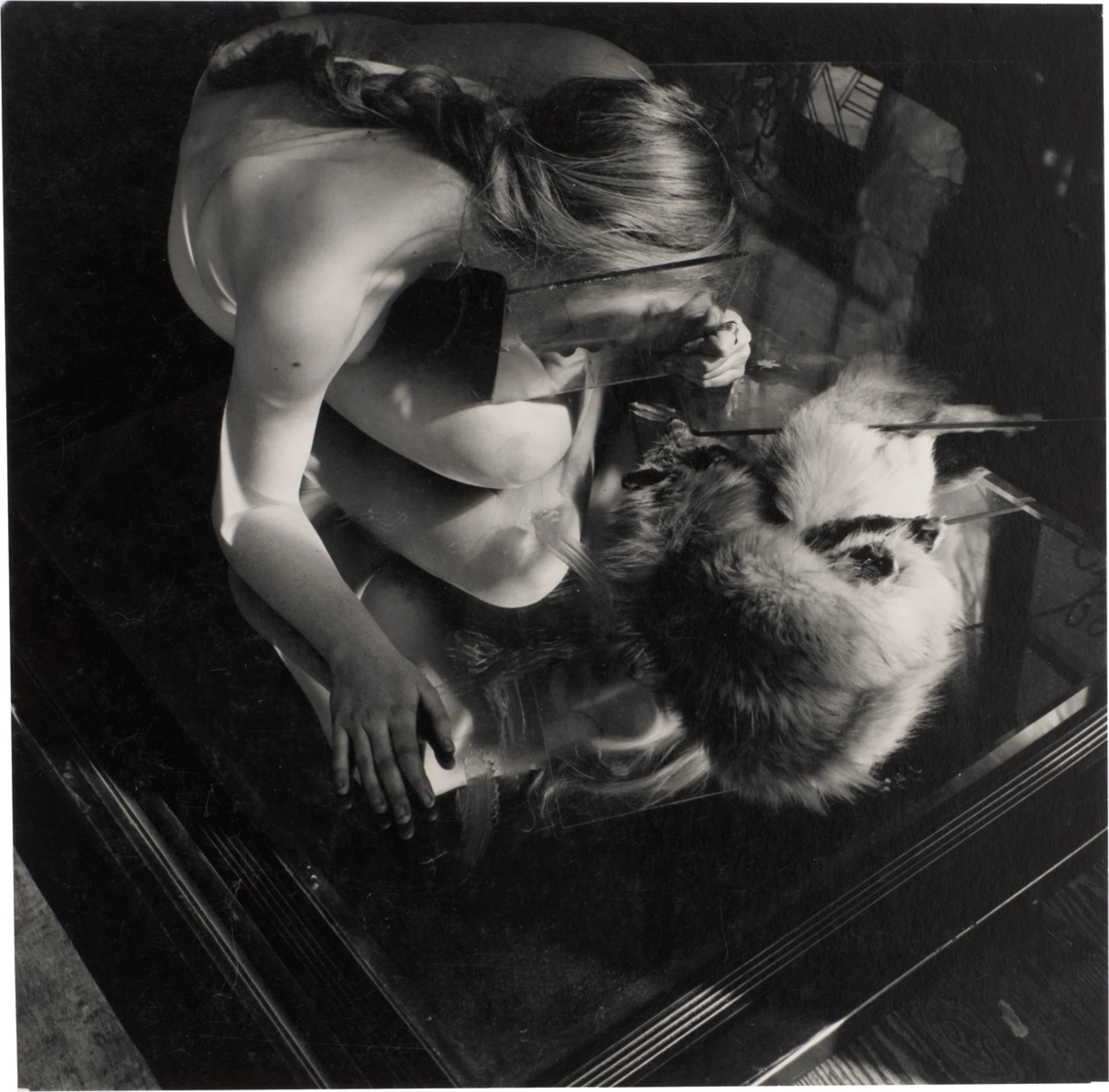
You can see that clearly at Gagosian’s Francesca Woodman exhibition, where the gallery builds a historically dense argument around Woodman’s relation to Surrealism and to Rome itself. The exhibition text emphasizes her years in the city in 1977 and 1978, her connection to Libreria Maldoror, and the way Italian visual culture fed her development. This is not a generic blue-chip transfer show that happens to land in Rome. It is a show using Rome as a meaningful part of the artist’s intellectual geography. That is one of the clearest markers of a serious Biennale-season presentation: the work would lose something if you moved it elsewhere.
The same reading strategy applies to exhibitions you hear about through art media rather than local signage. When the calendar gets crowded, do not ask only what is biggest. Ask what is site-sticky. Which show is merely rentable? Which show is in conversation with the city’s architecture, memory, or language? Roman galleries worth following are the ones that can answer that question without overexplaining themselves.
Use the Emin and Woodman contrast to track how Roman galleries frame female subjectivity
Elbaor’s juxtaposition of Tracey Emin at Galleria Lorcan O’Neill and Francesca Woodman at Gagosian offers one of the cleanest interpretive keys for the season. Both artists place the female body near the center of the work, but they mobilize it differently, and the city’s gallery ecology sharpens those differences. In the Artforum account, Emin’s nudes are rendered as familiar vehicles of injury, confession, and bodily exposure, yet the review argues that repetition has blunted their force. The work is legible, branded, and instantly recognizable, but that recognizability may now function as inertia.
Woodman, by contrast, comes through as an artist whose self-imaging still destabilizes identity rather than consolidating a signature performance of it. On the Gagosian exhibition page, the gallery stresses dissociation, theatricality, allegory, and the unstable boundary between body and setting. This is more than wall-text rhetoric. It provides a practical method for looking. When you stand in front of Roman gallery shows this season, notice whether the body is being used as a solved symbol or as an unstable instrument. Rome rewards the latter because the city itself is overloaded with fixed iconography. Work that merely repeats its own image risks hardening into another monument.
This contrast is useful well beyond these two exhibitions. It helps you sort the broader season into shows that rely on established emotional signatures and shows that genuinely reactivate perception. In a city where image history is omnipresent, the question is not whether an artist has a vocabulary. It is whether that vocabulary can still produce surprise under pressure.
Pay attention to architecture because in Rome the room can overpower the work
One of the easiest mistakes in writing about Rome is to treat architecture as a beautiful backdrop rather than an active force. The city’s galleries are not neutral containers, and the strongest or weakest exhibition decisions are often spatial before they are thematic. Elbaor’s account of Sant’Andrea de Scaphis, the deconsecrated church turned exhibition space, gets at this precisely. A large painting in that setting is never just a painting. It is negotiating with liturgical scale, historical residue, and a built environment that can either flatten the work or intensify it beyond expectation.
That is why her contrast between the earlier Peter Doig presentation and Rudolf Stingel’s current installation is so instructive. The Stingel, she argues, succeeds partly because the crude subject matter of the monumental canvas gains force from the sanctified architecture around it. Even if you cannot rely on the gallery site for a convenient explanatory page, the lesson remains clear: in Rome, scale is not enough. Placement, altitude, sightline, and friction with the room are the real curatorial materials. A work that dominates a white cube may vanish in a Roman palazzo, chapel, or stone-walled gallery if the staging is lazy.
So when reading the city this season, train yourself to ask architectural questions first. Does the work need the room or merely occupy it? Is the exhibition using Rome’s density, or borrowing prestige from it? If the space itself is doing most of the emotional work, the show may be weaker than first impressions suggest. If the artist and the room are deepening one another, pay attention.
Do not confuse historical citation with actual historical pressure
Roman exhibitions often arrive swaddled in references. Surrealism, antiquity, church space, feminist lineages, literary allusions, and local art histories are always ready to be invoked. Some of that is productive. Some of it is cultural perfume. The task is to distinguish between work that is actually pressured by history and work that merely enjoys sounding adjacent to it.
The Gagosian Woodman show offers a model of useful historical framing because the Roman context is biographical, formal, and conceptual at once. Her time in the city shaped her development, her reading, and her visual language. The supporting materials extend that frame through essays and conversations linked from the exhibition page, including an essay on Woodman and Surrealism and an interview on her photographic ambiguity. Those references extend the work without trapping it in simple nostalgia.
By contrast, an exhibition that leans on Rome’s grandeur while offering little resistance to it will often announce itself through overly reverent language, generic historical gestures, or a mismatch between concept and staging. This is where Roman literacy matters. The city’s history is so available that weak shows can quote it cheaply. Strong shows make history feel like a pressure that alters what you are seeing in the present tense.
Follow the city’s medium politics: photography, painting, and installation do not carry equal weight here
Rome’s gallery season also reveals medium hierarchies that are easy to miss if you look only at names. Photography, especially in the Woodman show, gains a peculiar intensity because it works against the city’s association with permanence. A photograph in Rome can feel like an anti-monument, a fragile or unstable record resisting the city’s appetite for stone certainty. Painting, by contrast, enters a more crowded lineage. It has to fight not only other contemporary paintings but the broader cultural memory of devotional, decorative, and historical painting already saturating the city.
This helps explain why certain large paintings can feel exhausted here while a tightly argued photographic installation feels newly volatile. It is not that Rome dislikes painting. It is that painting arrives with heavy historical baggage and therefore needs sharper installation intelligence to remain alive. A medium is never just a medium in a city like this. It is a relation to the past.
Visitors can use that insight practically. If a painting show feels too easy, ask whether the work is relying on scale and reputation rather than genuine friction. If a photography show feels unusually acute, ask how it is exploiting the city’s resistance to ephemerality. We saw a version of this problem in our London Gallery Weekend guide, where medium balance was tied to urban context, but Rome raises the stakes because context here is never quiet.
What to carry away from Rome in 2026
The best way to leave Rome this season is not with a ranked list of must-sees, but with a better filter. Look for exhibitions that understand timing without pandering to it, that use architecture as a live condition rather than a postcard, that resist the city’s monumental self-image instead of being absorbed by it, and that make the present feel a little less obedient to inherited prestige. That is what makes Rome worth serious attention during Biennale season. The city turns contemporary exhibitions into tests of nerve.
If you want a single example to organize your looking, start with Woodman at Gagosian and measure other shows against its strengths: grounded Roman relevance, medium-specific thinking, and a sense that biography and setting illuminate rather than imprison the work. Then read outward to the rest of the scene, including the more uneven or contentious presentations Elbaor describes. The point is not to agree with every judgment. It is to develop a sharper standard for what ambition looks like in a city where history is always trying to do half the work.
Rome in 2026 is neither a sleepy appendix to Venice nor a fully frictionless contemporary hub. It is something more interesting: a city where galleries keep staging arguments about whether the past is ballast, burden, or fuel. If you can read those arguments clearly, you will get more from the season than another round of art-tourism consensus. You will understand why Rome still matters when the international circuit temporarily swings its gaze south.