How to Read Museum Acquisition Round-Ups Without Falling for Prestige Fog
Acquisition round-ups can look like harmless good news, but they reveal how museums rewrite canon, spend money and signal future priorities if you know where to look
Start by ignoring the feel-good tone and asking what problem the museum is trying to solve
Museum acquisition round-ups are designed to feel reassuring. A work enters a collection, a curator says something about historical breadth, a donor or foundation is thanked and the story moves on. That surface is exactly why they are worth reading closely. Each acquisition is a small but concrete institutional decision: money was spent, relationships were activated, collection priorities were adjusted and a claim about art history was made visible. When The Art Newspaper\ grouped recent acquisitions at the Art Gallery of Ontario and the Blanton Museum of Art, it offered more than a list of good deeds. It offered a map of what museums now need their collections to say.
The first question is therefore not whether the object is beautiful or important. It is what institutional pressure the acquisition answers. Is the museum filling a historical omission, shoring up an established strength, reacting to scholarly change, appealing to donors, responding to public criticism or building around a new programme area? Those motives can overlap, but they rarely disappear. Once you read with motive in mind, the genre becomes much less bland.
Look for the collection gap being named, and then test whether the object really fills it
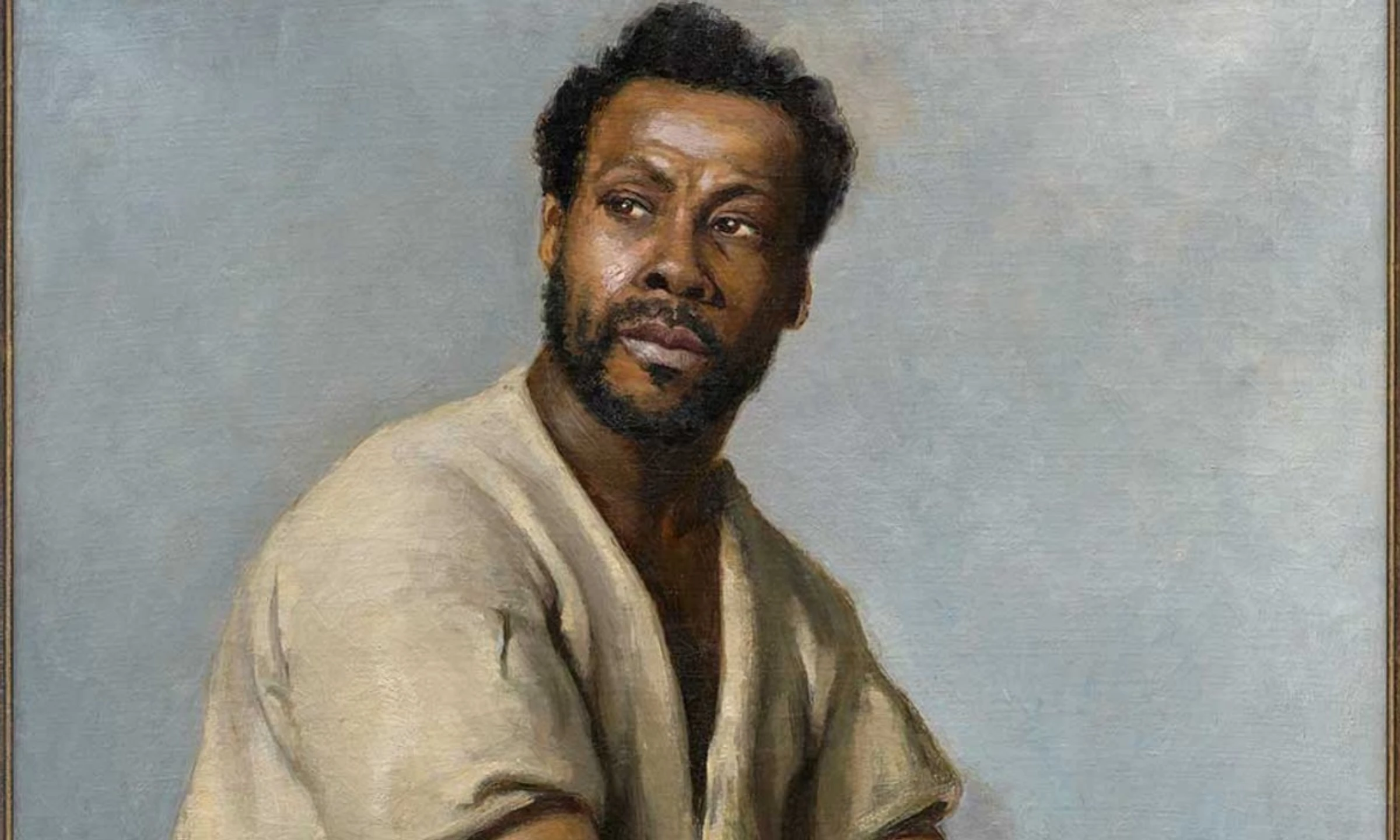
The round-up's strongest example is the Art Gallery of Ontario's acquisition of Alma Holsteinson's portrait of Pierre Louis Alexandre, one of the most depicted Black models in pre-twentieth-century art. Curator Caroline Shields frames it as part of a more expansive history of Europe and the African diaspora. That language is not empty. It identifies a real gap in many European collections, where Black sitters appear frequently in paintings but are rarely centered as historical subjects with biographies, mobility and social agency. Alexandre's story, from French Guiana to Stockholm and the Royal Academy, gives the work far more than representational optics.
But you should still ask whether one painting solves the problem it names. Usually it does not. A single acquisition can open a door, signal intent or give curators a platform for future interpretation. It cannot by itself rebalance a collection built through centuries of exclusion. That does not make the purchase cynical. It makes scale part of the analysis. The same skeptical generosity applies whenever a museum says an object expands the canon. Great. Expanded how, and what comes next?
This is where supporting research matters. Check whether the institution has collection essays, installation plans, related acquisitions or public programming that make the work legible beyond the press release. If the museum can show how the object will change interpretation in galleries, catalogues or teaching, the acquisition is probably substantive. If all you get is celebratory language and a hero image, the announcement may be carrying more symbolic than structural weight.
Follow the money because acquisitions are always financial stories as well as scholarly ones
Round-ups are often discreet about cost, but the economics are never incidental. The Holsteinson portrait sold at Bukowskis for 760,000 kronor, more than seven times estimate. The Kirchner double-sided print was purchased with help from the Ernst von Siemens Art Foundation. Jennie C. Jones's audio work RPM entered the Blanton through a sound-art programme enabled by a $5 million gift from Sarah and Ernest Butler and an endowment dedicated to that field. Those details tell you who the museum can buy with, how quickly it can act and whether the institution is strategically opportunistic or merely thankful when something appears.
Donor structure matters because it shapes future acquisitions. A museum with a named endowment for sound art can build depth in that area. A museum relying on ad hoc gifts may acquire more unpredictably. Foundation support can rescue an important object, but it can also channel collecting toward areas that donors find attractive or reputationally useful. None of this is inherently suspect. It is simply the material basis of collection building. Readers who want the broader institutional lens can pair this with our guide to museum capital gifts, because acquisitions and philanthropy often tell the same story in different registers.
You should also notice how museums use acquisitions to turn private money into public authority. The transaction may begin with a dealer, an auction house or a donor, but once the object enters the museum the institution effectively certifies its importance through display, scholarship and custodianship. That is one reason acquisition announcements matter to the market. Museums do not just preserve value. They manufacture it.
Ask whether the object changes how the collection works, not just how it looks
The Kirchner acquisition is instructive here. On paper it is an appealing expressionist print with excellent provenance and a powerful historical afterlife, having passed through Botho Graef's holdings before Nazi confiscation and destruction under the label of degeneracy. The story is compelling. But the more important question is what the print does inside a collection. Does it deepen the museum's holdings around Brücke artists, queer networks, print culture, provenance research or the politics of confiscation? A good acquisition is not only additive. It reorganizes relationships among works already owned.
The same applies to Jennie C. Jones's RPM. An audio work entering an outdoor sound gallery changes institutional behaviour if the museum commits to maintenance, interpretation and continued collecting in that format. Sound art is not a painting hung once and left alone. It demands technical infrastructure, curatorial confidence and an audience strategy. When an acquisition announces a new medium or display logic, treat it as a test of whether the museum is serious about the programme, not just eager to appear contemporary.
One useful habit is to look sideways rather than upward. Instead of asking how famous the artist is, ask what neighbouring galleries or departments the acquisition will touch. Will it force curators to rewrite wall texts, add context to an overlooked school, build new cross-cultural narratives or address provenance questions more directly? That is when an acquisition starts doing institutional work rather than decorative work.
Read the language of inclusion carefully, especially when museums invoke canon repair
Acquisition stories now frequently lean on the vocabulary of expansion, repair, recovery and representation. Sometimes that language is earned. Sometimes it functions as a reputational softener around standard collecting behaviour. The trick is not to sneer at inclusive rhetoric, but to test it against specificity. In the AGO case, the reference to the African diaspora has substance because Pierre Louis Alexandre's biography is traceable and because the work intersects directly with European art history rather than sitting outside it. That is stronger than generic claims about diversity.
Still, the best reading keeps two ideas in view at once. First, museums really are under pressure to tell fuller histories. Second, they often prefer the clean symbolism of acquisition to the messier labour of reinterpretation, staffing, research and sustained display. Buying a work is visible. Rewriting a curatorial narrative across permanent collections is harder and slower. So when a museum says an acquisition marks a new chapter, ask whether the institution has the will to write the rest of the book.
If you need a comparison point, our guide to authentication and rediscovery claims covers a similar reading discipline: resist the headline, check the evidence, then evaluate the institutional appetite behind the claim. Acquisition news deserves the same skepticism because it, too, often trades on compressed narratives of importance.
Pay attention to provenance and previous context, because museums inherit stories as well as objects
When a museum buys something, it is not acquiring a blank asset. It is inheriting a trail: prior owners, exhibition history, scholarly disputes, gaps in documentation and, sometimes, moral hazard. The Kirchner example foregrounds this directly through Nazi confiscation. Other acquisitions embed quieter questions, such as whether a work comes from an artist's own context of use, a major collector's taste-making apparatus or a recently inflated market category. Those histories matter because they shape how a museum can responsibly interpret the object.
Previous context matters just as much for living artists. Jennie C. Jones's RPM was first commissioned for The Glass House, which means the work already carries a site-specific history and a relationship to modernist architecture. At the Blanton, it will take on a different public function in the Butler Sound Gallery. Good acquisition coverage should make that transition visible, because re-siting changes meaning. Museums that hide those shifts behind generic celebration flatten exactly what makes the object interesting.
The best way to read a round-up is to treat it as a forecast
An acquisition round-up is never just backward-looking. It is one of the clearest forward signals a museum gives. It hints at the scholarship it wants to commission, the audiences it wants to attract, the donors it wants to please and the gaps it is finally willing to admit. A museum adding Black sitters to European narratives, strengthening sound-art infrastructure or refining its holdings around confiscated modernism is telling you where future exhibitions, installations and fundraising pitches may go.
That is why the genre deserves more attention than it gets. Acquisition news may look modest compared with biennials, blockbuster gifts or director appointments, but it often reveals institutional intention in a purer form. There is no abstraction here. The museum chose a work and took responsibility for it. Read enough of these decisions over time and you start to see the real museum, not just the mission statement version.
So the next time a round-up lands, do not ask only whether the acquisitions are impressive. Ask what collecting logic they share, who paid for it, which absences they admit and whether the museum has given itself the means to make the objects matter publicly. That is how you get past prestige fog and into the actual politics of collection building.