How to Read Auction House Museum Partnerships in 2026
A practical guide to reading auction house museum tie ups without swallowing the prestige language around access, scholarship, branding, and donor courtship.
Start by Asking Who Needs the Borrowed Credibility
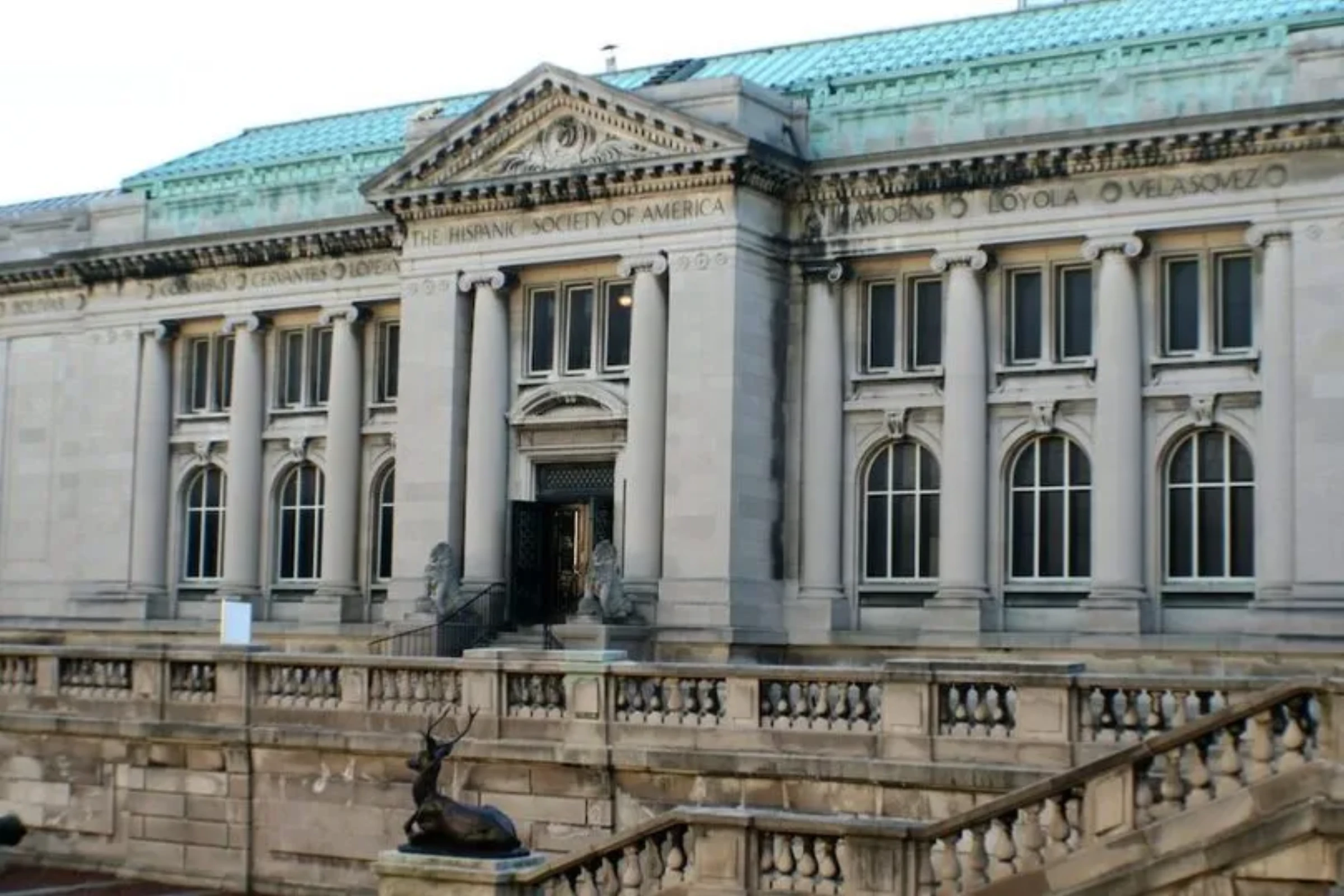
Auction house museum partnerships are usually announced in the language of access, scholarship, and cultural programming. That language is not always false. Sometimes the public really does get a strong exhibition in a place that would otherwise stage only selling theater. But the first serious question is simpler: which side needs the other's credibility more urgently right now? The recent ARTnews story on Sotheby's new museum partnership series, beginning with an exhibition from the Hispanic Society Museum and Library, is a useful case. Sotheby's gets to activate the Breuer building with institutional seriousness rather than pure commerce. The museum gets a stage inside one of the market's most visible New York addresses. That sounds mutually beneficial, and it may be. It is still a transaction in symbolic capital before it becomes anything else.
When readers ignore that first layer, they become easy prey for prestige language. Auction houses like to present these collaborations as proof that they are broader cultural actors, not merely intermediaries for wealthy buyers. Museums like the exposure, the foot traffic, and the chance to reach patrons who already circulate through the salesrooms upstairs. Both sides can claim public benefit. The real work is figuring out whether that benefit is structural or mostly atmospheric. Does the museum gain scholarship, new audiences, and curatorial autonomy? Does the auction house create space for non commercial looking, or merely wrap its brand in institutional glow? Usually the answer is mixed, which is exactly why these announcements deserve a colder read.
Separate Public Access From Donor Access
The phrase "open to the public" appears constantly in these announcements, and it should never be accepted without follow up. Public access can mean genuinely free and well interpreted entry for broad audiences. It can also mean an elegantly installed exhibition that primarily functions as a donor salon, a VIP softener, or a context machine for adjacent sales. Commercial venues know how to use culture as pacing. A museum style exhibition can slow people down, elevate the building's tone, and invite a collector to experience the house as a place of stewardship rather than extraction. That shift in feeling has strategic value even when no object on the wall is for sale.
Look closely at logistics. Are there posted public hours that make ordinary attendance plausible? Is the exhibition supported by interpretation, education, and programming, or is it mainly a photogenic installation? Are there barriers that signal the work is technically public but socially gated? If the announcement foregrounds private previews, invitation only dinners, or collector adjacency more than civic invitation, that tells you a lot about the real target audience. Museums know this dynamic too. Some will accept it because access to collectors, trustees, and future benefactors is itself a meaningful institutional resource.
This is where commercial real estate history becomes relevant. Sotheby's inherited the Breuer building, a site still haunted by the memory of museum occupation. That history gives partnership programming unusual potency because the architecture already carries institutional associations. Presenting museum material there is not neutral. It reactivates a building's cultural authority while allowing a private market actor to absorb some of that legitimacy into its own brand story. Readers should compare such claims with the venue's own public positioning, whether on the Sotheby's corporate pages, its exhibition calendar, or the museum's collection mission statements.
Read the Curatorial Terms and the Spatial Terms Together
In a credible partnership, curatorial intent and spatial context reinforce one another. In a weak one, the exhibition serves mostly as a refined backdrop. Readers should therefore pay attention to both what is being shown and where within the commercial ecosystem it is being shown. A Hispanic Society presentation tied to Joaquín Sorolla's Vision of Spain cycle carries obvious scholarly and historical appeal because the institution holds a distinctive collection and a strong mission. But if the exhibition is folded into a traffic pattern optimized for high net worth guests, gala photography, and sales week energy, the scholarship risks becoming atmospheric decoration for a broader luxury machine.
Good announcements provide clues about curatorial control. Do they name museum curators, lenders, and interpretive goals? Do they indicate whether the exhibition was shaped to fit the venue, or whether the venue was adapted to the exhibition's needs? Does the house describe conservation, publication, or educational commitments, or does it linger on architecture and special events? Commercial actors often talk most confidently about setting and visibility. Museums usually reveal seriousness through specifics: object lists, research context, historical framing, and programming details.
When those specifics are thin, be skeptical. A partnership can be visually impressive and still intellectually hollow. Readers saw a related issue in artworld.today's guide on how to read museum expansion announcements, where spatial rhetoric often hides operational priorities. The same principle applies here. Architecture and institutional atmosphere can distract from the harder question of what knowledge is actually being produced.
Follow the Money Even When No Price Tag Is Printed
Most partnership announcements will not tell you directly what changed hands, what costs were absorbed, or what long term expectations were attached. That silence is normal and revealing. Museums may receive venue support, fabrication help, sponsorship, donor cultivation opportunities, or access to a client network that no public institution can easily build alone. Auction houses may gain foot traffic, hospitality leverage, content for their communications machine, and a way to present themselves as custodians of culture rather than merely brokers of wealth. None of that requires a visible sales pitch to have economic force.
Readers should look for indirect financial clues. Is the museum in a fundraising cycle? Is it reopening galleries, planning capital work, or seeking fresh patron relationships? Is the auction house trying to deepen a building's identity, differentiate itself from rivals, or smooth reputational friction around its commercial priorities? The less explicit the announcement is about money, the more important those background questions become. In many cases the partnership is best understood as donor development by other means.
There is nothing inherently corrupt about that. Museums have always relied on wealthy networks, and auction houses have always wanted to appear culturally serious. The issue is whether the economic logic overwhelms the scholarly one. If the collaboration produces research, publications, educational access, and serious interpretation, then donor adjacency may simply be part of how the project became possible. A useful cross check is to read the museum's own language about its mission, such as the Hispanic Society's history and mission materials, alongside whatever the commercial partner emphasizes in its release. If it produces glamour, press, and a temporarily elevated mood in the building, then the museum has effectively rented out its aura.
Watch for Mission Drift, Especially on the Museum Side
Museum partnerships with commercial platforms can be productive, but they also create mission risk. A museum that becomes too comfortable treating an auction house as an extension of its public face may start bending programming toward visibility metrics, collector tastes, or transportable spectacle. That drift is rarely announced. It appears gradually in the choice of projects deemed partnership ready, the publics centered, and the forms of scholarship that receive resources. Exhibitions that thrive in a luxury branded environment are not always the ones a museum would choose if its only question were curatorial necessity.
Institutions should therefore be judged not only on whether they partner, but on how selectively they do so. Does the collaboration align with collection strengths and educational aims, or does it feel like a prestige exchange untethered from mission? Does the museum preserve its own voice in catalogues, wall texts, and programming, or does everything flatten into a tasteful neutral register designed to offend no client? The sharper the museum's identity before the partnership, the easier it is to spot whether that identity survives contact.
Auction houses face their own version of mission drift, though they are less likely to call it that. The more they invest in museum style programming, the more they invite scrutiny about what kind of public institution they are pretending not to be. If they want the prestige of cultural stewardship, they also inherit some expectations around transparency, seriousness, and public trust. They cannot have all the aura with none of the accountability forever.
Check Whether the Partnership Builds a Public Afterlife
One of the cleanest ways to judge these collaborations is to ask what survives once the installation closes. Does the museum leave with new research, conservation support, digitization, or a publication that broadens access beyond those who visited the venue? Does the auction house publish substantive materials, educational recordings, or archival resources, or is the whole effort designed to evaporate into press coverage and client memory? Strong partnerships generate a public afterlife. Weak ones generate a mood.
This is also where comparison helps. If a commercial platform hosts serious institutional programming, it should be possible to point to outputs that resemble what museums already provide through exhibitions at the Frick or the National Gallery's public programs: interpretation, continuity, and a record people can return to. Without that residue, talk of access usually means temporary visibility for the already visible.
What a Strong Partnership Looks Like in Practice
The strongest auction house museum partnerships do not hide their mutual benefit. They state the scholarly stakes clearly, identify who curates the exhibition, explain how the public can actually attend, and give the museum more than glamorous square footage. They also produce something durable: a catalogue, a research program, conservation support, or a genuine audience expansion that continues after the installation closes. In other words, they leave residue that is not reducible to photos from opening night.
Weak partnerships do the opposite. They rely on words like dialogue, access, and celebration while offering almost no operational clarity. They make the museum look available for brand laundering and the auction house look desperate for institutional costume. The work itself may still be excellent, but the structure around it feels opportunistic. Readers should learn to tell the difference quickly because this model is likely to spread. As real estate costs rise, museums seek new patrons, and commercial platforms compete for cultural authority, the incentive to collaborate will only grow.
The smart way to read the next announcement is therefore unsentimental. Ask who gains trust, who gains money, who controls interpretation, and what the public actually receives besides the pleasure of entering a branded room filled with good art. If the answers are robust, the partnership may deserve attention. If they are foggy, the announcement has probably already told you what it is: a prestige exchange dressed up as public culture.