How to Read Artist Foundations in 2026
Use the Frank Bowling launch to judge how artist foundations shape archives, access, canon formation, and institutional power
Start by treating every foundation as a power structure, not a sentimental tribute
The launch of the Frank Bowling Foundation is a useful prompt because it arrives wrapped in admirable language: public access, scholarships, bursaries, institutional support, archive stewardship. All of that may be true, and much of it is necessary. But the first rule for reading any artist foundation is to stop hearing the word foundation as if it meant benevolence by default. A foundation is a power structure. It decides where works go, who gets access to papers, which scholars receive encouragement, how loans are negotiated, what educational story becomes standard, and whether an artist's reputation remains productively unstable or hardens into official myth.
That does not make foundations suspect by nature. It makes them important. When Artnet reported that the Frank Bowling Foundation will oversee public access to works and archive materials while supporting London art schools, the Whitechapel Gallery, and the South London Gallery, it described exactly the kinds of decisions that shape an artist's future life. A foundation can be more consequential than a retrospective because it controls the conditions under which future retrospectives, catalogues, dissertations, and school visits happen.
If you remember nothing else, remember this: a foundation tells you which version of an artist's life is being made durable. That version may be generous, nuanced, and institutionally open. It may also be narrow, defensive, and optimized for market stability. Your task is to learn how to tell the difference.
Read the legal and administrative skeleton before you read the mission statement
The fastest way to get fooled is to stop at the mission statement. Every foundation promises preservation, education, and public benefit. The harder evidence sits in its administrative skeleton. For a British charity such as the Frank Bowling Foundation's Charity Commission registration, start with governance: when was it registered, where is it based, is reporting current, who are the trustees, and what legal obligations attach to it. These details may sound dry, but they reveal whether a foundation is a serious institutional body or a hazy branding shell.
Administrative form shapes cultural outcome. A transparent reporting structure can make it easier to track whether educational promises become actual grants. A weak or opaque structure makes it easier for a foundation to talk publicly while operating privately. The same logic applies internationally. In the United States, nonprofit disclosures, board composition, and annual reports often tell you more about a foundation's priorities than any foreword in an exhibition catalogue. Bureaucracy is not the enemy of art here. It is often the record of whether ideals survived contact with money and governance.
Also ask where the archive sits. Is it physically housed with the foundation, dispersed across storage, partially deposited with a museum, or controlled by an estate office? Foundations that promise access but keep researchers dependent on ad hoc personal permission are not really offering access. They are offering discretion.
Ask what exactly is being stewarded: works, archives, education, or the market
Not all artist foundations do the same job. Some exist mainly to steward an archive. Some authenticate works and protect an estate from fakes. Some run residency and education programs. Some underwrite exhibitions and scholarship. Some quietly stabilize a market by controlling scarcity, narrative, and access to high-value material. Most do several of these at once. The trick is to figure out which function is primary.
The Bowling case is instructive because the announced package is broad: gift of artworks and archives, public access, scholarships, bursaries, and support for institutions. Compare that with the Bridget Riley Art Foundation, whose public identity centers on the artist's work, educational ambitions, and exhibition ecosystem. These are both serious artists, but the infrastructure around them can perform different cultural work. One foundation may be most useful as a research hub. Another may be strongest as an educational engine. Another may be most aggressive in protecting attribution and market order.
When a foundation receives a major body of works, pay attention to how those works are likely to circulate. Will they be lent widely? Used to seed museum partnerships? Reserved for controlled institutional contexts? Broken into education collections and major retrospective holdings? The answer affects not just access, but art history itself. The works people can repeatedly borrow and teach with are the works that become canonical in practice.
Judge whether the education claims are structural or cosmetic
Education language is one of the easiest places for institutions to look virtuous while doing very little. That is why the specifics in the Bowling announcement matter. Scholarships and bursaries for London art schools are measurable. So is support for named institutions. A foundation that names programs, partners, and beneficiaries is easier to hold to account than one that vaguely pledges outreach. If you want to read artist foundations critically, train yourself to separate structural educational investment from cosmetic programming.
Whitechapel Gallery's own history explains why named partnerships matter. Founded in 1901 to bring great art to the people of East London, Whitechapel has long tied artistic ambition to civic access. A foundation partnership there means something different from a sponsor logo on a gala wall. Likewise, the South London Gallery sits inside a local and educational ecosystem that can activate an artist's legacy beyond high-end collector circuits. Specific partners let you infer the intended public.
Watch, too, for timelines. Are grants annual? Is there an open application process? Are educational resources published online? Are schools outside the usual elite nodes included? A foundation serious about education creates repeatable pathways. One-off talks and commemorative events are pleasant, but they do not change who gets to enter the field.
Look for the canon the foundation wants to build
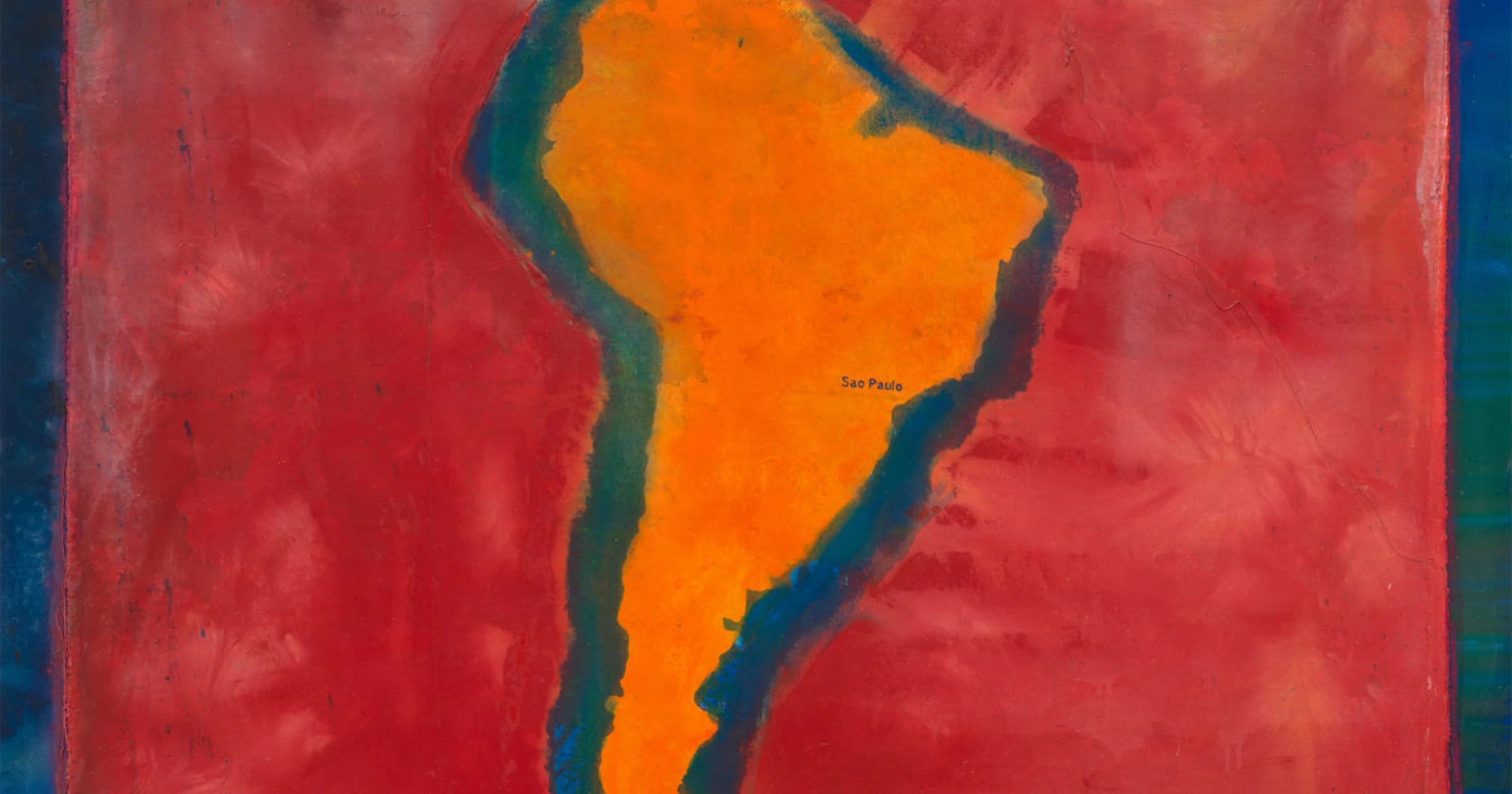
Every foundation builds a canon, whether it admits it or not. The question is how broad and argumentative that canon will be. Frank Bowling's career, as his official biography makes clear, spans Guyana, London, New York, abstraction, map paintings, poured surfaces, institutional struggle, and late-career acclaim. A lazy canon would reduce that to a single redemptive storyline about overdue recognition. A serious canon would preserve the formal, geographic, and political complexity that makes the work resistant in the first place.
This is where our recent guide on how to read late-career artist surveys becomes relevant. Surveys and foundations perform related functions. Both stabilize narratives. Both decide what younger audiences inherit as official emphasis. If a foundation consistently highlights one period, one style, or one politically convenient interpretation, it is teaching you how it wants the artist remembered. Read omissions as carefully as highlights.
Ask which works appear first on the site, which essays get commissioned, what language recurs, and whether difficult periods are granted real space. Canon formation is often legible in design decisions before it becomes explicit in scholarship.
Separate public benefit from market benefit without pretending they never overlap
One of the more childish habits in art writing is to pretend that foundations are either pure public service or pure market machinery. In reality, they often do both. Better archives can support better scholarship and stronger prices. Wider institutional loans can increase public access and deepen collector confidence. Controlling authentication can protect history and restrict supply. The point is not to demand innocence. It is to identify the balance.
Foundations become troubling when every public-facing act seems to converge on brand consolidation and value protection. They become more convincing when market benefit exists but does not exhaust the institution's purpose. If a foundation funds scholarships, publishes research, lends work beyond prestige museums, and keeps archival access reasonably open, then market uplift is not the whole story even if it remains part of the story. Mature criticism can hold both truths at once.
This is why artist foundations deserve more scrutiny than they usually get. They are among the main places where the art world's public language of care meets its private language of asset management. The friction between those languages is not a scandal. It is the field. Learn to read it.
Judge success by what future the foundation makes possible
In the end, the best test is forward-looking. Does the foundation make it easier for future students, curators, writers, and artists to encounter the work in its full difficulty? Does it widen who can participate in that encounter? Does it create durable research and educational infrastructure? Does it lend generously enough to keep the work alive in public institutions? Or does it mainly convert a complicated life into tidy heritage?
The Frank Bowling Foundation may well become a strong model because its first public description joins archive stewardship to scholarships and institutional support. That is the right direction. But the real verdict will come later, in board decisions, access policies, grant lists, cataloguing choices, and the tone of the scholarship it enables. Foundations should be read over time, not just at launch.
If you read them well, they tell you a great deal about the current art world. They show who gets protected, who gets taught, what gets archived, and how reputation becomes infrastructure. That is why an artist foundation is never just a tribute. It is a machine for deciding what survives, who can study it, and on what terms. Learn to read the machine, and you will understand far more than one artist's legacy.